
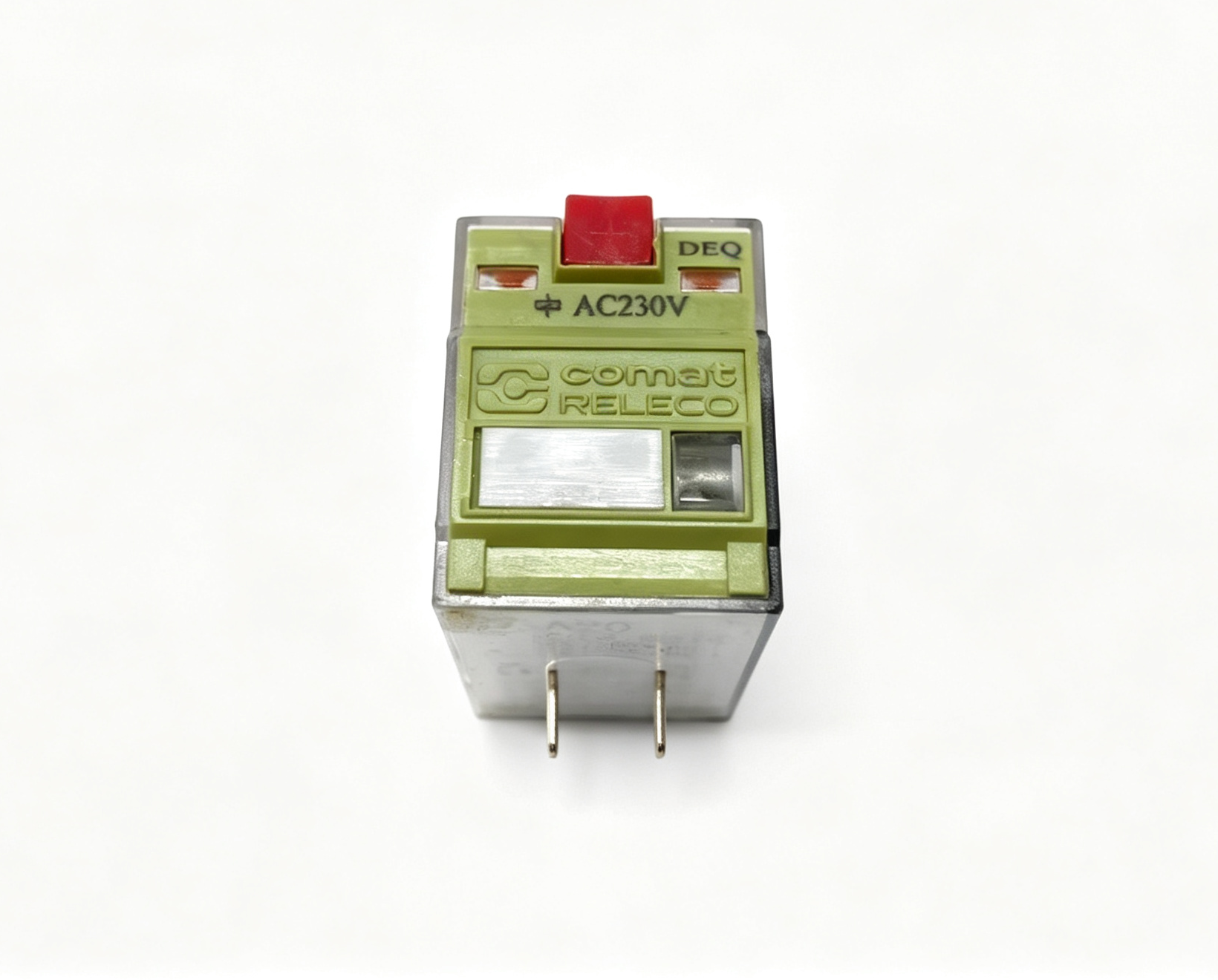
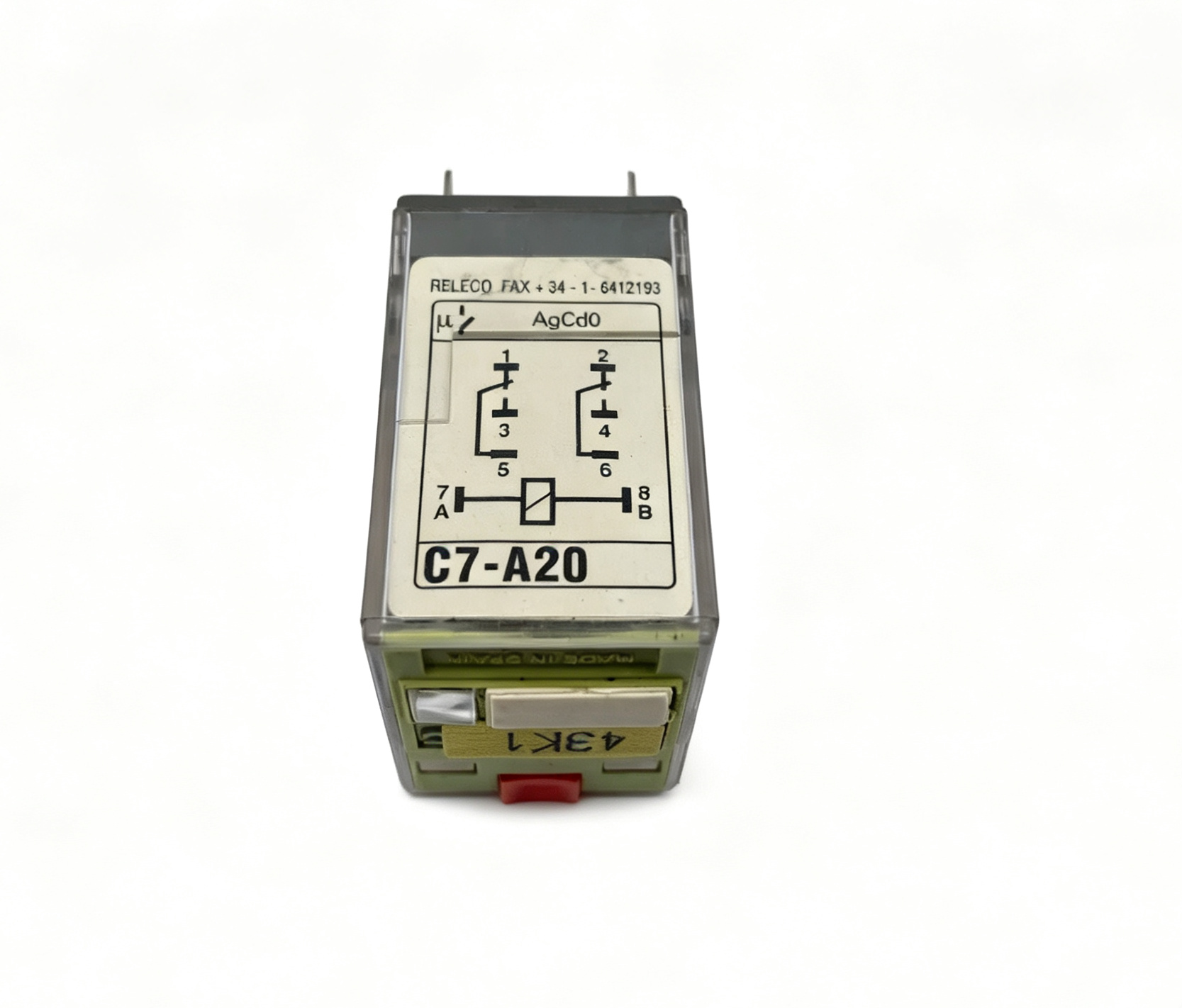
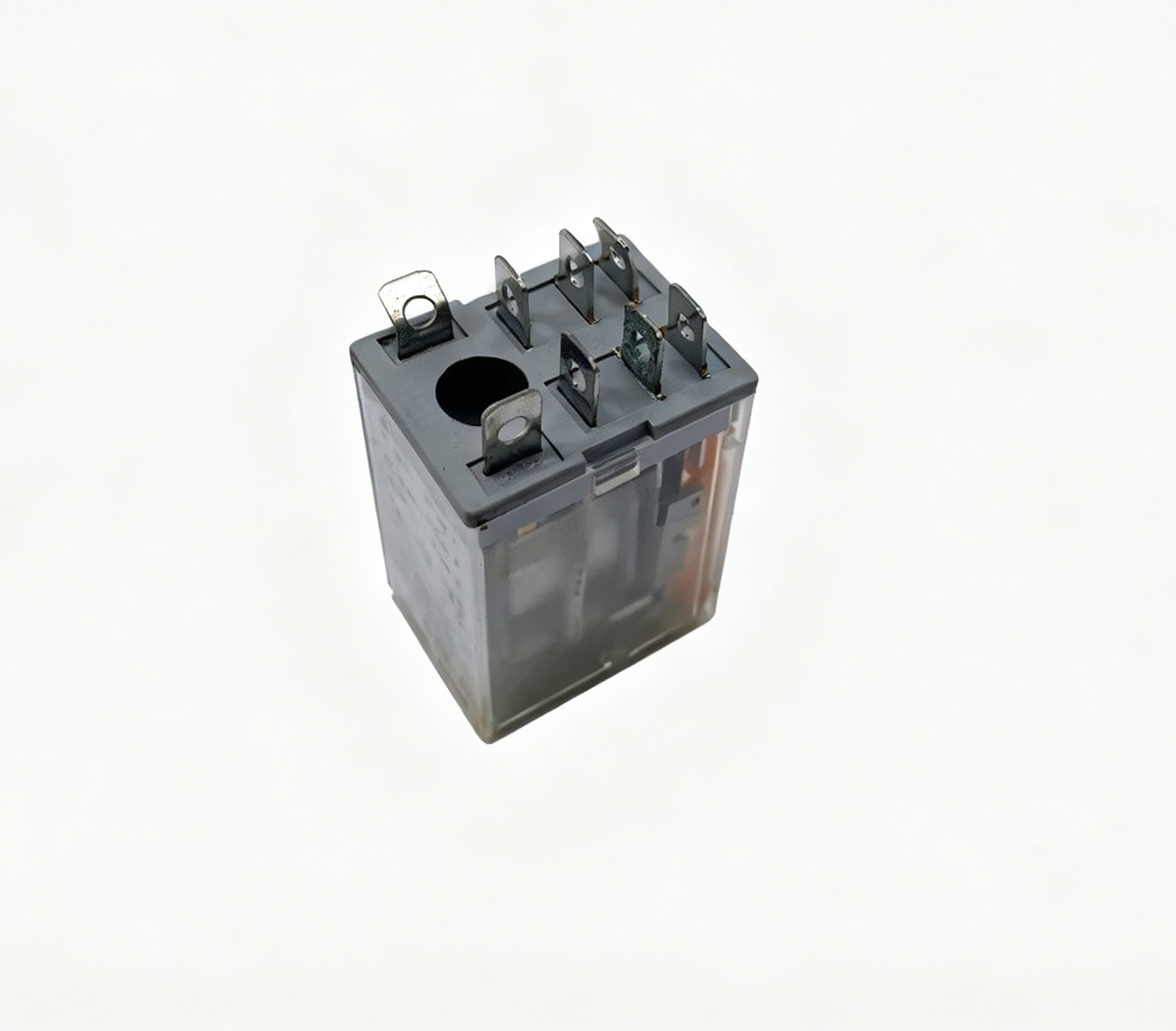

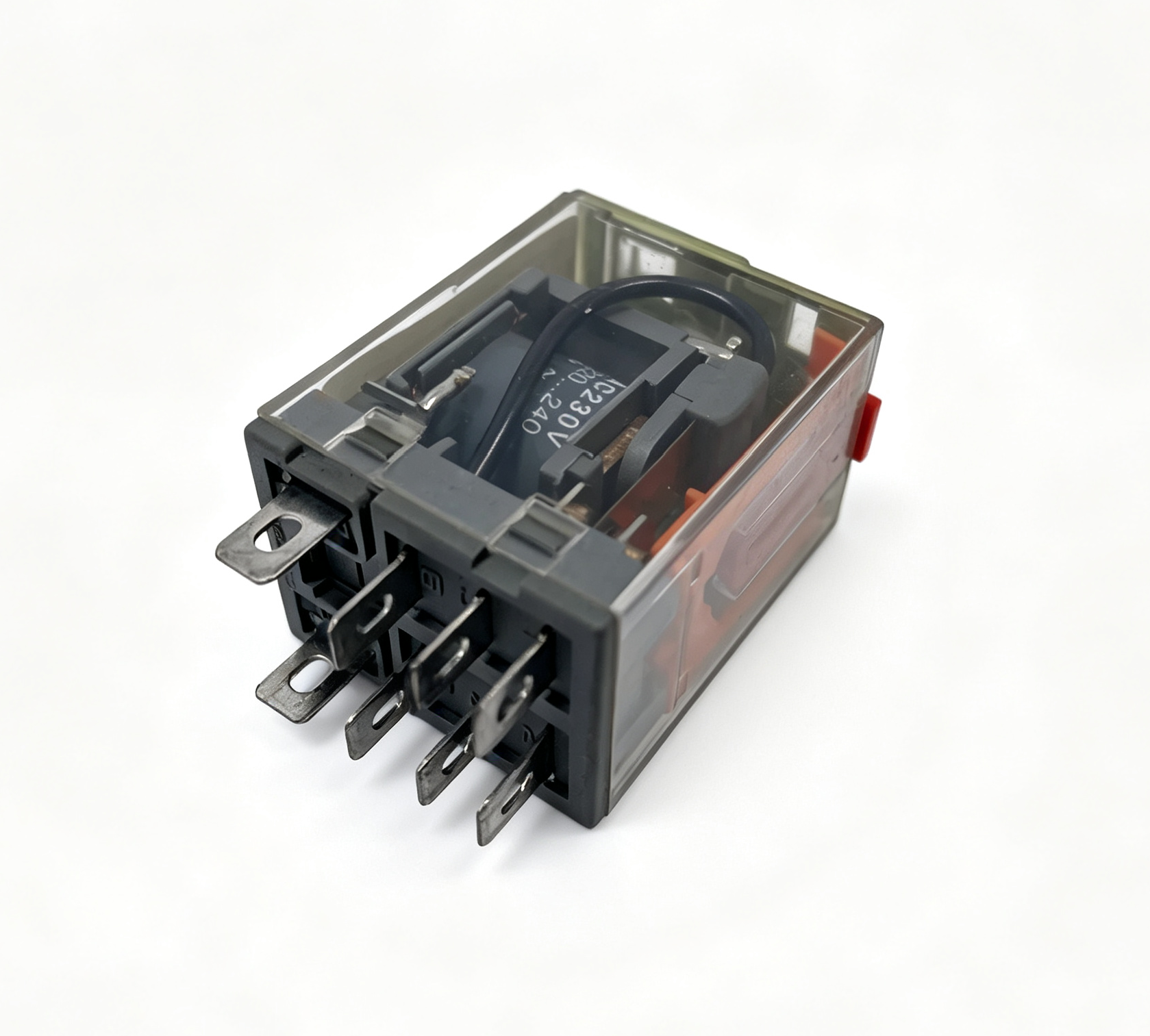
Comat RELECO C7-A20/AC230V Industrial Control Relay
The Comat RELECO C7-A20/AC230V is an industrial control relay designed for electrical switching and control applications. This relay belongs to the C7 product series and is identified by its specific C7-A20/AC230V designation. The model uses a 230 VAC coil and provides 2 C/O changeover contacts, with contact capability specified at up to 10 A at 250 VAC. Its configuration makes it suitable for a wide range of industrial control circuits where an electromechanical relay is required to interface control signals with connected electrical loads.
The complete model designation is important when identifying the relay because the C7 series includes different contact arrangements and coil voltage variants. The AC230V suffix identifies the coil voltage configuration, while the C7-A20 designation identifies the particular relay arrangement. For engineering records, electrical drawings, equipment documentation, and component identification, the complete model number should be retained exactly as C7-A20/AC230V.
Product Identification
The C7-A20/AC230V is identified as a control relay rather than a programmable controller or power supply. Its primary function is electrical switching through an energized relay coil and a set of changeover contacts. The 230 VAC coil allows the relay to be controlled from an appropriate alternating-current control circuit, while the contact arrangement provides electrical switching between connected circuits.
The model designation should be checked carefully when selecting a replacement or configuring an electrical control system. Similar C7 series models may use different coil voltages, contact arrangements, or functional configurations. A relay with a different coil voltage should not be treated as an interchangeable component simply because its external appearance or series designation is similar.
230 VAC Coil Configuration
One of the defining characteristics of the C7-A20/AC230V is its 230 VAC coil. The coil is the electromagnetic operating element of the relay. When the appropriate alternating-current control voltage is applied, the electromagnetic mechanism changes the state of the relay contacts. When the coil is de-energized, the contacts return according to the relay’s designed contact arrangement.
The 230 VAC coil specification is therefore a key parameter during system design and maintenance. The control circuit supplying the relay coil must correspond to the specified coil voltage. Applying an incorrect control voltage can result in improper operation or damage to the relay. Engineers should verify the electrical schematic and relay identification before connecting the coil to an existing control circuit.
2 C/O Changeover Contacts
The C7-A20/AC230V provides 2 C/O contacts, meaning that the relay incorporates two changeover contact sets. A changeover contact configuration allows a common connection to be switched between normally closed and normally open paths according to the energized or de-energized condition of the relay.
This arrangement gives the relay greater flexibility than a simple single-path switching device. The two changeover contacts can be used to control separate circuits or to provide coordinated switching functions within an electrical control system. Depending on the application, the contacts can be incorporated into motor control circuits, machine control logic, alarm interfaces, signal switching circuits, or other electrical systems that fall within the specified contact ratings.
Contact Rating and Switching Function
Available product information identifies the C7-A20/AC230V with a contact rating of 10 A at 250 VAC. This rating defines an important limit for the electrical load connected through the relay contacts. The actual suitability of the relay depends not only on the nominal current and voltage but also on the type of load, switching frequency, inrush current, electrical characteristics, and application environment.
For resistive loads, inductive loads, motors, solenoids, lamps, and other electrically demanding devices, the applicable contact-rating information should be reviewed before installation. A relay contact rating should never be interpreted as a universal value for every possible load type. Proper circuit protection and suitable engineering practices remain necessary when incorporating the relay into an industrial electrical system.
Industrial Control Applications
The compact control-relay architecture of the C7-A20/AC230V allows it to be used in many electrical automation environments. Control relays are commonly used where a control signal needs to operate or isolate another electrical circuit. The relay can provide electrical separation between the control side and the switched circuit while allowing the state of the controlled circuit to be changed through the relay contacts.
Potential system-level applications include industrial machine control, electrical control panels, motor-related circuits, alarm and indication circuits, interface circuits, process equipment, and general automation systems. The exact application depends on the electrical requirements of the installation and the characteristics of the connected load.
Electrical Integration
When integrating the C7-A20/AC230V into an electrical system, the coil circuit and contact circuits should be evaluated separately. The coil requires the specified 230 VAC control voltage, while the contacts operate as switching elements for the connected external circuits. The wiring arrangement should follow the electrical schematic and the relay’s terminal identification.
The two changeover contact sets can provide independent switching paths or coordinated control functions. This can be useful in applications where one relay operation needs to influence more than one circuit. The actual terminal assignment should always be confirmed from the applicable technical documentation or the markings on the specific relay before wiring.
Control Circuit Design Considerations
Several factors should be considered when using the C7-A20/AC230V in an industrial control system. The first is the compatibility of the 230 VAC coil with the available control voltage. The second is the contact load, including both normal operating current and any transient or inrush current associated with the connected equipment.
Engineers should also consider switching frequency, ambient conditions, electrical noise, circuit protection, and the expected service conditions of the installation. Where the relay is used to switch inductive loads, additional suppression or protection measures may be appropriate depending on the circuit design.
Accurate documentation is equally important. The model designation, coil voltage, contact configuration, and terminal connections should be recorded in electrical drawings and equipment records. This information makes future maintenance and troubleshooting more straightforward and reduces the possibility of installing a relay with an incompatible configuration.
Importance of Correct Model Selection
The C7 relay family can include multiple variants with different coil voltages and contact configurations. Therefore, the designation C7-A20/AC230V should be treated as a complete product reference rather than shortened to C7-A20 during technical selection.
The AC230V portion of the designation is particularly significant because the coil voltage determines how the relay is controlled. Selecting a similar C7 relay with a different coil voltage could prevent the control circuit from operating correctly. Likewise, the contact configuration must match the required switching function of the application.
Maintenance and Documentation
For industrial installations, maintaining accurate relay identification can be valuable when updating electrical drawings, reviewing control cabinets, or managing component documentation. The complete model number should be recorded together with the equipment location, circuit reference, and relevant electrical schematic information.
Before working on a control circuit containing the C7-A20/AC230V, appropriate electrical safety procedures should be followed. The circuit should be isolated according to the applicable site procedures, and the presence of hazardous voltage should be considered because the relay coil is designed for 230 VAC operation and its contacts may be connected to electrical loads.
Conclusion
The Comat RELECO C7-A20/AC230V is an industrial control relay featuring a 230 VAC coil and 2 C/O changeover contacts. With a specified contact capability of up to 10 A at 250 VAC, it provides a flexible switching element for industrial electrical control and automation circuits.
Its combination of a 230 VAC operating coil and two changeover contact sets allows the C7-A20/AC230V to perform switching and interface functions across a variety of control applications. Correct model identification is essential because the C7 series contains multiple configurations, and the coil voltage and contact arrangement directly affect system compatibility.
For engineering and maintenance purposes, the complete designation C7-A20/AC230V should be used when documenting the component. The relay should be selected and connected according to its specified electrical characteristics, the requirements of the connected circuit, and the technical documentation applicable to the installation.
评价
目前还没有评价