
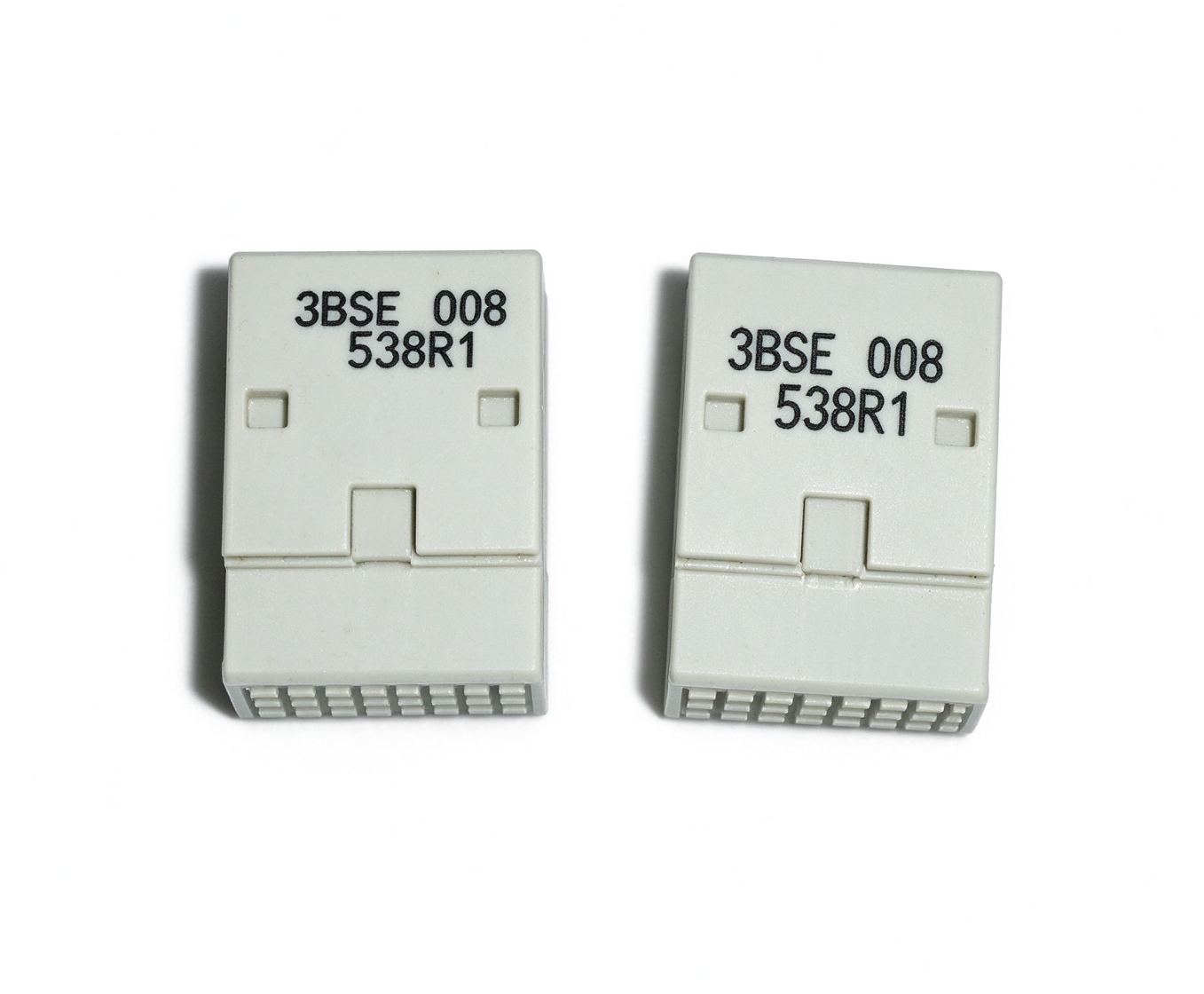
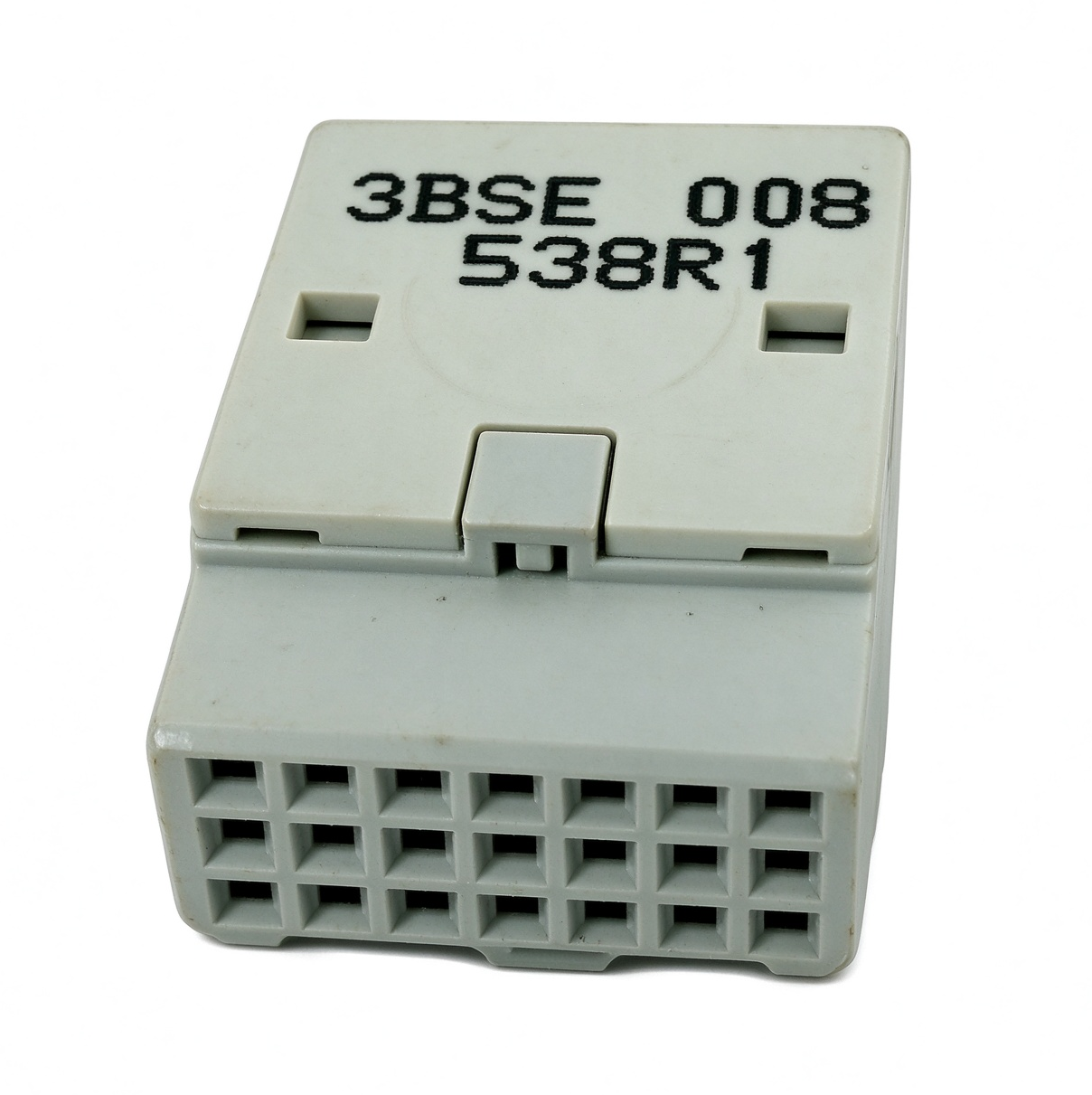
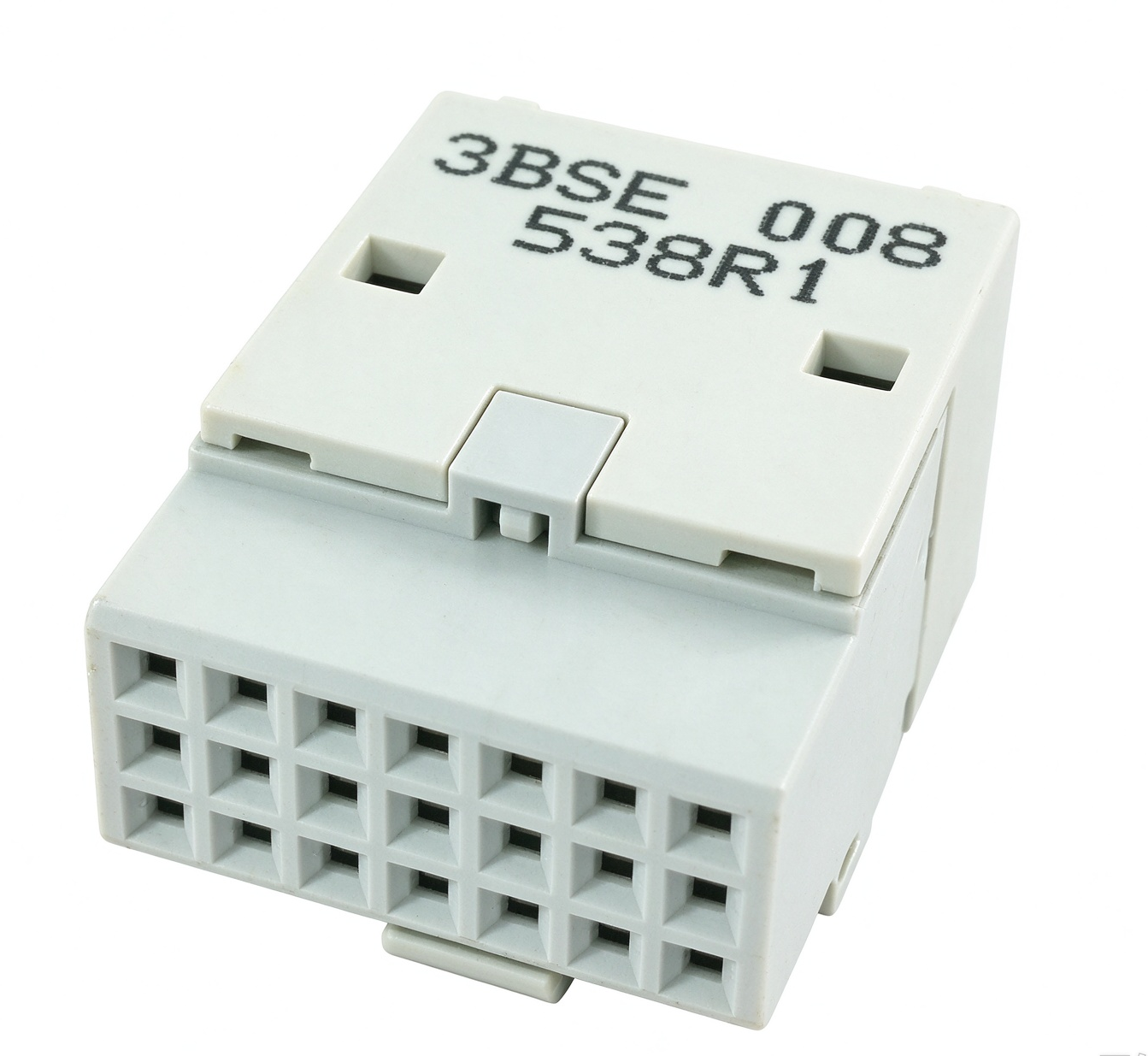
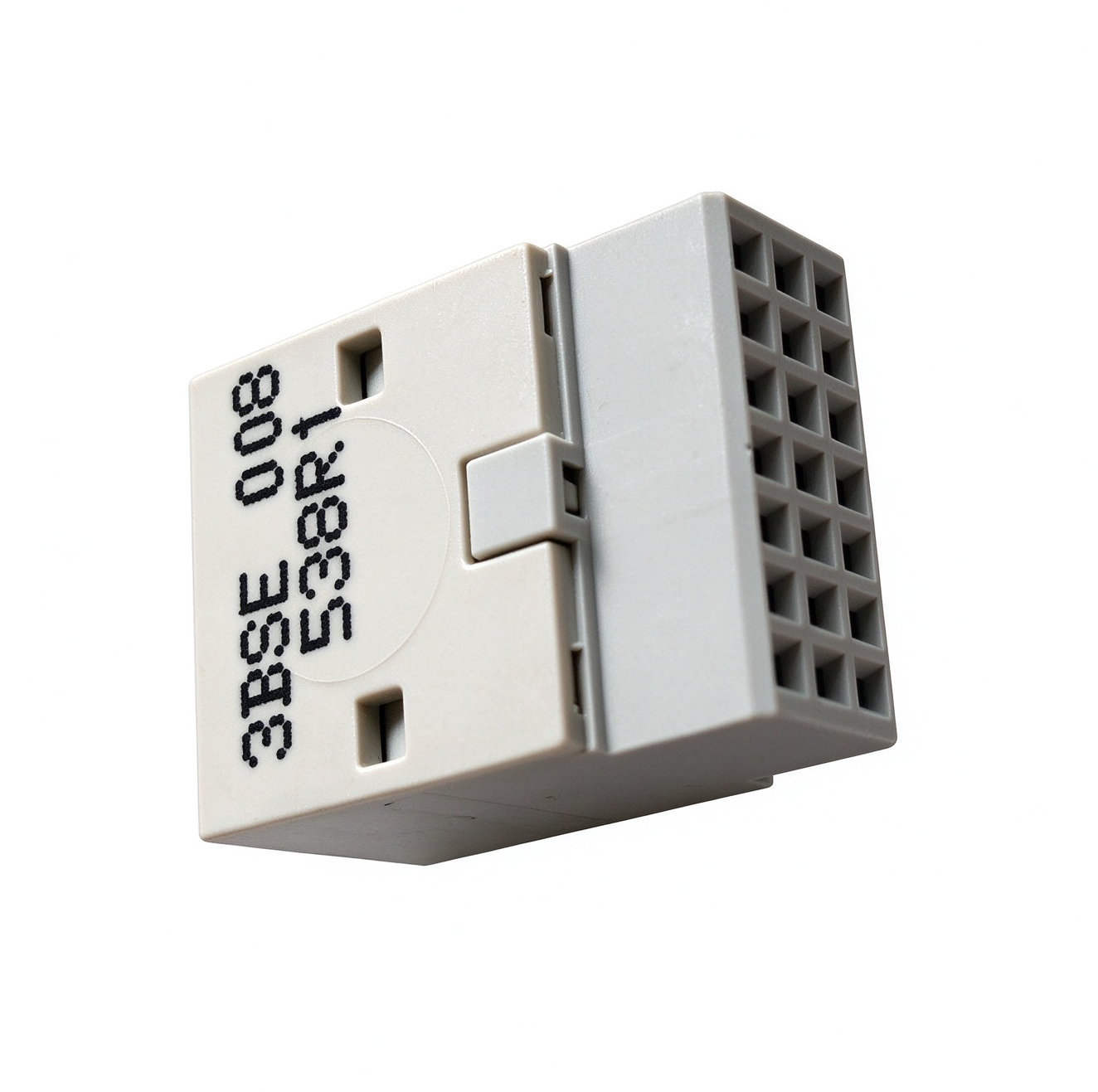
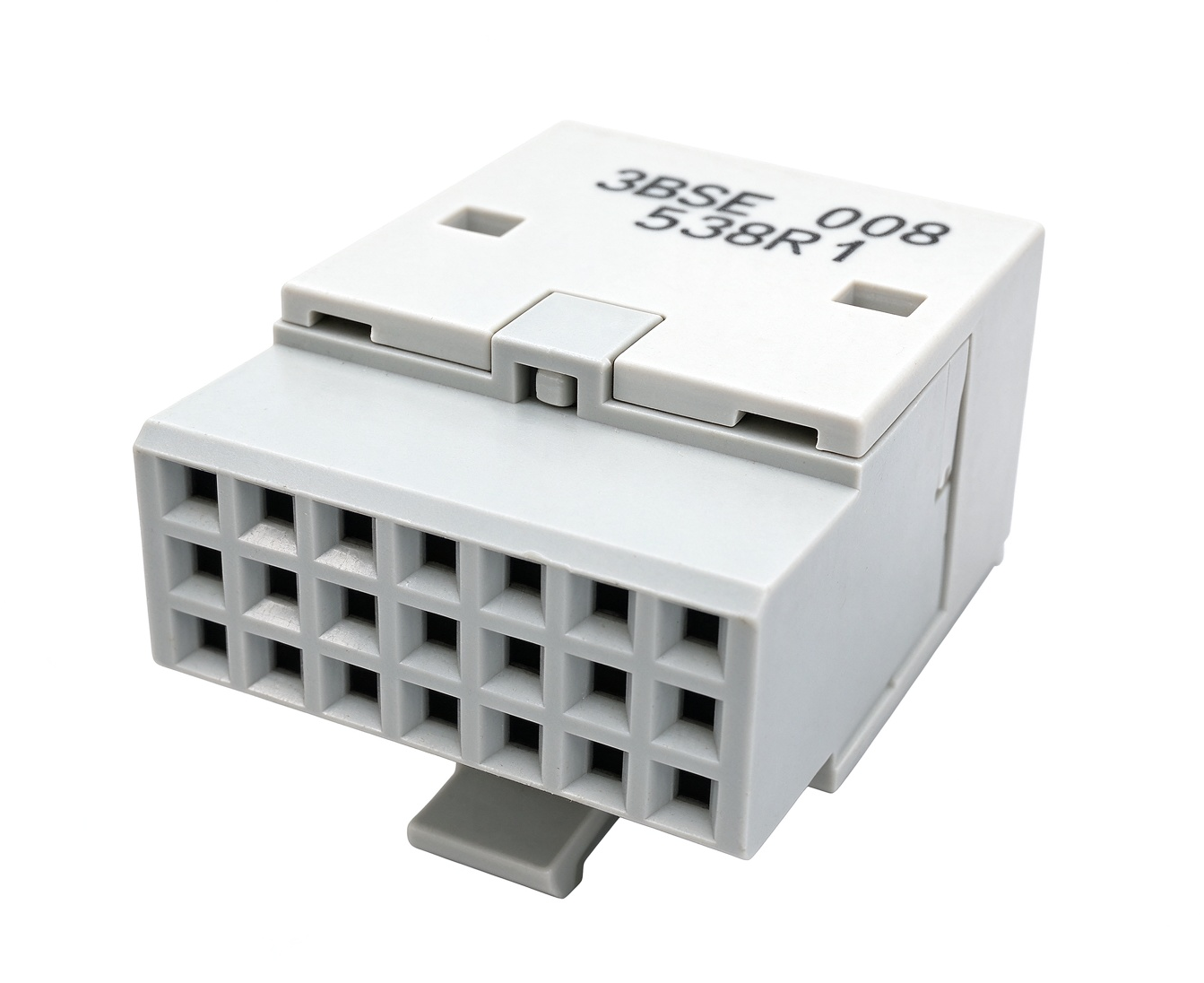
ABB TB807 3BSE008538R1 Modulebus Terminator
Product Overview
The ABB TB807, identified by order number 3BSE008538R1, is a Modulebus terminator designed for use in compatible ABB S800 I/O configurations. Its defined purpose is to terminate the Modulebus in accordance with the arrangement specified for the automation system. Although compact in form, a termination component has an important role in completing the intended hardware configuration and supporting the correct organization of an industrial I/O installation.
In a distributed automation architecture, controllers exchange information with input and output equipment through designated communication and interface structures. The physical arrangement of these components must follow the applicable hardware design. A terminator is therefore not interchangeable with an ordinary signal-processing module: it performs a specific function within the bus arrangement. The TB807 should be identified and applied according to its product designation and the relevant ABB system documentation.
For maintenance teams, engineers, and automation system integrators, the complete designation is important when identifying this component. Both the TB807 type designation and the order number 3BSE008538R1 help distinguish it from other ABB termination products and S800 I/O accessories.
Understanding the Modulebus Termination Function
A Modulebus forms part of the hardware organization used by an automation system to connect compatible I/O components. The exact bus arrangement depends on the selected hardware, installation structure, and system design. Termination requirements must be considered as part of this arrangement rather than as an independent configuration choice.
The ABB TB807 provides the designated Modulebus termination function. Its purpose is to complete the relevant bus configuration where the system design specifies this component. Correct termination is a hardware configuration matter, so the position and application of the terminator should be determined from the installation documentation for the particular S800 I/O arrangement.
It is important to distinguish Modulebus termination from other functions in an automation system. A termination unit does not replace an I/O module, controller, power supply, communication interface, or field terminal assembly. These components have different responsibilities. Selecting the correct part helps preserve the intended architecture and avoids treating different accessories as equivalent simply because they belong to the same product family.
Role in ABB S800 I/O Systems
The ABB S800 I/O family is used in industrial automation installations that require distributed input and output interfaces. Within these installations, hardware components are selected according to the system topology, I/O arrangement, control requirements, and applicable engineering rules. Accessories such as the TB807 support the physical configuration defined for the system.
In a project environment, engineers should confirm which I/O modules and related hardware are installed before choosing a termination component. The presence of an ABB controller or an S800 I/O assembly alone is not sufficient to establish that every accessory is suitable for every position. The applicable product documentation must be used to confirm the required component and its intended placement.
The TB807 is best understood as a dedicated accessory within a compatible Modulebus configuration. It should be included in system drawings, hardware lists, and maintenance records when required by the selected architecture. Keeping accessory information aligned with the actual installation helps reduce identification errors during troubleshooting, system expansion, and planned maintenance.
Product Identification and Ordering Information
Correct product identification is essential when sourcing industrial automation components. For this item, the principal identifiers are:
- Manufacturer: ABB
- Type designation: TB807
- Order number: 3BSE008538R1
- Product description: Modulebus terminator
- Product family context: ABB S800 I/O
These identifiers should be compared with the equipment list, original configuration records, and the identification marking on the existing component where available. The full order number is especially useful because product names and descriptions can be abbreviated in maintenance documents or purchasing systems.
When preparing a replacement-parts list, record the type designation and order number together. If the installed component is difficult to identify, review the relevant assembly drawing and hardware documentation before confirming the selection. Do not assume that another terminator with a similar appearance or a related product-family name has the same application.
Installation and Configuration Considerations
Installation should be carried out by personnel familiar with the applicable ABB automation hardware and the site’s electrical safety procedures. Before handling the component, review the system documentation to determine the intended location, mounting arrangement, and any required isolation measures. Follow the prescribed procedures for the specific installation rather than relying on assumptions based on appearance.
Confirm that the component designation matches the hardware list and that the intended Modulebus arrangement is consistent with the system design. Check the mounting interface and the surrounding assembly for damage, contamination, or signs of mechanical stress. The terminator should be installed only in the position specified by the applicable instructions.
After installation, verify that the hardware arrangement matches the approved configuration and that any covers, retaining features, or associated components are correctly positioned. Where the control system provides relevant diagnostics, review them in accordance with the site’s commissioning or maintenance procedure. The exact checks required will depend on the system configuration and the documentation applicable to the installed equipment.
Maintenance and Troubleshooting
The TB807 should be included in routine hardware identification and maintenance practices whenever it forms part of the installed system. During an inspection, personnel can check that the component is present where required, correctly identified, and positioned in accordance with the system drawing. Visible damage, loose mounting, contamination, or evidence of abnormal environmental exposure should be assessed before the equipment is returned to service.
If an I/O assembly reports an abnormal condition, avoid assuming that the terminator is necessarily the cause. Troubleshooting should consider the complete hardware arrangement, associated I/O components, communication path, installation records, and available diagnostic information. Follow the documented diagnostic sequence and make one controlled change at a time so that any change in system behavior can be evaluated accurately.
When replacement is necessary, compare the existing part number with the replacement designation before installation. After the work is completed, update the maintenance record with the part number, location, date of intervention, and any relevant observations. Consistent records make future troubleshooting more efficient and help ensure that the installed hardware continues to correspond with the approved design.
Spare Parts Planning and System Documentation
Termination components are small items, but they can be important to the completeness of an automation hardware assembly. For this reason, spare-parts planning should cover not only major controllers and I/O modules but also the accessories specified by the system design. The TB807 can be listed by its full ABB order number, type designation, and functional description to support accurate inventory management.
For facilities with multiple automation cabinets or distributed I/O locations, a structured parts register can record the equipment location, installed quantity, related assembly, and applicable documentation reference. These details help maintenance personnel determine whether a requested component belongs to the correct hardware arrangement. They also reduce the risk of ordering a similar-looking item that serves a different termination function.
During system modifications or expansions, engineers should review the complete hardware design instead of adding accessories based only on the previous arrangement. Any changes to the bus structure or related modules should be checked against the current engineering documentation. The TB807 should be used only where the documented configuration calls for this specific Modulebus terminator.
Conclusion
The ABB TB807 3BSE008538R1 is a Modulebus terminator intended for compatible ABB S800 I/O configurations. Its principal role is to provide the designated termination for the Modulebus according to the system’s hardware arrangement. Accurate identification, correct placement, and adherence to the applicable ABB documentation are essential when installing or replacing this component.
For engineers and maintenance teams, retaining the full model designation and order number in equipment records helps support spare-parts selection, troubleshooting, and configuration control. Before use, verify the required part against the installed hardware and the documentation for the specific automation system.

评价
目前还没有评价