
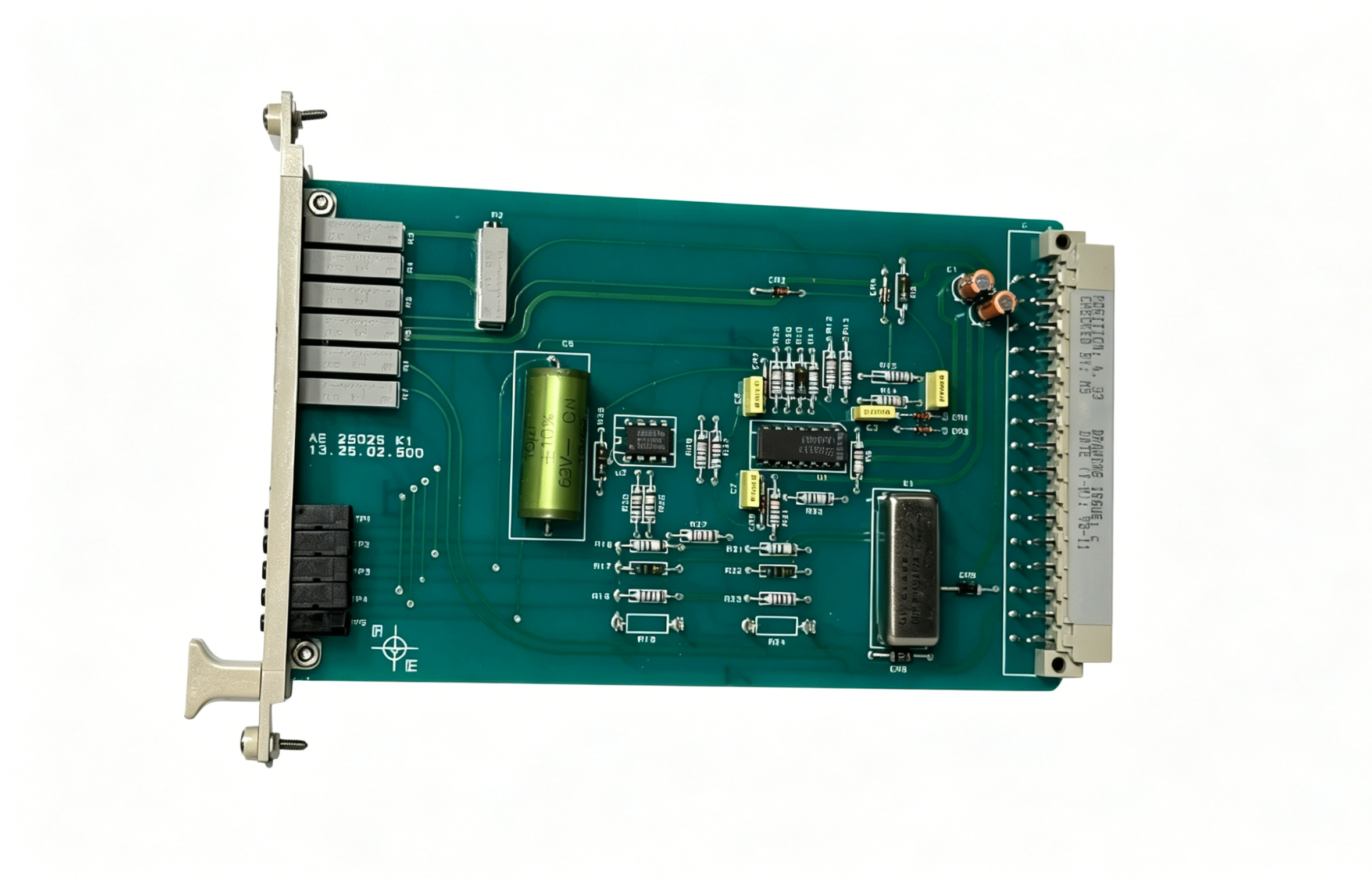
ABB Stal 720092-1 Ramping Device PCB Circuit Board
The ABB Stal 720092-1 Ramping Device PCB Circuit Board is a specialized industrial automation module developed for ABB STAL turbine control systems. Within modern turbine installations, maintaining smooth operational transitions is essential for achieving reliable performance, reducing mechanical stress, and supporting long-term equipment stability. The ABB Stal 720092-1 is designed to perform ramping functions that help regulate how control references change over time, ensuring that turbine systems respond in a controlled and predictable manner.
Industrial turbines operate under a wide range of conditions, including startup procedures, load adjustments, process changes, and shutdown sequences. Sudden changes in operational references can create undesirable effects such as excessive mechanical loading, unstable process conditions, or unnecessary stress on critical equipment. The ABB Stal 720092-1 addresses these challenges by supporting controlled ramping functionality, allowing reference values to change gradually and smoothly throughout the operating cycle.
Designed for ABB STAL Turbine Control Systems
ABB STAL turbine automation platforms incorporate numerous specialized modules that perform dedicated control functions. These systems are commonly utilized within power generation facilities, industrial process plants, petrochemical operations, refineries, and manufacturing environments where dependable turbine control is essential. Control architectures often include speed measurement cards, set value generators, selector modules, frequency controllers, valve position controllers, overspeed protection devices, and ramping modules.
The ABB Stal 720092-1 is designed to operate within this integrated automation environment. Industry references identify the module as a Ramping Device PCB Circuit Board belonging to the ABB STAL turbine controller family. Similar ABB STAL modules include the 720071 Step/Gradient Limiter, 720090 Frequency Dead Band Controller, 720083 Critical Speed Module, and 720087 Set Value Generator, all of which work together to provide comprehensive turbine automation functionality. :contentReference[oaicite:2]{index=2}
Understanding the Role of Ramping Functions
Ramping functions are essential within industrial control systems because they manage how operational references change over time. Rather than allowing abrupt changes to control signals, a ramping device gradually increases or decreases the reference value according to predefined parameters. This process helps maintain smooth equipment operation and reduces the possibility of sudden system disturbances.
In turbine applications, ramping functions can influence speed references, load demands, valve commands, and other control variables. Controlled transitions help improve overall system stability while reducing the impact of operational changes on mechanical components and process equipment. The ABB Stal 720092-1 contributes to these objectives by supporting reference ramp management within ABB STAL control architectures.
Supporting Controlled Acceleration and Deceleration
One of the most important applications of ramping technology is the management of acceleration and deceleration processes. Turbine systems frequently require gradual increases or decreases in operating parameters to maintain stable performance. Sudden acceleration can create excessive stress on rotating equipment, while abrupt deceleration may affect process stability and system reliability.
The ABB Stal 720092-1 is designed to support controlled transitions by regulating the rate at which operational references change. Through precise ramping control, the module helps ensure that turbines respond smoothly to operational demands while maintaining consistent performance and equipment protection.
Signal Conditioning and Reference Management
Industrial automation systems rely on accurate signal processing and reference management to achieve effective control performance. Sensors, operator interfaces, supervisory systems, and control modules continuously exchange information that influences turbine operation. Ramping devices help condition these signals by ensuring that changes occur in a controlled and predictable manner.
The ABB Stal 720092-1 contributes to signal conditioning activities by managing reference transitions within the automation platform. This capability improves communication between control modules and supports coordinated operational behavior across the turbine control system.
Applications in Power Generation Facilities
Power generation facilities require highly reliable turbine control technologies to maintain stable electricity production and efficient plant operation. During startup, synchronization, load adjustment, and shutdown procedures, controlled ramping functions are critical for maintaining operational stability and protecting valuable equipment.
The ABB Stal 720092-1 can be utilized within steam turbine installations, industrial power plants, combined heat and power facilities, and other energy production environments. By supporting gradual operational transitions, the module contributes to efficient power generation and improved equipment reliability.
Industrial Process Control Applications
Beyond power generation, turbine automation technologies are widely utilized throughout industrial sectors such as oil and gas production, petrochemical processing, refining, chemical manufacturing, pulp and paper production, and heavy industrial operations. These facilities often depend on turbine-driven equipment for compressors, pumps, generators, and other critical machinery.
Within these environments, process stability is a primary objective. Sudden changes in operational parameters can negatively impact production efficiency and equipment performance. The ABB Stal 720092-1 helps address these challenges by supporting smooth reference transitions and stable control system behavior.
Integration Within ABB STAL Automation Architectures
ABB STAL turbine control systems are designed around a modular architecture that enables different control functions to work together efficiently. The ABB Stal 720092-1 operates alongside other specialized modules responsible for speed monitoring, frequency regulation, setpoint generation, signal selection, and protective supervision.
This integrated approach allows turbine operators to maintain precise control over complex industrial processes. By contributing ramping functionality to the control architecture, the 720092-1 supports coordinated system operation and improves overall automation effectiveness. Industry references show the ABB STAL family includes numerous dedicated modules that collectively manage turbine control requirements. :contentReference[oaicite:3]{index=3}
Operational Reliability and Equipment Protection
Reliability is a fundamental requirement in industrial turbine applications. Control modules must operate continuously while maintaining accurate performance under changing operational conditions. Ramping devices contribute to reliability by reducing sudden operational transitions that may place unnecessary stress on equipment.
The ABB Stal 720092-1 supports equipment protection objectives by helping ensure smooth operational behavior during startup, load changes, and shutdown sequences. Controlled transitions contribute to longer equipment life, improved operational consistency, and reduced maintenance requirements.
Engineering Principles Behind Reference Ramping
Modern industrial automation systems commonly incorporate ramping functions to improve control quality and system responsiveness. Reference ramping allows operators to define how quickly control values change, providing greater flexibility and precision in process management. ABB automation technologies utilize ramping principles across numerous industrial applications to support stable operation and effective control performance. :contentReference[oaicite:4]{index=4}
The ABB Stal 720092-1 applies these principles within turbine control environments, helping automation systems maintain smooth operational transitions while supporting overall process efficiency and reliability.
Long-Term Value for Industrial Facilities
Organizations operating turbine-based facilities seek automation solutions that deliver long-term reliability, operational efficiency, and maintainability. Ramping modules remain important because they directly influence system stability and equipment performance. Effective ramping control can reduce mechanical stress, improve process consistency, and enhance overall control system effectiveness.
The ABB Stal 720092-1 provides value by supporting these objectives within ABB STAL turbine automation architectures. Its contribution to reference management and operational coordination helps facilities achieve dependable performance across demanding industrial environments.
Conclusion
The ABB Stal 720092-1 Ramping Device PCB Circuit Board is an important component within ABB STAL turbine automation systems. Supporting reference ramping, controlled acceleration and deceleration, signal conditioning, operational coordination, and process stability, the module contributes to reliable turbine performance and efficient industrial automation. Its integration within ABB STAL control architectures makes the ABB Stal 720092-1 a valuable solution for organizations seeking dependable turbine control, equipment protection, and long-term operational efficiency.

评价
目前还没有评价