
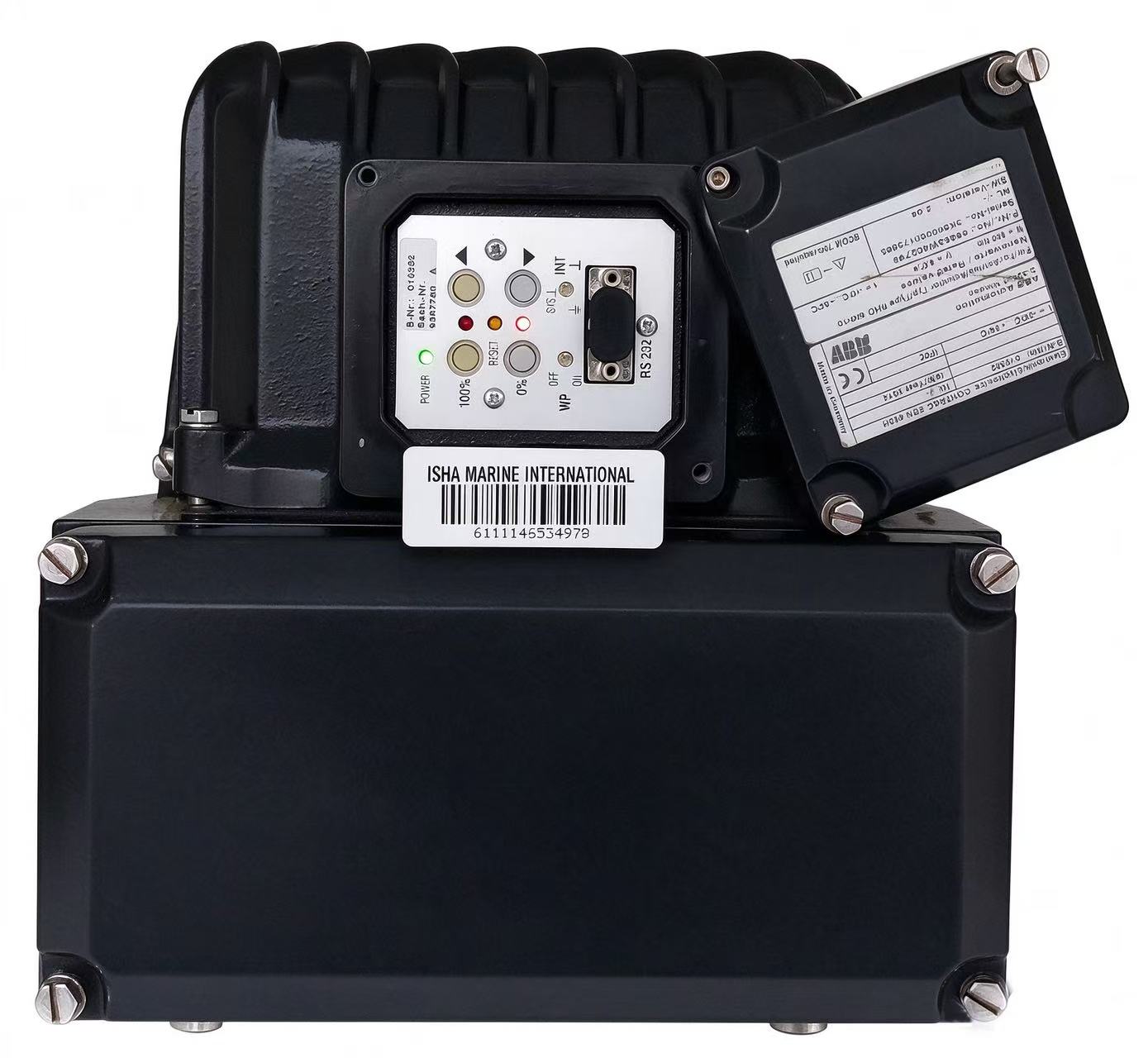
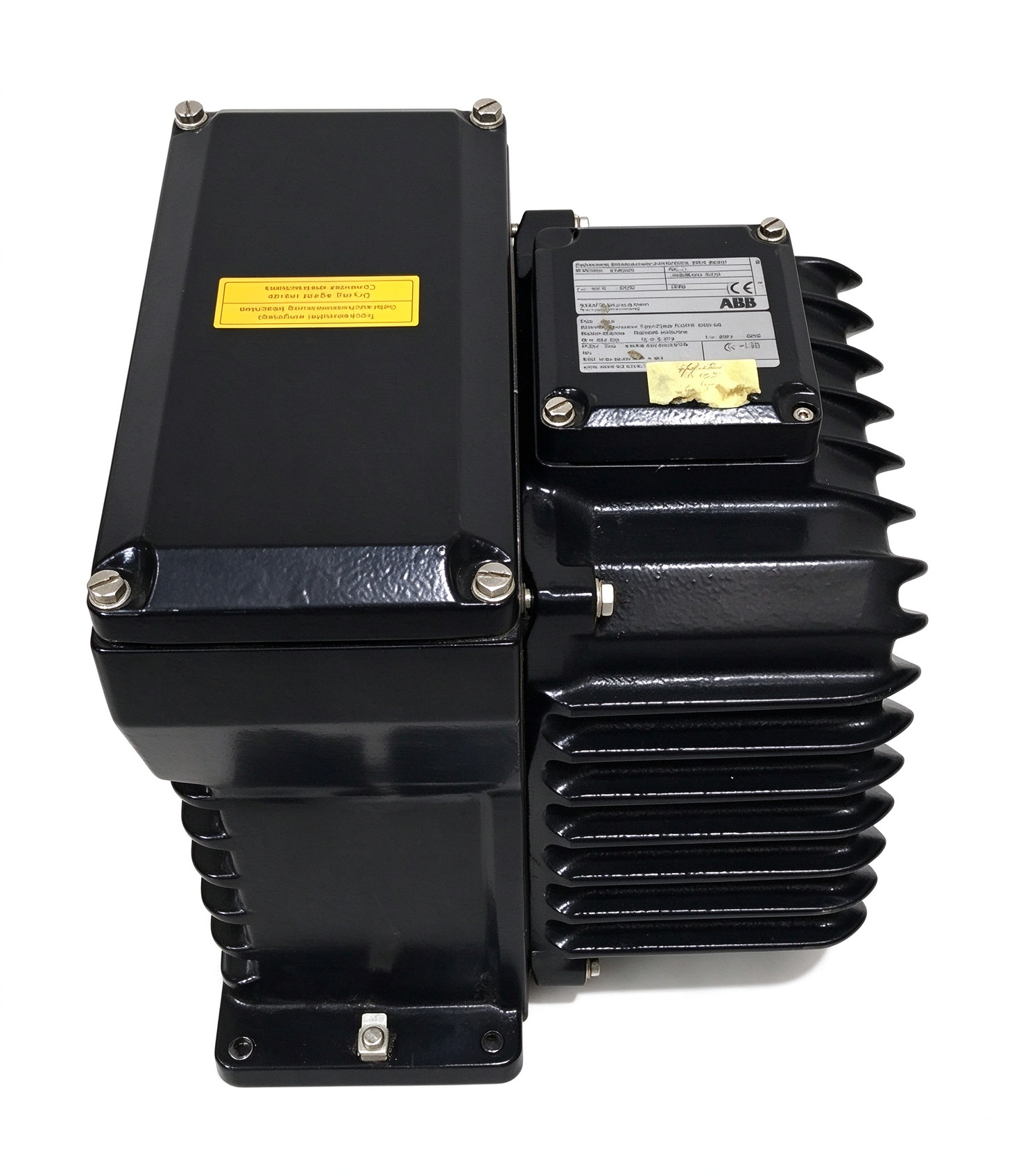
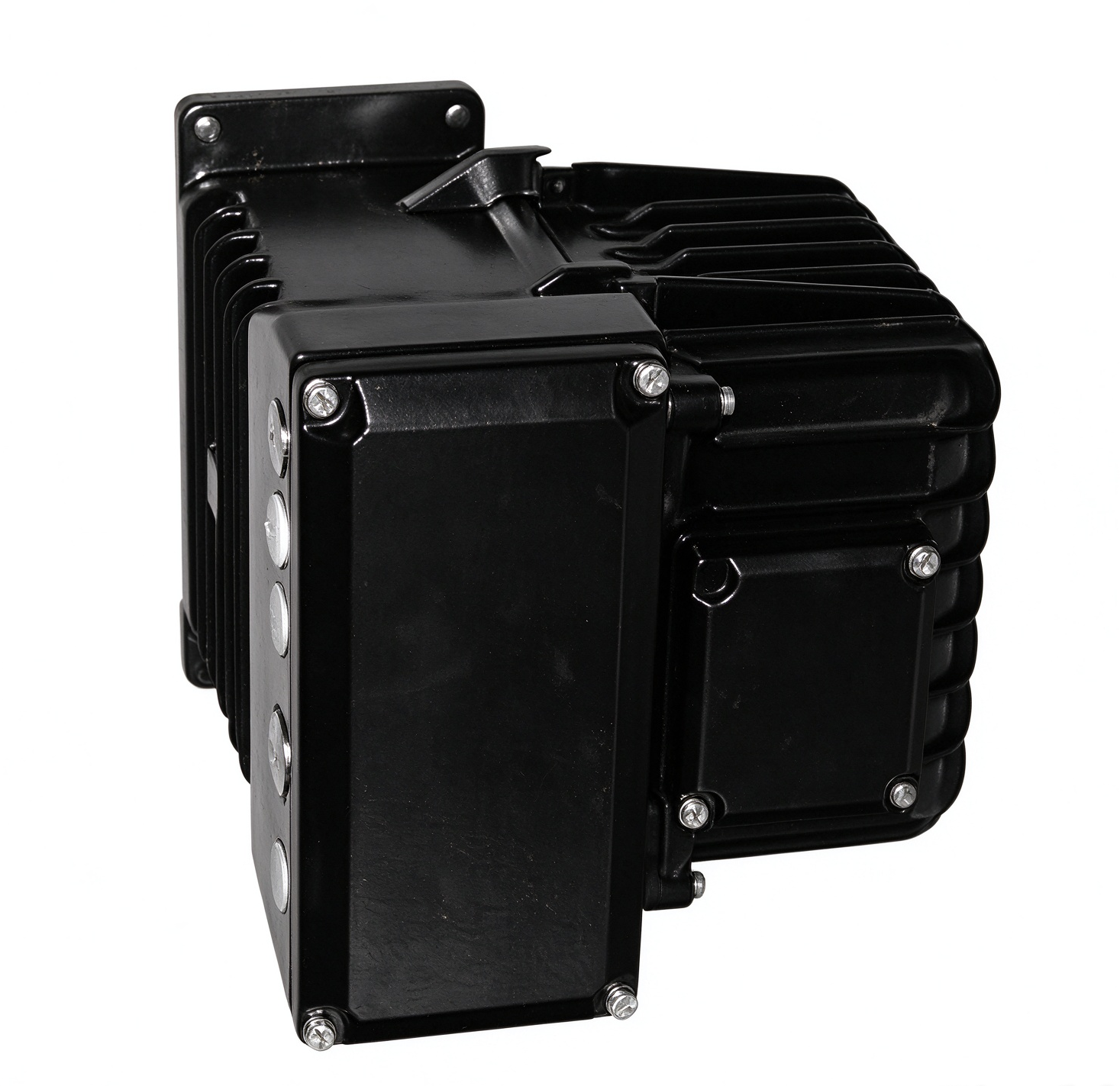
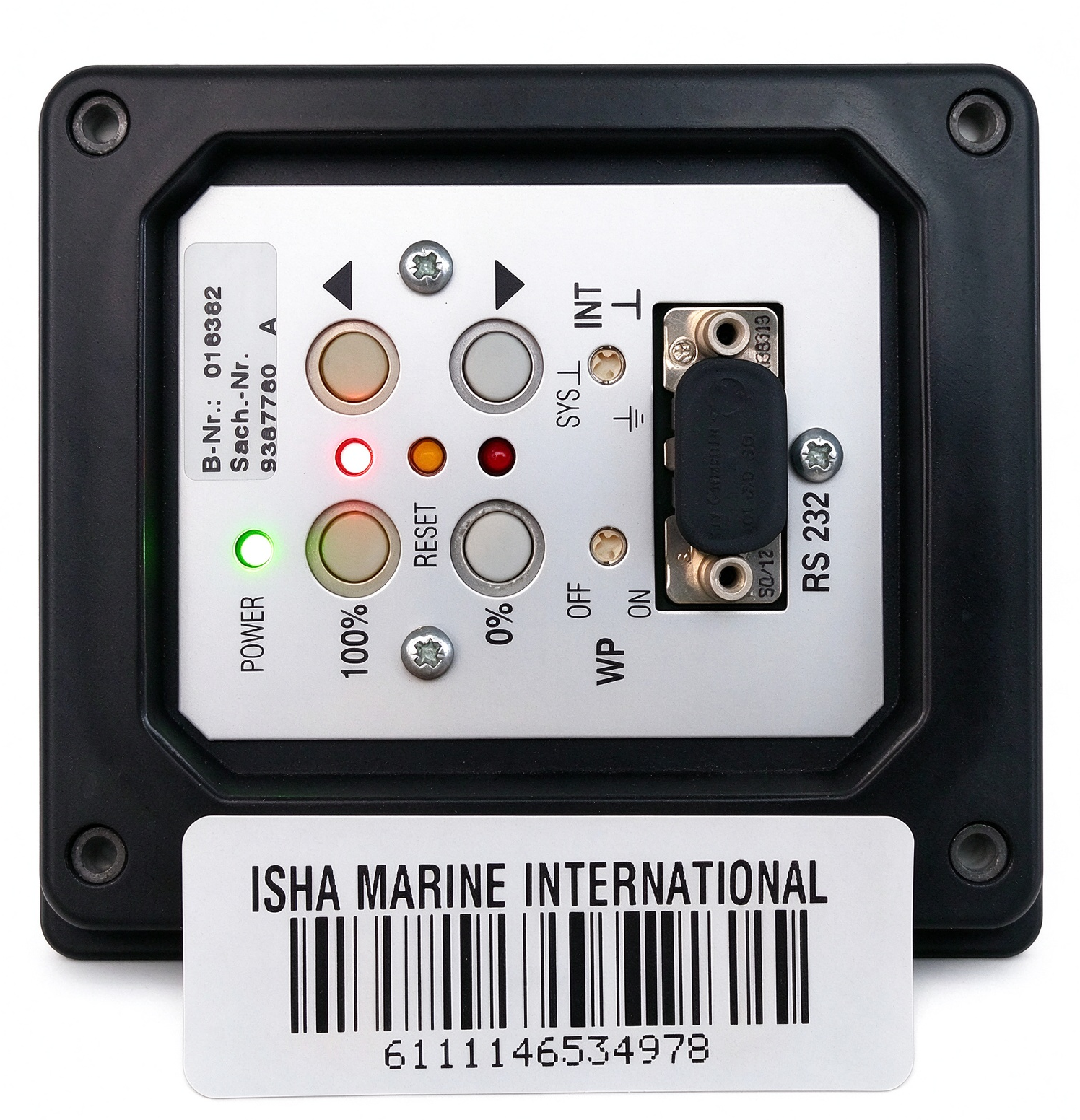
ABB RHDE1250-12 CONTRAC EBN853 Electrical Rotary Actuator
Product Overview
The ABB CONTRAC RHDE1250-12 is an electrical rotary actuator designed for industrial process control applications that require controlled angular movement and accurate positioning. It is part of ABB’s CONTRAC actuator family and is intended for operating compatible final control elements, including valve flaps and other equipment with rotary movement. The RHDE designation identifies an explosion-protected actuator version, making correct application and installation according to the relevant approval documentation particularly important.
The RHDE1250 actuator provides a nominal torque of 1250 Nm. Its motion is controlled through an electronic unit that serves as the interface between the actuator and the process control system. In the configuration identified here, EBN853 is the associated medium-power electronic unit for field installation. The actuator and electronic unit work together to convert control commands into mechanical movement of the connected process equipment.
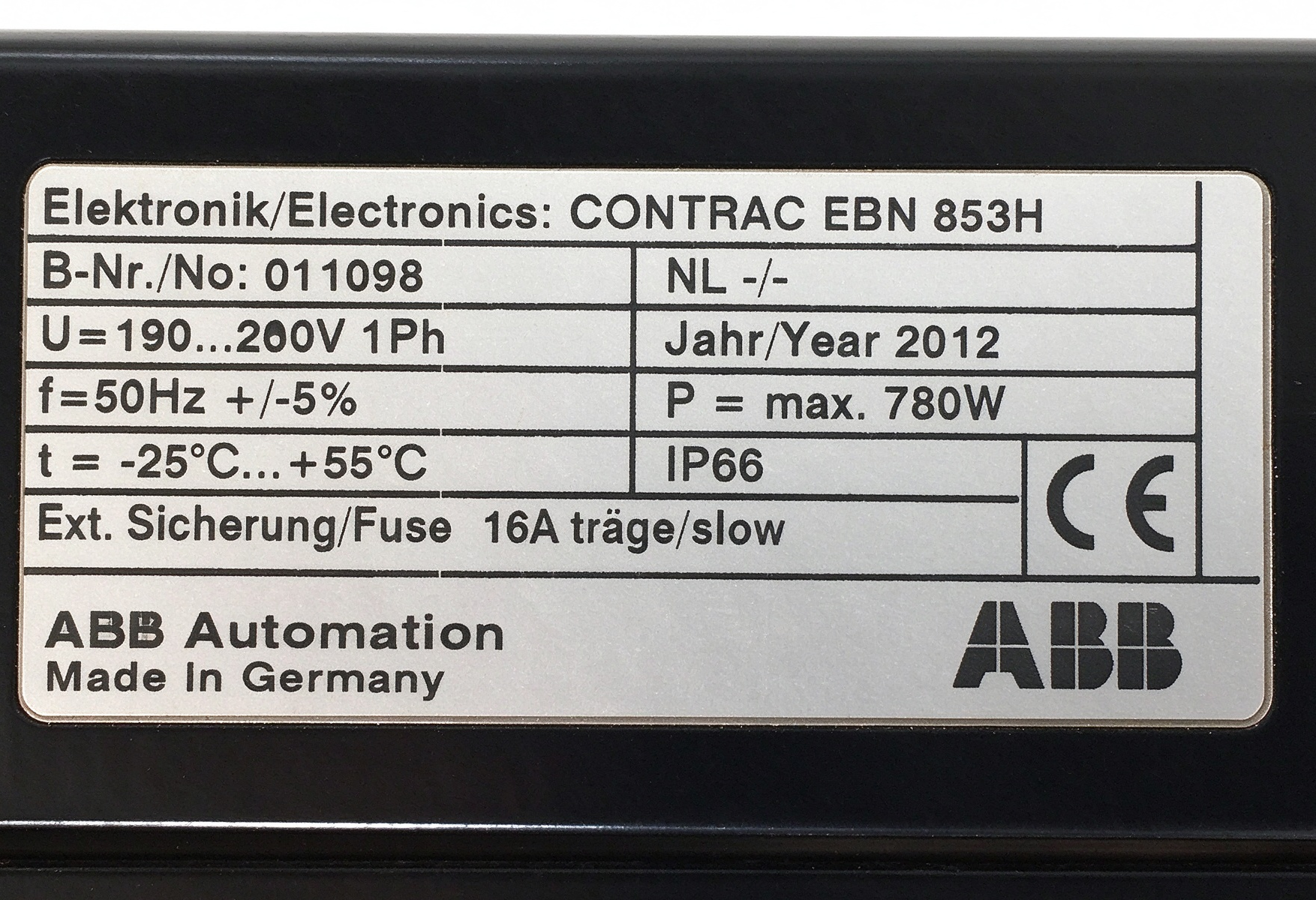
The complete equipment designation should be checked against the nameplates on both the actuator and its electronic unit. The exact actuator variant, electronic configuration, communication interface, and approval requirements must be confirmed from the applicable ABB documentation before installation or replacement.
Operating Principle and Position Control
The CONTRAC actuator system is designed to position a mechanical control element according to a command from the process automation system. Depending on the configured control mode, the actuator can support continuous positioning, three-point control, or compatible bus-based control. The electronic unit processes the command and coordinates actuator movement with the required position.
Continuous positioning is useful where the process variable must be regulated smoothly rather than through simple fully open and fully closed operation. Examples include controlling a valve flap, regulating a process opening, or adjusting another rotary element in response to changes in temperature, pressure, flow, or other process conditions.
The actuator’s control characteristics depend on the selected operating mode, system configuration, mechanical installation, and application settings. Correct commissioning is therefore necessary to establish the intended relationship between the control signal and the mechanical position. The approved control strategy and relevant ABB instructions should be followed when configuring the equipment.
Nominal Torque and Operating Speed
The RHDE1250-12 belongs to the 1250 Nm actuator class. Nominal torque is a key selection parameter because it determines the actuator’s specified mechanical output capability for the intended application. The required torque depends on the connected valve or control element, process forces, friction, operating conditions, and the mechanical characteristics of the installation.
For the RHDE1250-12 model, ABB lists a rated operating speed range of 12 to 900 seconds per 90 degrees. This range describes the time associated with a quarter-turn movement under the relevant product specifications. The selected operating speed should match the process response requirements and the limits of the connected mechanical equipment.
Torque and speed should be evaluated together when selecting an actuator. A control element that requires a high operating torque or a specific movement time must be checked against the actuator’s published performance data. Do not assume that every torque and speed combination is available under all operating conditions. Consult the model-specific data sheet for the applicable limits.
EBN853 Electronic Control Unit
The EBN853 is an electronic unit used with compatible ABB CONTRAC actuators. It provides the electrical and control interface between the actuator and the higher-level control system. ABB identifies EBN853 as a medium-power field-mounted electronic unit, while other units in the CONTRAC family serve different power ranges or installation arrangements.
The electronic unit processes incoming control commands and supports communication of the relevant operating signals. Depending on the selected configuration, control may use analog and digital signals or a supported fieldbus interface. The actual interface and available functions must be verified from the EBN853 nameplate, wiring diagram, and configuration documentation.
Compatibility between the actuator and electronic unit is essential. When replacing either component, confirm that the actuator model, electronic-unit type, wiring arrangement, supply requirements, and control interface match the intended system configuration. A similar-looking electronic unit should not be assumed to be interchangeable without checking ABB’s compatibility information.
Explosion-Protected Design and Safety
The RHDE series is designed for applications requiring an explosion-protected electrical actuator configuration. Equipment used in potentially explosive atmospheres must be selected according to the hazardous-area classification, the applicable certification, the gas or dust group where relevant, and the temperature-class requirements of the installation.
The explosion-protected designation does not mean that every RHDE variant is suitable for every hazardous location. The precise approvals and permitted operating conditions must be verified from the product nameplate and the documentation supplied for the specific model. The electronic unit, cable entries, connections, and associated installation components must also meet the requirements of the overall installation.
Installation, wiring, inspection, and maintenance should be performed by qualified personnel following the relevant safety standards and ABB instructions. The equipment must not be modified in a way that compromises its certified protection characteristics. Where a hazardous-area installation is involved, all work should follow the site’s approved permit and isolation procedures.
Process Applications
Electrical rotary actuators are used where a process control system needs to adjust a mechanical element through a defined angular movement. Compatible applications can include valve flaps, rotary valves, and other process equipment designed for actuator-driven positioning. The RHDE1250-12 is suitable only when its torque, movement range, speed, mechanical interface, and approvals meet the actual application requirements.
In industrial process plants, controlled actuator positioning can help regulate the movement of fluids or gases, manage process conditions, and support automated operation. The electronic control unit allows the actuator to respond to the selected command structure, enabling integration with an appropriate control system.
Application engineering should consider the mechanical load, required travel, control response, environmental conditions, and operating frequency. The connected control element must be compatible with the actuator’s output arrangement and operating limits. Mechanical alignment and mounting quality are also important for reliable movement and long-term performance.
Installation and Commissioning
Before installation, verify the actuator and electronic-unit model numbers, mounting dimensions, mechanical connection, and electrical requirements. Review the applicable ABB operating instructions and the approved plant drawings. The actuator must be mounted securely, with suitable alignment between its output mechanism and the connected control element.
Electrical wiring should follow the correct terminal diagrams for the EBN853 and the specific actuator variant. Verify the supply arrangement, protective earthing, signal wiring, cable routing, and any required shielding. Communication settings and input/output assignments should be consistent with the control system design.
Commissioning should include checks of the mechanical travel, operating direction, position feedback, command response, and relevant diagnostic indications. Confirm that the configured movement limits are appropriate for the connected equipment and that the actuator does not impose unintended loads on the mechanical assembly. For explosion-protected installations, all required enclosure, cable-entry, and protection measures must be maintained.
Maintenance and Troubleshooting
ABB describes the CONTRAC actuator family as designed for long maintenance intervals, subject to the relevant model and operating conditions. Maintenance planning should nevertheless follow the instructions for the specific RHDE model, electronic unit, and installation environment. Routine checks may include inspecting the mounting arrangement, mechanical coupling, wiring, enclosure condition, and available diagnostic information.
If the actuator does not respond correctly, review the control command, electronic-unit status, supply conditions, wiring, and mechanical load. A failure to reach the commanded position may be associated with an incorrect signal, configuration issue, obstruction, mechanical problem, or incompatible operating limits. Troubleshooting should proceed systematically and follow the manufacturer’s diagnostic guidance.
Before replacing components, record the complete model designations and relevant configuration information. Confirm the compatibility of the proposed replacement and repeat the necessary functional checks after maintenance. In hazardous areas, any inspection or repair must follow the applicable safety and certification requirements.
Product Identification and Replacement Planning
Accurate identification is important when maintaining a CONTRAC actuator installation. The actuator designation RHDE1250-12 identifies the actuator model, while EBN853 identifies the associated electronic control unit in the configuration described here. These designations should be recorded separately and linked to the equipment location and relevant technical documentation.
Before selecting a replacement, confirm nominal torque, rated operating speed, operating angle, mounting arrangement, electronic-unit compatibility, supply requirements, control interface, and explosion-protection approvals where applicable. A replacement decision should consider the complete system rather than relying solely on a similar model name or appearance.
Keeping accurate equipment records supports maintenance planning, commissioning, and future troubleshooting. Records should include the full nameplate information, applicable wiring diagrams, configuration settings, and relevant inspection history.
Conclusion
The ABB CONTRAC RHDE1250-12 is an explosion-protected electrical rotary actuator with a nominal torque of 1250 Nm and a specified operating-speed range of 12 to 900 seconds per 90 degrees. The EBN853 electronic unit provides the control interface for compatible actuator configurations and supports integration with industrial automation systems according to the selected setup.
Correct application requires verification of mechanical requirements, control interfaces, electronic-unit compatibility, installation conditions, and hazardous-area approvals where relevant. Using the complete equipment designations and following the applicable ABB documentation helps support safe installation, reliable positioning, and effective maintenance.


评价
目前还没有评价