
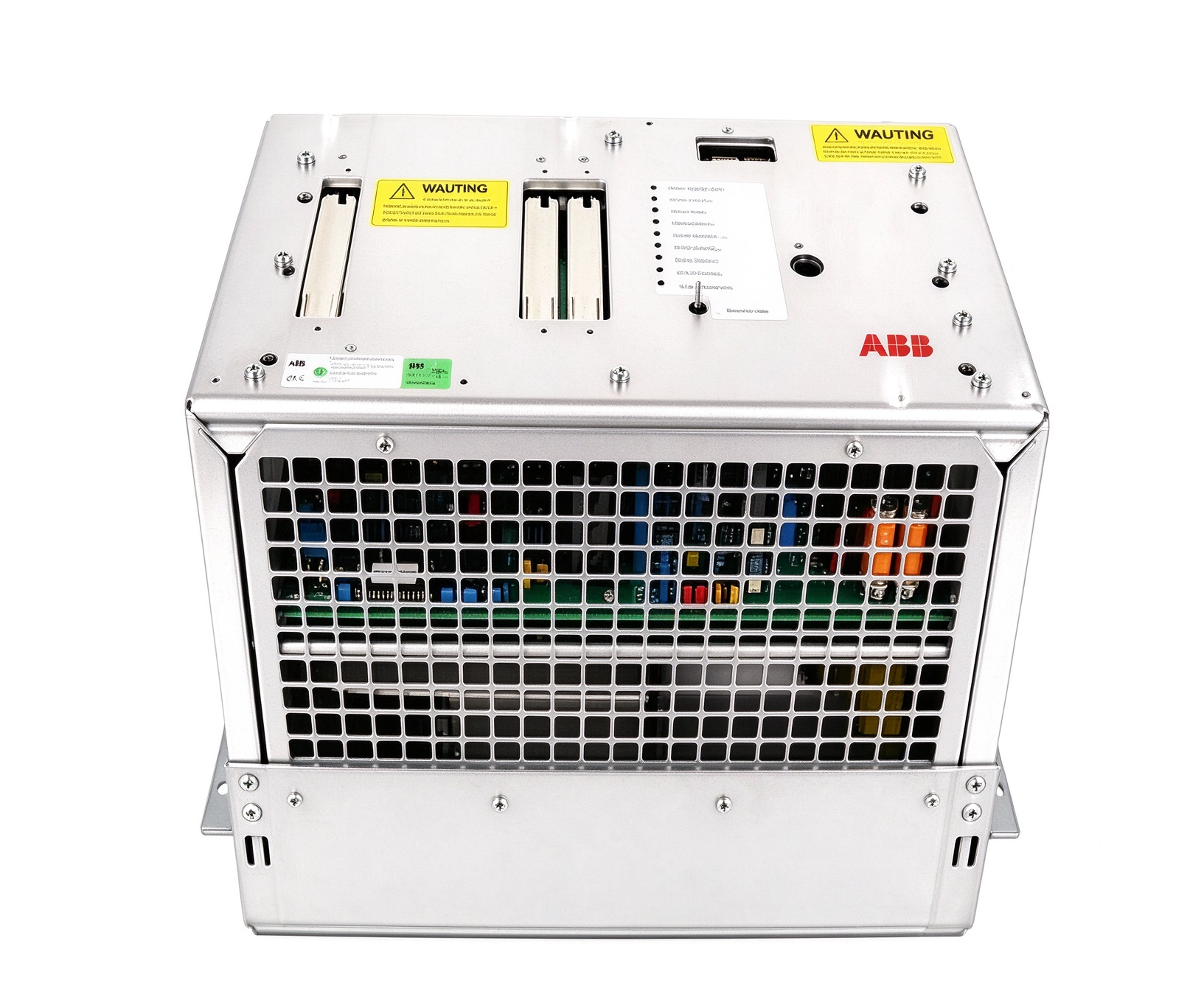
ABB PFSA103D STR-A1 1006-X1 Industrial Control Component
Product Overview
The ABB PFSA103D STR-A1 1006-X1 is identified by a product designation associated with industrial automation equipment. Information available for the PFSA103D designation connects it with tension control and signal processing applications. These functions are important in production systems where material movement, process stability and coordinated machine operation must be managed consistently. The complete designation should be retained when identifying the component for engineering documentation, equipment maintenance or replacement planning.
Industrial control components support the relationship between field measurements, control logic and the equipment responsible for carrying out a process. Depending on the architecture of the installation, signal processing may help make measurement information available to a control system, where it can be evaluated alongside operating conditions and process requirements. The specific function and interfaces of the ABB PFSA103D STR-A1 1006-X1 must be established from the applicable technical documentation rather than inferred from its designation alone.
For maintenance engineers and system integrators, accurate identification is particularly important when working with established automation installations. Product codes, hardware revisions and configuration markings can distinguish components that appear similar but have different electrical or functional characteristics. Recording the full model designation provides a useful starting point for checking the intended application and confirming whether a component is appropriate for a particular system.
Product Identification and Technical Information
The following table summarizes the information that can be associated with the product designation and identifies details requiring confirmation before engineering use. It deliberately avoids assigning unsupported ratings or interface specifications to this particular configuration.
| Manufacturer | ABB | Product Designation | PFSA103D STR-A1 1006-X1 | Base Model Reference | PFSA103D | Product Category | Industrial automation component; exact hardware type to be confirmed | Associated Functional Area | Tension control and signal processing | Application Environment | Industrial machinery and process automation, subject to configuration verification | Electrical Ratings | Refer to the applicable product specification and nameplate | Communication Interfaces | Confirm from the relevant hardware documentation | Connection Details | Confirm using the corresponding terminal or connection diagram | Hardware Revision | Verify against the installed component markings |
|---|---|
Role in Industrial Tension Control
Tension control is used in production processes that move continuous materials through rollers, guides, winding stations or other mechanical handling equipment. Maintaining an appropriate level of tension helps reduce material deformation, wrinkling, slipping and inconsistent winding. Typical materials include paper, film, plastic sheet, foil and other flexible substrates processed in continuous production lines.
A tension control system generally combines measurement devices, control electronics, machine controllers and actuators. Measurement information is evaluated against process requirements, and the control architecture determines the necessary adjustments to drive speed, torque or other relevant operating variables. Signal processing is an important part of this arrangement because the control system must receive and interpret information in a form appropriate to its configured functions.
The PFSA103D designation is associated with tension-control and signal-processing applications in available product information. However, the exact responsibilities of the STR-A1 1006-X1 configuration, including its inputs, outputs and control behavior, should be confirmed from the corresponding technical records. This distinction is essential when engineers are evaluating the component for an existing production line or considering its role in a revised automation design.
Industrial Applications
Continuous material processing is one of the principal application areas in which tension-related control functions are relevant. Paper and converting machinery may require stable material handling as a web moves between processing stations. Printing equipment must maintain suitable material conditions to support consistent registration and prevent excessive stretching or wrinkling. Film and plastic processing lines may also rely on coordinated web movement during winding, unwinding and subsequent production operations.
Winding and unwinding systems present additional control challenges because the effective roll diameter and material load can change throughout the operating cycle. The control system must account for the relevant machine characteristics and sensor information to maintain the desired process behavior. Signal-processing components can form part of the wider control arrangement, although their exact contribution depends on the installed hardware and system configuration.
These examples describe general industrial contexts associated with tension control rather than a guarantee that every application is supported by the ABB PFSA103D STR-A1 1006-X1. Suitability should be assessed using the machine documentation, electrical requirements, environmental conditions and verified functions of the specific component.
System Integration Considerations
Integrating an industrial control component requires a clear understanding of the existing control architecture. Engineers should identify the connected controller, field instruments, power supply, signal types and communication arrangements before planning installation. The electrical characteristics and interface requirements of the selected component must match the system design, and all connections should follow the applicable manufacturer documentation.
For a tension-control installation, the complete signal path deserves particular attention. Measurement devices must provide information suitable for the receiving control hardware, while scaling, signal conditioning and configuration settings must be consistent with the process requirements. Incorrect assumptions about signal ranges or terminal assignments can lead to unreliable measurements, unexpected machine responses or equipment damage.
When replacing a component, the existing wiring and system configuration should be documented before disconnection. The replacement designation, hardware revision, mounting arrangement and electrical interfaces must be checked rather than relying only on a similar model name or physical appearance. Where the original system includes application-specific settings or controller logic, their preservation and restoration should follow an approved maintenance procedure.
Maintenance and Operational Reliability
Preventive maintenance helps industrial automation systems operate consistently over time. Inspection activities should consider the component’s physical condition, mounting security, connector integrity and the condition of surrounding wiring. Dust, moisture, vibration, elevated temperature and electrical interference can affect industrial electronic equipment, depending on its design and the installation environment.
If a tension-control process becomes unstable, troubleshooting should begin with the complete system rather than assuming that a single component is responsible. Engineers may need to examine sensor condition, mechanical alignment, material behavior, drive performance, control settings and signal connections. Comparing observed measurements with expected process behavior can help identify whether the problem originates in the measurement chain, control configuration or mechanical equipment.
Any electrical inspection, disconnection or component replacement should be performed by qualified personnel using the site’s isolation procedures and applicable safety requirements. Power supply limits, permissible environmental conditions and any special handling instructions must be taken from the relevant technical documentation. Unsupported assumptions about internal circuitry or test points should be avoided.
Model Verification and Replacement Selection
The full designation ABB PFSA103D STR-A1 1006-X1 should be used when checking component identity. Before approving a replacement, compare the markings on the installed hardware with the available equipment records and the applicable manufacturer specification. Confirm whether the suffix identifies a particular configuration, revision, assembly or other product-specific distinction.
Additional checks should cover electrical ratings, physical dimensions, mounting details, connection assignments and compatibility with the host control system. If the component belongs to a legacy installation, the original machine documentation and maintenance records may provide important context. A matching base model designation alone does not establish that two complete configurations are interchangeable.
Where documentation is incomplete, obtaining a clear image of the nameplate or printed circuit board markings can help support further identification. The final selection should be based on verified technical information and the requirements of the intended application.
Product Summary
The ABB PFSA103D STR-A1 1006-X1 is an industrial automation component whose base model designation is associated with tension control and signal processing. Such functions are relevant to continuous material handling, winding systems and other production processes that depend on coordinated measurements and control responses. Correct identification, careful system integration and structured maintenance are essential when evaluating the component for industrial use. Because the exact suffix-specific specification has not been independently confirmed, electrical characteristics, interfaces and replacement compatibility should be verified against the applicable ABB documentation before implementation.
评价
目前还没有评价