

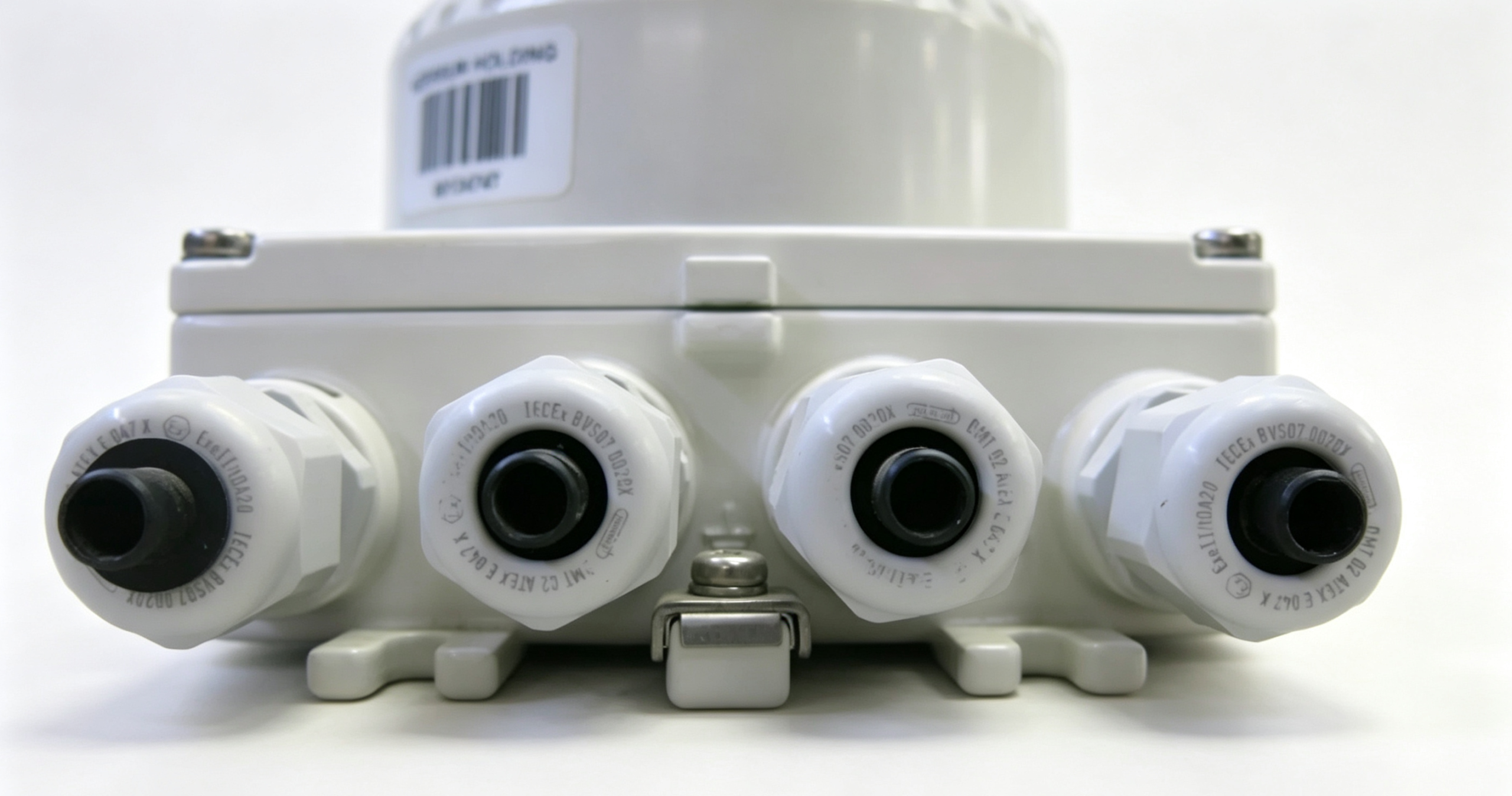
ABB FET321-C0A1B1C0H2M5 Remote Transmitter
ABB FET321-C0A1B1C0H2M5 is a configured FET321 remote transmitter for the ABB ProcessMaster FEP300 electromagnetic flowmeter system. The FET321 is designed for remote-mounted flow measurement installations, where the transmitter and electromagnetic flow sensor are installed separately. Within the ProcessMaster FEP300 family, FET321 represents the transmitter version without explosion protection. The corresponding remote sensor family includes FEP321, while FET325 is used for specified explosion-protection configurations.
The transmitter is responsible for processing the measurement signal supplied by the electromagnetic flow sensor and converting that information into useful process values and control signals. It combines measurement electronics, display functions, output interfaces, communication capability and diagnostic functions in one process instrumentation unit.
Product Identification
The complete identification supplied for this product is ABB FET321-C0A1B1C0H2M5. The base model FET321 identifies the remote transmitter platform, while the configuration suffix specifies selected product options. ABB uses structured ordering codes for ProcessMaster products, allowing individual flowmeter systems to be configured according to sensor characteristics, electrical interfaces, housing arrangements, communication requirements and documentation options.
- Manufacturer: ABB
- Product family: ProcessMaster FEP300
- Transmitter model: FET321
- Configuration: C0A1B1C0H2M5
- Instrument type: Remote electromagnetic flowmeter transmitter
- Associated sensor family: FEP321
- Primary application: Industrial flow measurement
- Mounting concept: Remote transmitter installation
- Standard communication: HART
- Display: Configurable graphical display
ProcessMaster FEP300 System
The FET321 forms part of the ABB ProcessMaster FEP300 electromagnetic flowmeter platform. ProcessMaster is designed for industrial process flow measurement and uses a modular architecture that separates the sensor and transmitter when a remote installation is required.
The electromagnetic sensor detects the movement of conductive process media, while the transmitter evaluates the electrical measurement signal and converts it into flow information. This separation allows the sensing element to be positioned at the process pipeline while the transmitter can be located in a more accessible position for operation, monitoring and maintenance.
ABB documentation identifies FET321 and FET325 as remote transmitter models for the ProcessMaster FEP300 system, with FET321 corresponding to the version without explosion protection.
Electromagnetic Flow Measurement
Electromagnetic flow measurement is based on the interaction between a conductive liquid and a magnetic field. As the process medium passes through the measuring tube, the sensor generates a measurement signal related to the velocity of the conductive fluid.
The FET321 processes this signal and calculates the corresponding flow information. This measurement principle has no mechanical moving parts inside the flow tube, making electromagnetic flow measurement suitable for many industrial liquid applications.
The ProcessMaster FEP300 documentation specifies that the system can cover nominal diameters from DN 3 to DN 2000, depending on the selected sensor configuration. The available liner and electrode combinations also vary according to the process application.
Remote Transmitter Architecture
A remote transmitter arrangement separates the electronic transmitter from the flow sensor. This can be advantageous when the pipeline is located in an area where direct transmitter installation is inconvenient or where the operator interface needs to be positioned at a more accessible location.
The FET321 is therefore not an independent flow sensor. It functions as the electronic measurement and control unit associated with a compatible electromagnetic flowmeter sensor.
Correct sensor and transmitter matching is important because the complete measurement system depends on the electrical and configuration relationship between the sensor and transmitter. ABB ProcessMaster incorporates sensor data storage technology that allows sensor information and transmitter configuration data to be managed as part of the system architecture.
Graphical Display
The FET321 transmitter uses a configurable graphical display for process information and device operation. ABB describes the display as configurable, allowing the presentation of measurement information to be adapted to the requirements of the application.
The transmitter interface also supports menu-based configuration. ABB documentation describes an Easy Set-up function that guides users through important configuration parameters and indicates permissible parameter ranges during configuration.
This structure allows process engineers and operators to configure measurement parameters and review device information directly through the transmitter interface.
4–20 mA Current Output
The ProcessMaster FEP300 transmitter provides a 4–20 mA current output for process integration. ABB specifies that the current output can operate as an active or passive signal depending on the selected configuration.
A 4–20 mA signal is widely used in industrial instrumentation because it can represent a measured process variable over a standardized current range. The signal can be connected to a compatible control system input, process indicator, programmable controller or distributed control system.
The exact output configuration should be verified from the complete FET321 ordering code and the electrical documentation for the specific transmitter.
Pulse Output
The FET321 also supports a configurable pulse output. Pulse signals can be used for flow-related counting functions in systems that require accumulated measurement information.
The ProcessMaster documentation specifies that the pulse output can be configured locally as active or passive using software. This provides flexibility when integrating the transmitter with different types of receiving equipment.
The actual pulse configuration should correspond to the electrical requirements of the connected control or counting system.
Switch Output and Switch Input
The ProcessMaster FEP300 transmitter includes programmable switch output and switch input functions implemented through optoelectronic coupling. These interfaces allow additional process or device-related functions to be incorporated into the automation system.
Depending on the configured application, switch functions can be associated with process conditions, status information or control requirements. Their precise function is determined through transmitter configuration rather than being limited to a single fixed application.
HART Communication
HART communication is specified as the standard communication protocol for the ProcessMaster FEP300 transmitter. HART provides a digital communication channel that can be used together with the analog measurement signal.
This allows configuration information, diagnostic information and measurement-related data to be exchanged between the transmitter and compatible process instrumentation equipment.
The ProcessMaster platform can also be configured with PROFIBUS PA or FOUNDATION Fieldbus communication options. These communication choices depend on the specific transmitter configuration and should not be assumed solely from the base FET321 model.
Diagnostics and Device Monitoring
Diagnostic capability is an important part of the ProcessMaster FEP300 architecture. ABB describes advanced diagnostics that monitor both the device and the process. Diagnostic parameters can be assigned limit values, and the transmitter can generate corresponding status information when specified conditions occur.
The system uses status messages in accordance with NAMUR recommendations and can display help text associated with diagnostic conditions. This approach can assist operators in identifying measurement-system conditions and understanding potential causes of abnormal operation.
Diagnostic information can also be accessed through compatible service and configuration tools, supporting systematic troubleshooting of the measurement system.
Measurement Performance
ABB documentation specifies a default measurement error of 0.4 percent of rate for the ProcessMaster FEP300, with an optional increased accuracy of 0.2 percent of rate for applicable configurations.
The actual performance of a complete flowmeter depends on the selected sensor, transmitter configuration, calibration arrangement, process conditions and installation. Therefore, a performance value from the general FEP300 family should not automatically be interpreted as the exact specification of every FET321 configuration.
Correct sensor selection and appropriate installation remain essential to achieving the intended measurement performance.
Signal Processing and Filtering
The FET321 transmitter applies electronic signal processing to the measurement signal received from the electromagnetic sensor. ABB describes advanced filtering methods designed to distinguish measurement information from unwanted signal noise.
This signal-processing capability is important in industrial environments where electrical interference, process conditions and other factors can affect the measurement signal.
The transmitter’s processing functions therefore form an important part of the overall measurement chain between the flow sensor and the plant control system.
Sensor and Transmitter Relationship
The FET321 is designed to operate with the remote sensor architecture of the ProcessMaster FEP300. ABB identifies FEP321 as the remote sensor without explosion protection and FEP325 as the corresponding sensor family for explosion-protection configurations.
The sensor provides the primary measurement signal, while the FET321 performs signal processing, calculation, display and output functions. This division of responsibilities allows the sensor to remain at the process pipeline while the transmitter can be installed separately.
For a complete flowmeter system, the sensor model, transmitter model, nominal diameter, liner, electrode material, process connection and electrical configuration should all be considered together.
Technical Specifications
| Parameter | ABB FET321-C0A1B1C0H2M5 |
|---|---|
| Product family | ProcessMaster FEP300 |
| Transmitter model | FET321 |
| Instrument type | Remote electromagnetic flowmeter transmitter |
| Associated sensor family | FEP321 |
| Explosion protection | Non-explosion-protected FET321 configuration |
| Current output | 4–20 mA, active or passive according to configuration |
| Pulse output | Configurable active or passive |
| Switch output | Programmable optoelectronic coupler |
| Switch input | Programmable optoelectronic coupler |
| Standard communication | HART |
| Optional communication | PROFIBUS PA, FOUNDATION Fieldbus |
| Display | Configurable graphical display |
| Configuration code | C0A1B1C0H2M5 |
Housing and Installation
The FET321 is available in remote transmitter housing configurations intended for industrial installation. ABB documentation provides both single-compartment and dual-compartment transmitter housing arrangements within the FET321 and FET325 product architecture.
The FET321 single-compartment housing has a compact field-mount design with provisions for installation and cable connection. ABB technical drawings identify a protection class of IP67 for the applicable field-mount housing arrangement.
Installation should provide suitable access to the display and operating interface while protecting the transmitter from environmental conditions outside its specified limits.
Power Supply
The FET321 platform supports several power supply configurations. ABB documentation lists 100–230 V AC at 50 Hz, 24 V AC/DC at 50 Hz, 100–230 V AC at 60 Hz, and 24 V AC/DC at 60 Hz within the available ordering options.
The exact power supply option for ABB FET321-C0A1B1C0H2M5 should be confirmed from the complete ordering code and nameplate rather than inferred from the FET321 base model.
Process Applications
The ProcessMaster FEP300 system is intended for industrial process flow measurement. Electromagnetic flow measurement is particularly relevant for conductive liquids in applications such as water systems, process pipelines, chemical processes, utility systems and general industrial fluid handling.
The suitable process medium, conductivity, temperature, pressure, liner material and electrode material must be evaluated when selecting the complete flowmeter system.
The FET321 provides the electronic interface required to transform the sensor measurement into useful process information for operators and automation systems.
Configuration Code Considerations
ABB uses detailed ordering structures for ProcessMaster equipment. The configuration suffix C0A1B1C0H2M5 should therefore be treated as part of the complete product identification rather than as a simple model variation.
For technical identification, it is important to retain every character shown on the transmitter nameplate. Different configuration fields can determine the electrical interface, housing, communication method, documentation language, power supply and other product characteristics.
If the complete ordering code differs from the abbreviated code supplied here, the complete nameplate code should take precedence for engineering documentation and equipment identification.
Maintenance and Troubleshooting
Maintenance of an ABB FET321 should include inspection of the transmitter housing, cable connections, power supply, sensor connection and communication interface. The display and diagnostic messages can provide useful information when investigating measurement or system conditions.
If the transmitter does not display the expected flow value, troubleshooting should consider the complete measurement chain. Sensor installation, process conditions, signal cable connections, grounding, configuration parameters and transmitter electronics can all affect the final measurement.
The diagnostic functions of the ProcessMaster platform can help distinguish device-related conditions from process-related conditions and support a structured troubleshooting procedure.
Industrial Automation Integration
ABB FET321 can be integrated into industrial automation systems through its available analog, pulse, switch and digital communication interfaces. A typical installation may transmit the measured flow value to a control system through the 4–20 mA output while HART communication provides additional configuration and diagnostic information.
Where a fieldbus configuration is selected, PROFIBUS PA or FOUNDATION Fieldbus can provide a digital process communication interface. The selected communication architecture should correspond to the plant control-system requirements and the transmitter’s actual configuration.
This flexibility makes the FET321 suitable for process installations where flow measurement must become part of a larger control, monitoring and asset-management architecture.
Conclusion
ABB FET321-C0A1B1C0H2M5 is a configured FET321 remote transmitter belonging to the ABB ProcessMaster FEP300 electromagnetic flowmeter platform. The FET321 is designed to work with a remote electromagnetic flow sensor and provides signal processing, flow calculation, graphical display, configurable outputs, communication and diagnostic functions.
The ProcessMaster FEP300 platform supports a broad range of sensor sizes and configurations, while the transmitter provides a flexible interface for industrial automation systems. ABB specifies a 4–20 mA current output, configurable pulse output, programmable switch functions, HART communication and optional fieldbus communication within the FET321 platform.
For ABB FET321-C0A1B1C0H2M5, the complete configuration code should always be retained when documenting the equipment. Because ABB uses structured ordering codes with multiple option fields, exact power supply, communication, housing and other configuration characteristics should be confirmed from the complete product identification and applicable technical documentation. This provides the most reliable basis for engineering selection, system integration and maintenance documentation.
评价
目前还没有评价