
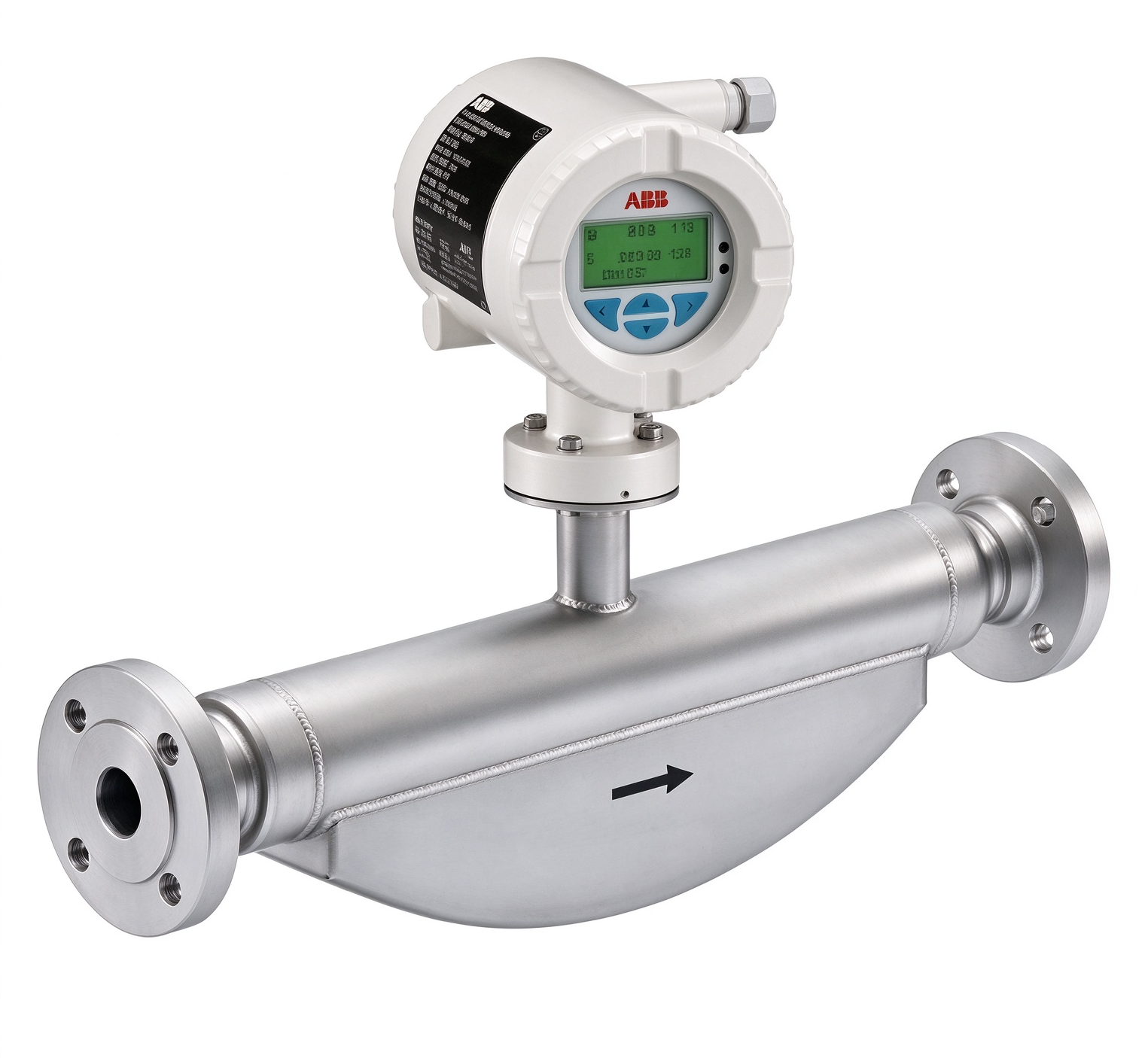
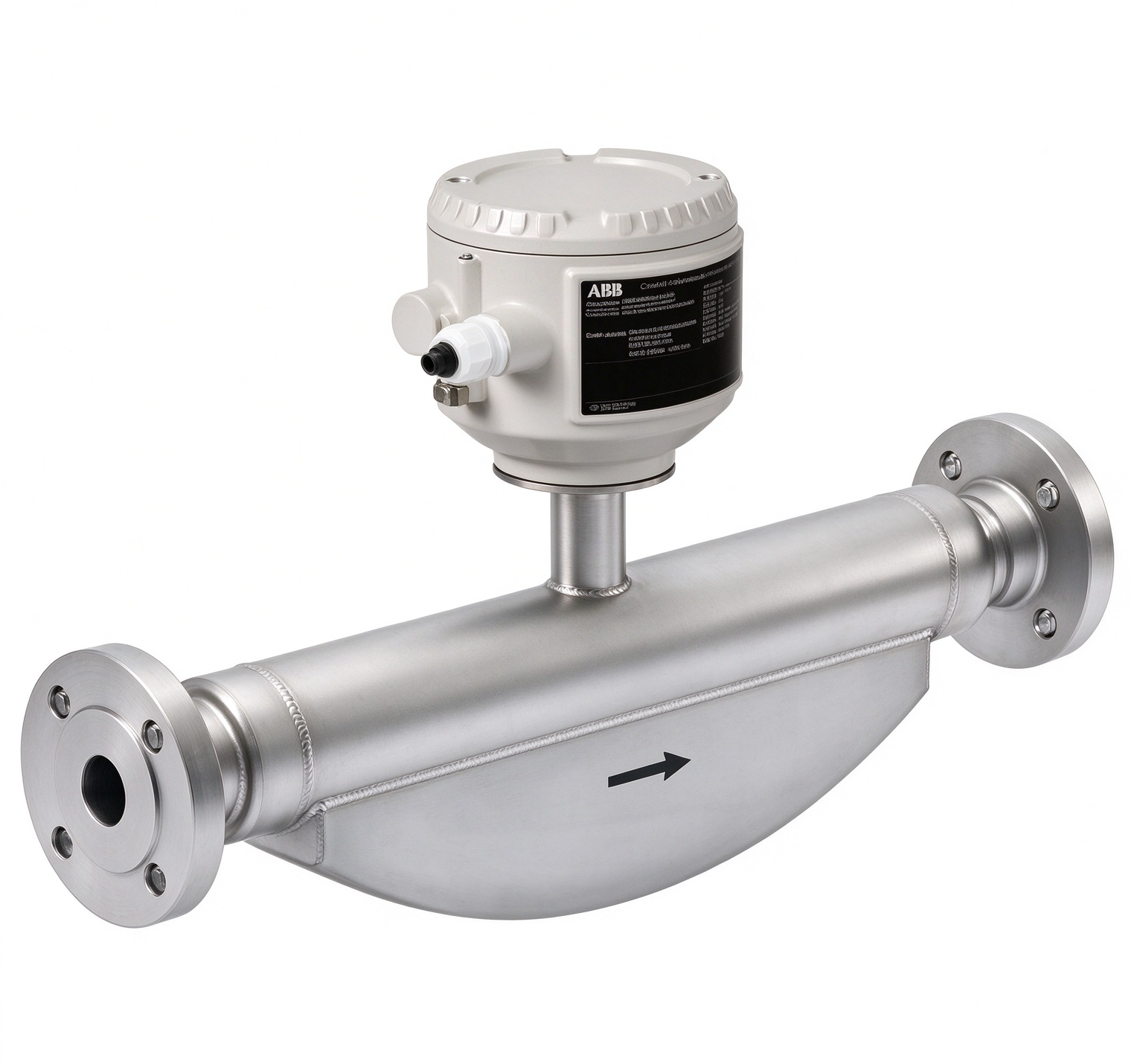
ABB FCB450 CoriolisMaster Coriolis Mass Flowmeter
Product Overview
The ABB FCB450 CoriolisMaster is a Coriolis mass flowmeter developed for industrial process measurement. It belongs to ABB’s FCB400 flowmeter family and is designed to provide reliable measurement information for process monitoring, control, and operational analysis. The instrument combines a Coriolis measurement principle with electronic signal processing and configurable interfaces for integration into industrial measurement systems.
Unlike flowmeters that infer flow primarily from fluid velocity or differential pressure, a Coriolis meter measures the effects associated with the movement of fluid through vibrating measuring tubes. The instrument processes the resulting signals to determine mass flow. Depending on the configuration and application, the FCB450 can also provide volume flow, density, and process temperature information.
The FCB450 can be used in a wide range of industrial environments where process quantities need to be measured and communicated to a control or monitoring system. Typical considerations include the fluid properties, required measurement range, operating pressure and temperature, installation arrangement, and selected communication interface. The exact capabilities of an individual instrument should always be confirmed using its product documentation and configuration information.
Operating Principle of Coriolis Measurement
Coriolis flow measurement uses the interaction between moving fluid and vibrating measuring tubes. As fluid passes through the tubes, Coriolis forces produce a measurable change in the tube motion. Sensors detect the resulting movement, and the transmitter processes these signals to calculate the mass flow rate.
Mass flow measurement is valuable in applications where the amount of material passing through a process line is more important than velocity alone. Examples include ingredient dosing, chemical processing, blending, product transfer, and process monitoring. Since the measurement is based on the Coriolis effect, the technology can provide direct mass flow information without relying solely on a volumetric measurement combined with an assumed density.
The density measurement capability can provide additional information about the process medium. Together with temperature and flow data, density can support process monitoring and certain concentration-related applications when the appropriate configuration and calculation methods are used. Application-specific requirements should be reviewed before using the instrument for a particular concentration or quality measurement task.
Measurement Capabilities
The ABB FCB450 supports multiple process measurement functions. Depending on the selected version and application, these can include mass flow, volume flow, density, and measuring-medium temperature. Having several process variables available from one instrument can simplify process monitoring and reduce the need for separate measurement devices in suitable installations.
Mass flow is commonly used for material accounting, batch control, dosing, and process regulation. Volume flow can be useful when the application requires a volumetric quantity. Density measurement can help operators observe changes in product composition or process conditions, while temperature information provides additional context for interpreting the measured fluid properties.
ABB’s published product information lists FCB450 measurement performance options with mass-flow accuracy values of up to 0.1% of rate, depending on the applicable specification and configuration. The actual achievable performance depends on the meter selection, process medium, operating conditions, installation, and the stated reference conditions. Users should consult the relevant technical specification rather than applying one accuracy value to every instrument or application.
Transmitter, Display, and Configuration
The FCB450 incorporates electronic measurement processing and a user interface for viewing information and configuring supported parameters. The interface allows operators and commissioning personnel to work with the instrument’s available measurement values, settings, and diagnostic information in accordance with the applicable product documentation.
The ABB FCB400 family supports modular input and output arrangements, with the available functions depending on the selected configuration. These interfaces can be used to exchange measurement signals and status information with external automation equipment. The required signal types, output assignments, and communication options should be established during instrument selection and engineering.
Configuration should reflect the process design. Relevant parameters may include measurement units, output assignments, communication settings, and application-specific functions. Before changing settings on an operating instrument, personnel should understand how the changes may affect connected control systems, alarm handling, and process operation. Configuration records should be retained to support maintenance and future troubleshooting.
Communication and Automation Integration
The ABB FCB450 supports several communication options across its available configurations. Published options for the FCB400 family include HART, PROFIBUS DP, PROFIBUS PA, Modbus RTU, and Ethernet-based interfaces such as PROFINET, Modbus TCP, and EtherNet/IP. Web-based configuration and monitoring capabilities are also available with supported Ethernet variants. Not every interface is included in every instrument, so the ordered configuration must be checked before system integration.
Communication enables measured values and instrument status to be transferred to PLCs, distributed control systems, supervisory platforms, or other compatible automation equipment. The selected interface determines the physical connection, protocol, available data, and configuration requirements.
Before commissioning, engineers should verify the network design, communication settings, addressing, signal mapping, and compatibility with the receiving system. Where analog outputs are used, the assigned measurement variable and scaling should be confirmed. Where digital communication is used, the required process values and diagnostic information should be checked against the integration specification.
Successful integration requires more than establishing a physical connection. The receiving control system must interpret the transmitted values and status information correctly. Functional verification should therefore be included in the commissioning plan.
Industrial Applications
The FCB450 can be applied in industrial processes where mass flow and related fluid properties are important. Potential applications include chemical production, food and beverage processing, pharmaceutical manufacturing, pulp and paper operations, and energy-related process systems, subject to the instrument’s material, hygienic, pressure, temperature, and approval requirements.
In blending operations, mass flow data can support the control of different ingredients entering a production process. In chemical plants, flow and density information may assist operators in monitoring process streams. In pulp and paper applications, suitable configurations can support measurements involving process liquids. In food and beverage production, the selected instrument must be appropriate for the required hygienic design and cleaning conditions.
Application suitability must be evaluated for the actual medium and operating environment. Engineers should confirm fluid compatibility, process connection requirements, expected flow range, operating pressure, temperature limits, and any required industry or hazardous-area approvals before specifying the instrument.
Installation Considerations
Correct installation is important for obtaining dependable measurement results. Before installing the FCB450, review the relevant ABB instructions and confirm the process connection, pipe arrangement, mounting position, and environmental conditions. The selected meter must be suitable for the fluid and the expected process conditions.
Consider the possibility of gas entrainment, solids, changing fluid properties, vibration, and pressure fluctuations where relevant to the application. The installation should follow the manufacturer’s recommendations for the selected meter size and design. Pipework should support the instrument appropriately and should not impose mechanical loads beyond the specified limits.
Electrical connections and grounding must follow the applicable wiring diagrams. Verify the supply arrangement and the selected signal or communication interfaces before energizing the instrument. After installation, confirm that the measured values, units, outputs, and communication data correspond to the process design.
Maintenance and Troubleshooting
Routine maintenance should follow the site’s maintenance plan and the instructions applicable to the installed instrument. Periodic checks can include reviewing diagnostic messages, examining the process and electrical connections, confirming measurement plausibility, and checking communication with the control system.
If a measurement appears unstable or inconsistent, investigate the process conditions and installation before assuming an instrument fault. Potential causes to consider include changes in the medium, gas entrainment, mechanical vibration, incorrect configuration, wiring problems, or communication errors. Diagnostic information provided by the instrument can help narrow the investigation.
Where verification or calibration is required, use the procedures and equipment appropriate to the instrument and application. Record relevant configuration details and maintenance findings so that changes in measurement behavior can be evaluated over time. Any replacement or configuration change should be checked against the original instrument specification and the requirements of the control system.
Product Selection and Identification
When selecting or identifying an ABB FCB450, the model designation alone may not provide every detail needed for an installation. Additional information can include meter size, process connections, wetted materials, transmitter configuration, electrical supply, communication interface, input and output options, and required approvals.
These details should be confirmed from the complete ordering code, instrument nameplate, technical specification, and project documentation. Similar model names do not necessarily indicate identical configurations. Maintaining accurate equipment records helps engineers identify the installed version and determine whether a proposed replacement meets the same process and integration requirements.
Conclusion
The ABB FCB450 CoriolisMaster is an industrial Coriolis mass flowmeter designed to provide mass flow measurement and, depending on configuration, additional process information such as volume flow, density, and temperature. Its available interfaces support integration into a range of industrial measurement and automation architectures.
Correct application depends on selecting a suitable meter configuration, verifying process conditions, following the installation instructions, and confirming the communication and measurement settings. Reviewing the product documentation and maintaining accurate configuration records help support reliable measurement and long-term process management.

评价
目前还没有评价