
ABB CS1000BR Traction Current Sensor 1000A RMS
ABB CS1000BR Overview
ABB CS1000BR is a CS1000 series traction current sensor designed for the measurement of DC, AC and
pulsating currents. The sensor provides galvanic insulation between the primary and secondary circuits,
allowing high-current electrical measurements to be transferred to the measurement and control system
without a direct electrical connection between the two circuits.
The CS1000BR is the horizontal-mounting version within the CS1000 current sensor family. Its nominal
primary current is 1000 A RMS, making it suitable for applications where high-current measurement is
required. The sensor is associated with traction applications and fixed installations and is designed
as part of ABB’s CS family of electronic current sensors.
The product identification CS1000BR is important when selecting the correct sensor because the CS1000
family also includes vertically mounted versions and variants with additional screen configurations.
The complete commercial reference should therefore be checked against the equipment design and
installation requirements.
Current Measurement Function
The primary function of ABB CS1000BR is to convert the measured primary current into a corresponding
secondary output signal that can be processed by a control, monitoring or measurement system. This
arrangement allows large electrical currents to be measured using a controlled secondary signal.
The sensor is intended for DC, AC and pulsating current measurement. This capability makes the CS1000BR
particularly suitable for electrical systems where the measured current may not be limited to a simple
sinusoidal AC waveform. The electronic sensing technology allows the sensor to respond to different
current conditions within its specified operating range.
Galvanic insulation between the primary and secondary circuits is an important characteristic of the
sensor. It separates the high-current primary circuit from the lower-level measurement circuit and
provides an electrical isolation interface for the associated monitoring or control equipment.
1000 A RMS Nominal Primary Current
ABB specifies a nominal primary current of 1000 A RMS for the CS1000BR. This rating identifies the
sensor’s intended primary-current measurement class and distinguishes it from other members of the
CS sensor family, such as lower-current CS300, CS503 and CS500 versions.
The 1000 A RMS nominal rating is particularly relevant to traction and industrial electrical systems
where substantial current levels must be monitored. When selecting a current sensor, the primary
current rating should be evaluated together with the maximum expected current, supply voltage,
measuring resistance, output requirements and installation arrangement.
The CS1000BR should therefore be considered as a complete measurement component rather than simply
as a high-current transformer. Its electronic characteristics and supply requirements form part of
the measurement system in which the sensor operates.
Measuring Range
Under a supply condition of ±24 V with a tolerance of ±5%, the ABB CS1000BR has a specified measuring
range of approximately ±2000 A peak. This provides a substantial measurement range around the current
reference point and allows the sensor to monitor positive and negative current conditions within its
specified limits.
The sensor documentation also defines the maximum measurable conditions according to the available
supply voltage and measuring resistance. These electrical parameters should be considered together
when integrating the sensor into a measurement circuit because the output capability depends on the
operating conditions of the complete interface.
Users should refer to the applicable technical documentation when determining the exact measurement
configuration. The nominal current rating alone does not define every operating condition of the
sensor.
Secondary Output
The CS1000BR has a specified secondary current of 200 mA at the nominal primary current. This
secondary output provides the interface between the measured primary current and the connected
measurement or control electronics.
The relationship between the primary current and secondary output is an important characteristic when
designing or checking a measurement circuit. The connected equipment must be compatible with the
sensor’s specified output conditions, supply voltage and measuring resistance.
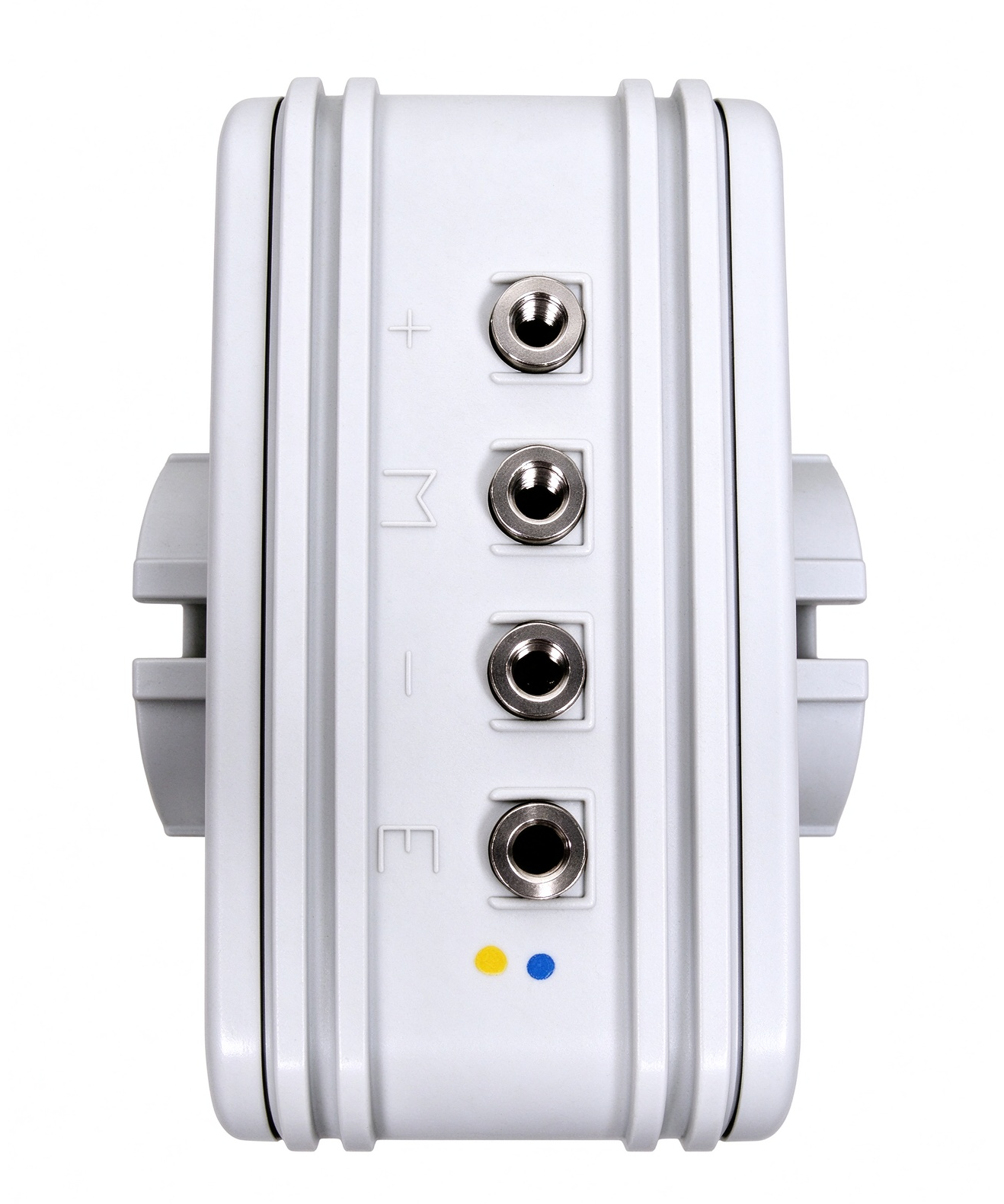
During system integration, the secondary connection should be treated as part of the complete
measurement circuit. Wiring, connection terminals, supply arrangement and connected measurement
resistance should follow the applicable system design and technical documentation.
Accuracy and Linearity
ABB technical information specifies an accuracy of up to ±0.5% at nominal primary current and 25°C
for the CS1000BR. The sensor also provides a defined linearity characteristic, allowing the secondary
output to maintain a predictable relationship with the primary current across the specified operating
range.
Accuracy in an industrial current measurement system depends not only on the sensor itself but also on
the electrical environment, supply conditions, temperature and connected measurement circuit. For
this reason, the sensor’s published characteristics should be evaluated together with the requirements
of the complete application.
The CS1000BR is specified for operation over a broad temperature range. ABB documentation provides
electrical characteristics for conditions extending from approximately -40°C to +85°C, which is
relevant for demanding traction and industrial environments.
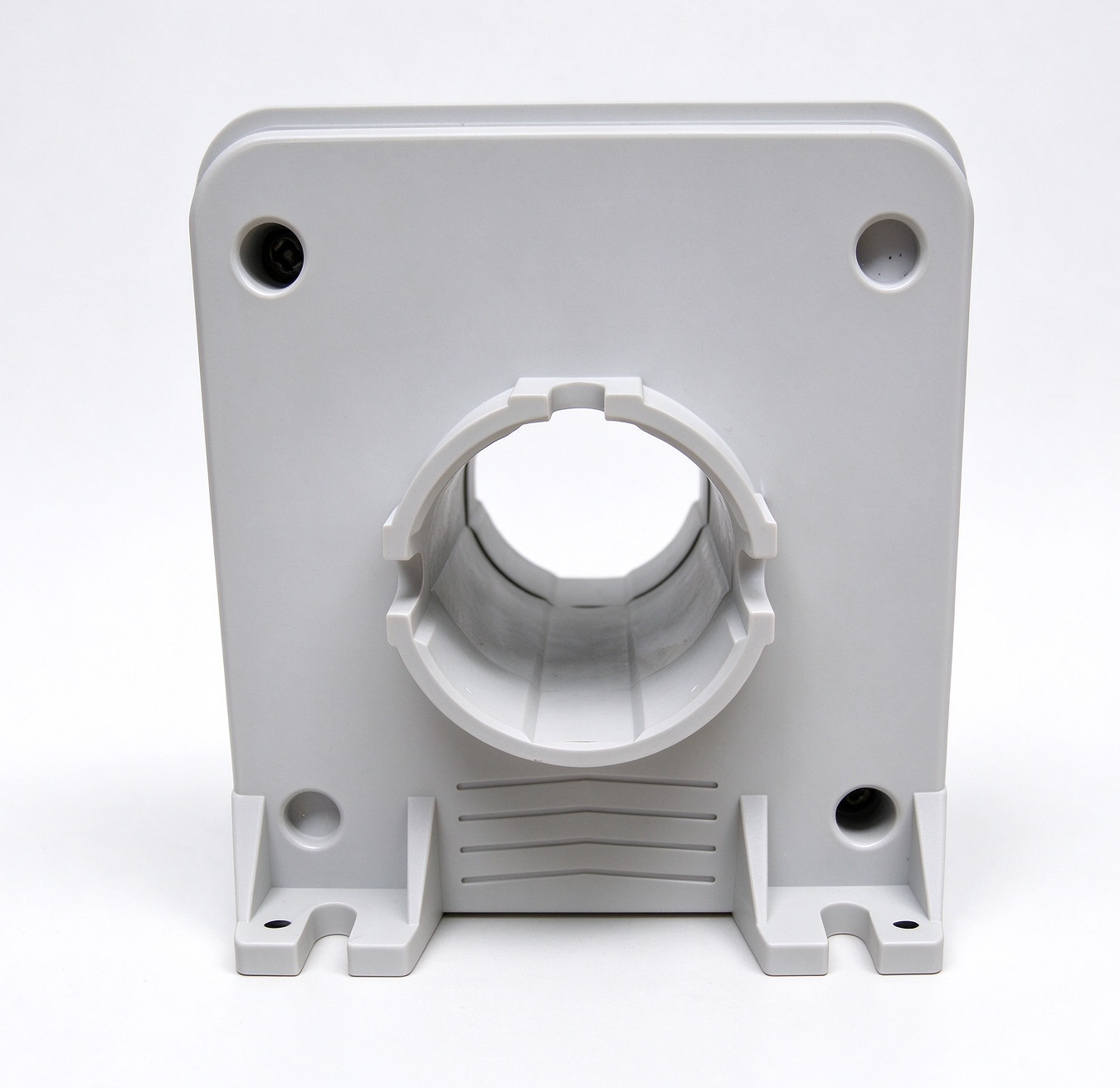
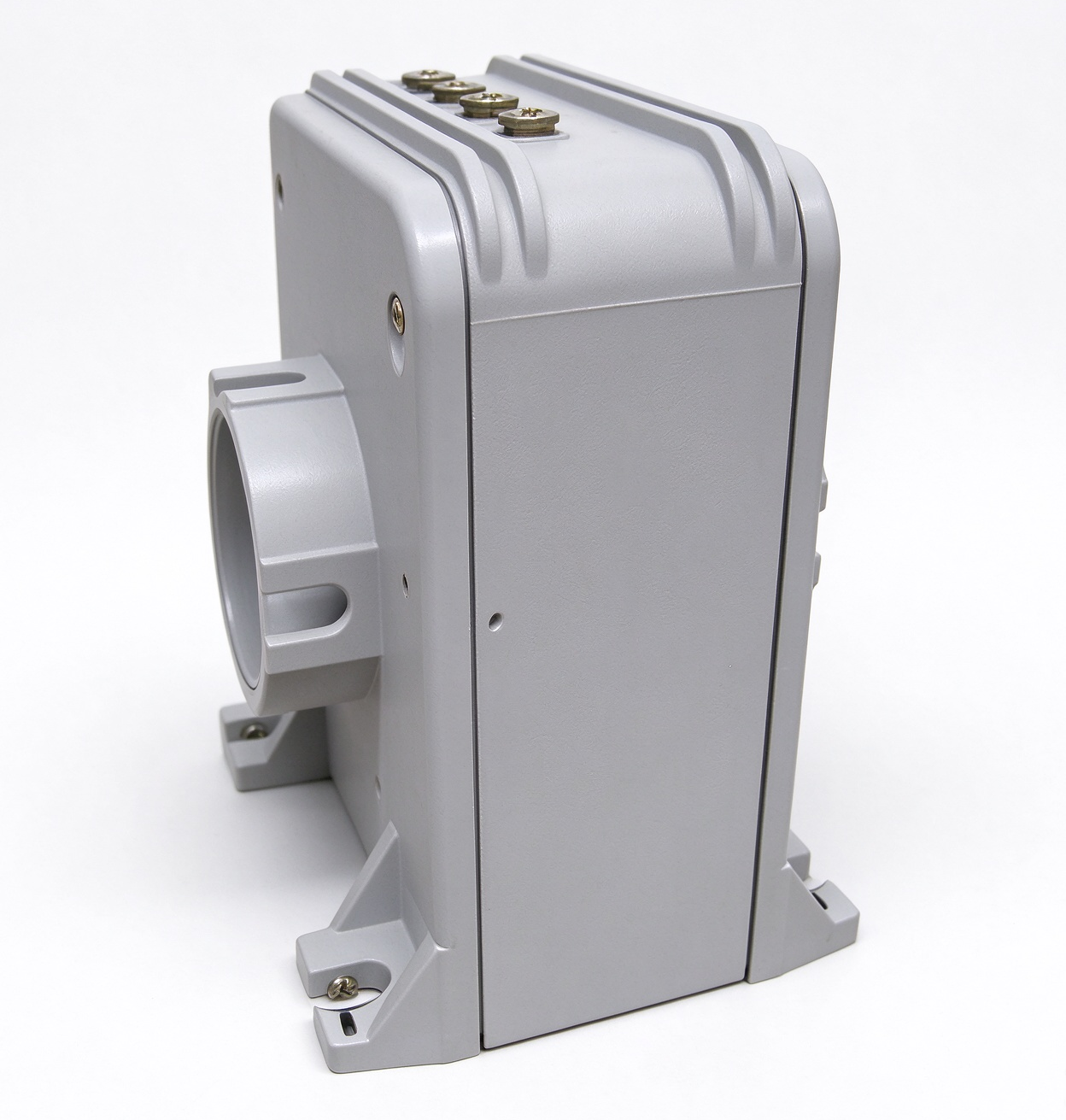
Horizontal Mounting Configuration
CS1000BR is the horizontal-mounting configuration of the CS1000 sensor family. ABB also lists related
CS1000 variants with vertical mounting and screen configurations. The mounting arrangement is therefore
an important identification point when replacing or integrating the sensor.
A physically similar current sensor may not provide the same mounting orientation, connection
arrangement or electrical configuration. The complete CS1000BR designation should be checked against
the equipment drawing and installation space before selecting the component.
Correct mechanical positioning also contributes to reliable current measurement because the primary
conductor and sensor must be installed according to the intended configuration. The applicable
installation instructions should be followed when mounting the sensor in an electrical assembly.
Applications in Traction Systems
The ABB CS1000BR belongs to the CS traction current sensor family intended for rolling stock and fixed
installations. High-current measurement is an important function in traction electrical systems because
current information can be used for monitoring, control, protection and system diagnostics.
A current sensor such as the CS1000BR can provide measurement information from a high-current circuit
to compatible electronic control or monitoring equipment while maintaining galvanic separation between
the primary and secondary sides.
The specific application depends on the electrical architecture of the traction system. System
engineers should verify current levels, supply voltage, output requirements, mechanical installation
and environmental conditions when applying the sensor.
Protection and Electrical Design
The CS sensor family incorporates protective functions associated with the measuring circuit and power
supply. The sensor documentation describes protection of the measuring circuit against short circuits
and opening conditions, together with protection of the power supply against polarity reversal.
These characteristics are relevant when the sensor is integrated into an industrial electrical
installation. Nevertheless, the complete installation must still provide the appropriate electrical
protection and wiring arrangements required by the system design.
The primary circuit operates at substantially higher current levels than the secondary measurement
circuit. Appropriate electrical procedures should therefore be followed when installing, servicing or
replacing the sensor.
Part Number and Compatibility Verification
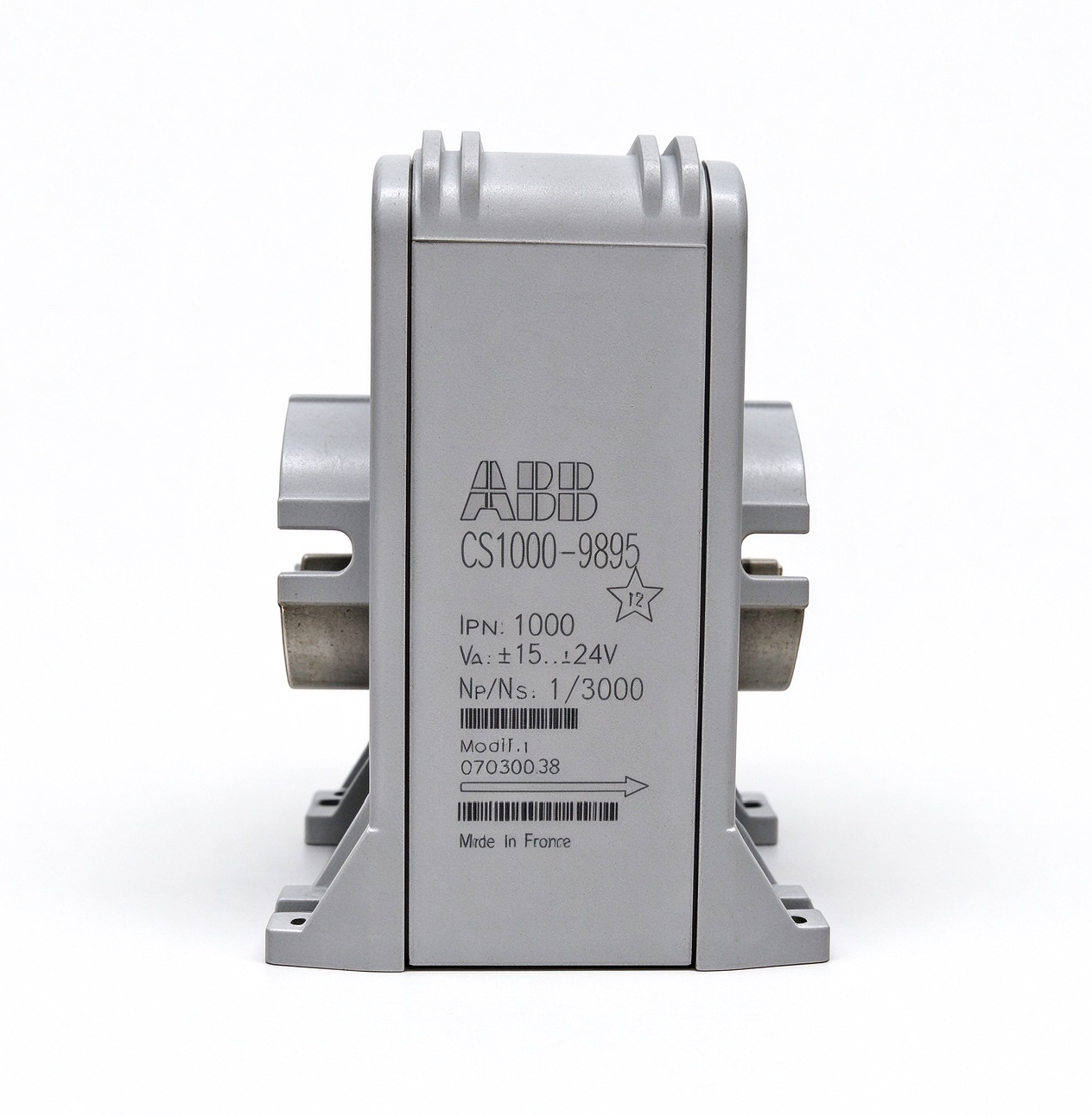
ABB CS1000BR should be identified by its complete commercial reference. The CS1000 family contains
several related variants, including CS1000BRV, CS1000BRE and CS1000BRVE, which differ in mounting
orientation or screen configuration.
Before selecting a replacement, users should compare the complete product designation, mechanical
mounting arrangement, primary current rating, secondary output, supply voltage and equipment
documentation. Checking these characteristics together reduces the possibility of selecting a similar
sensor with an incompatible configuration.
For maintenance records and procurement documentation, CS1000BR should be retained as the primary
product reference. Additional system information can then be used to confirm the appropriate
application and installation position.
Technical Role in Measurement Systems
ABB CS1000BR forms the measurement interface between a high-current primary conductor and the
electronic monitoring system. Its sensing principle allows current information to be represented by a
defined secondary output while maintaining galvanic insulation between the two circuits.
This architecture is useful in systems where direct electrical connection between the high-current
circuit and measurement electronics would be unsuitable. By providing an isolated measurement path,
the current sensor can become part of a broader traction or industrial monitoring architecture.
The sensor’s nominal 1000 A RMS primary rating, ±2000 A peak measuring range at ±24 V, 200 mA
secondary output and specified accuracy provide key parameters for evaluating its application.
Mechanical configuration and environmental conditions must also be considered as part of the complete
system design.
Summary
ABB CS1000BR is a CS1000 series traction current sensor designed for measuring DC, AC and pulsating
currents with galvanic insulation between the primary and secondary circuits. It uses a horizontal
mounting configuration and has a nominal primary current of 1000 A RMS.
At a supply voltage of ±24 V with a ±5% tolerance, the specified measuring range reaches approximately
±2000 A peak. The nominal secondary current is 200 mA, while the published technical characteristics
include accuracy of up to ±0.5% at nominal current and 25°C. The sensor is designed for demanding
traction and industrial current measurement applications.
When selecting ABB CS1000BR for an existing electrical system, the complete product designation should
be checked together with the current rating, supply voltage, secondary circuit, mounting configuration,
environmental conditions and equipment documentation. These parameters provide the technical basis for
identifying the appropriate CS1000 current sensor for a particular installation.

评价
目前还没有评价