
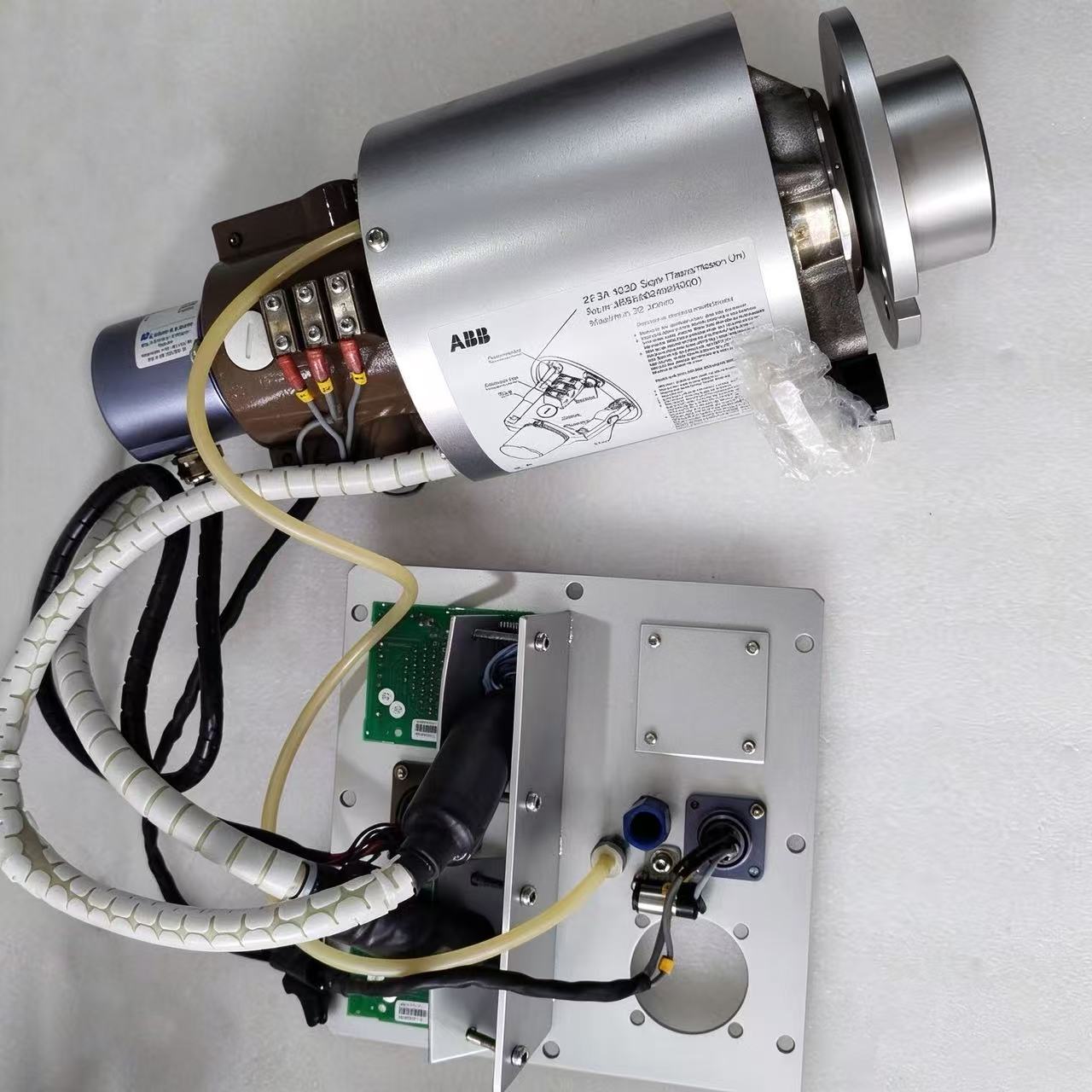
ABB PFSA103D STR-A1 1005-X2-1 Industrial Control Component
Product Overview
The ABB PFSA103D STR-A1 1005-X2-1 is an industrial automation component identified by its complete model designation and the PFSA103D base model reference. Available product information associates the PFSA103D model family with tension control and signal processing applications. These functions are relevant to industrial machinery in which measurement signals must be interpreted and coordinated with process control operations. Accurate identification of the complete designation is therefore important when reviewing equipment documentation, planning maintenance or evaluating a component for an existing installation.
In industrial automation, control components form part of a wider arrangement that may include sensors, controllers, drives and mechanical equipment. Their role depends on the architecture of the installed system and the functions assigned to each device. In tension-related applications, the control system typically uses measurement information to maintain suitable material handling conditions as a production line accelerates, decelerates or operates under changing loads.
The STR-A1 1005-X2-1 suffix should be retained when recording or identifying this component. However, its precise meaning and the hardware characteristics associated with this particular configuration require confirmation from the applicable technical documentation. Model similarity alone should not be treated as proof of electrical equivalence or direct replacement compatibility.
Technical Identification
The following table presents the available identification information without assigning unverified electrical or mechanical values to the complete model designation.
| Manufacturer | ABB | ||
|---|---|---|---|
| Complete Model | PFSA103D STR-A1 1005-X2-1 | ||
| Base Model Reference | PFSA103D | ||
| Product Category | Industrial automation component; exact hardware type requires verification | ||
| Associated Functional Area | Tension control and signal processing | ||
| Potential Application Environment | Industrial process machinery and automation systems | ||
| Power Supply | Confirm from the applicable product specification | ||
| Input and Output Signals | Confirm from the corresponding connection documentation | ||
| Communication Interface | Configuration dependent; verify before integration | ||
| Mounting Requirements | Refer to the relevant mechanical drawing | ||
| Hardware Configuration | Verify the STR-A1 1005-X2-1 identification on the component |
Functional Role in Industrial Automation
Industrial automation systems depend on reliable information exchange between field measurements and control equipment. Sensors monitor physical conditions, while control devices process the resulting information according to the requirements of the application. The system then uses the available control outputs to coordinate motors, brakes, actuators or other process equipment. The specific responsibilities of an individual module depend on its design and its position within the control architecture.
For tension-related processes, the controlled variable is the pulling force applied to a continuous material. Maintaining an appropriate tension range helps reduce material deformation, wrinkling, slipping and breakage. Measurement and control functions are particularly important when the material passes through several production stages or when operating conditions change during a manufacturing cycle.
PFSA103D-related product information connects the model family with tension control and signal processing. Nevertheless, the exact measurement channels, signal ranges, control functions and interfaces of the ABB PFSA103D STR-A1 1005-X2-1 should not be assumed without supporting documentation. Engineers should establish the module’s actual role before modifying wiring, changing configuration parameters or introducing it into a control system.
Applications in Continuous Material Processing
Continuous material processing is an important industrial area in which tension measurement and control functions are used. Paper production and converting machinery must move paper webs through rollers and processing stations while maintaining appropriate tension. Printing systems require consistent material movement to support registration accuracy and stable print quality. Film, foil and flexible packaging production also depend on controlled web handling during winding, unwinding, coating and laminating operations.
Winding equipment presents changing mechanical conditions as the diameter and mass of a roll increase or decrease. The control architecture must account for the relevant process variables to maintain the required tension throughout the operating cycle. Depending on the installation, this may involve feedback from load cells, drive speed information, torque regulation or other configured measurement and control functions.
Metal strip processing and textile machinery can present different tension requirements because material strength, elasticity, width and operating speed vary by application. The selection of suitable control equipment must therefore consider the complete process rather than relying solely on a product family name.
These application examples describe general industrial uses of tension control technology. They do not establish that every listed application is supported by the specific STR-A1 1005-X2-1 configuration. Compatibility must be assessed against the verified functions and limitations of the installed component.
Signal Processing and Control System Integration
Signal processing helps an automation system interpret measurement information in a form suitable for its intended control functions. Depending on the system design, this can involve signal conditioning, scaling, filtering or the transfer of measurement values between connected devices. The actual functions provided by the ABB PFSA103D STR-A1 1005-X2-1 must be confirmed from its technical documentation rather than inferred from general industrial control principles.
Before integration, engineers should identify the connected sensors, controller platform, power source and any associated drive or actuator equipment. The electrical characteristics of each interface must match the receiving device. Incorrect assumptions about voltage levels, current ranges, terminal assignments or communication protocols can lead to invalid measurements, system faults or equipment damage.
Wiring records and configuration information should be reviewed before changes are made to an established installation. Where the component operates within a legacy control system, the original drawings and maintenance records can help clarify its intended function. Any proposed replacement should be checked against the complete part designation, hardware revision and system requirements.
Installation and Environmental Considerations
Correct installation supports reliable operation of industrial electronic equipment. The mounting arrangement, enclosure requirements, cable routing and environmental limits should follow the applicable manufacturer instructions. The installation environment must be assessed for temperature, humidity, dust, vibration and electrical interference according to the actual equipment specification.
Signal cables should be routed and shielded in accordance with the system design, particularly where low-level measurement signals are installed near motor drives or other potential sources of electrical interference. Grounding and shielding practices must be consistent with the applicable wiring documentation. Unsupported modifications to terminal connections or protective arrangements should be avoided.
Before energizing an installation, qualified personnel should confirm the supply characteristics, wiring correctness, protective grounding and compatibility of connected equipment. Commissioning procedures should include verification of measurement behavior and control-system responses under appropriate operating conditions. Any special configuration or calibration procedure must be established from the relevant documentation.
Maintenance and Troubleshooting
A structured maintenance program helps identify developing problems before they affect production. Routine inspection may include checking the component’s physical condition, mounting security, connectors and surrounding wiring. Maintenance personnel should also review system diagnostics and operating records where these are available through the installed control platform.
When a tension-control process becomes unstable, the investigation should consider the entire measurement and control chain. Potential areas for inspection include sensor condition, mechanical alignment, cable integrity, electrical interference, controller settings and drive behavior. A process disturbance does not necessarily indicate a defective electronic component; mechanical and configuration-related factors may produce similar symptoms.
Maintenance work should be performed by qualified personnel using the site’s electrical isolation and safety procedures. Before replacing a component, record the existing model identification and relevant configuration details. The replacement must be verified against the actual system requirements, and post-installation checks should confirm that the equipment operates as intended.
Model Verification and Replacement Selection
When identifying the ABB PFSA103D STR-A1 1005-X2-1, use the full designation rather than relying on the PFSA103D base model alone. Check the printed markings, available equipment records and applicable technical documentation to determine whether the suffix identifies a particular hardware assembly, revision or configuration.
Replacement selection should include verification of electrical ratings, signal interfaces, mechanical dimensions, mounting arrangements and compatibility with the host automation system. Similar-looking components may have different connection assignments or functional characteristics. A matching product family designation is therefore insufficient to establish interchangeability.
Where the original specification is unavailable, clear photographs of the nameplate and component markings can help support further identification. The final decision should be based on confirmed technical data and the requirements of the intended application.
Product Summary
The ABB PFSA103D STR-A1 1005-X2-1 is an industrial automation component identified by a specific PFSA103D model designation. Available information associates the model family with tension control and signal processing, functions relevant to continuous material handling and industrial process equipment. Appropriate application assessment requires accurate identification, documented system interfaces and careful verification of electrical and mechanical requirements. Confirming the exact suffix-specific configuration against the applicable ABB documentation is essential before installation, integration or replacement.

评价
目前还没有评价