
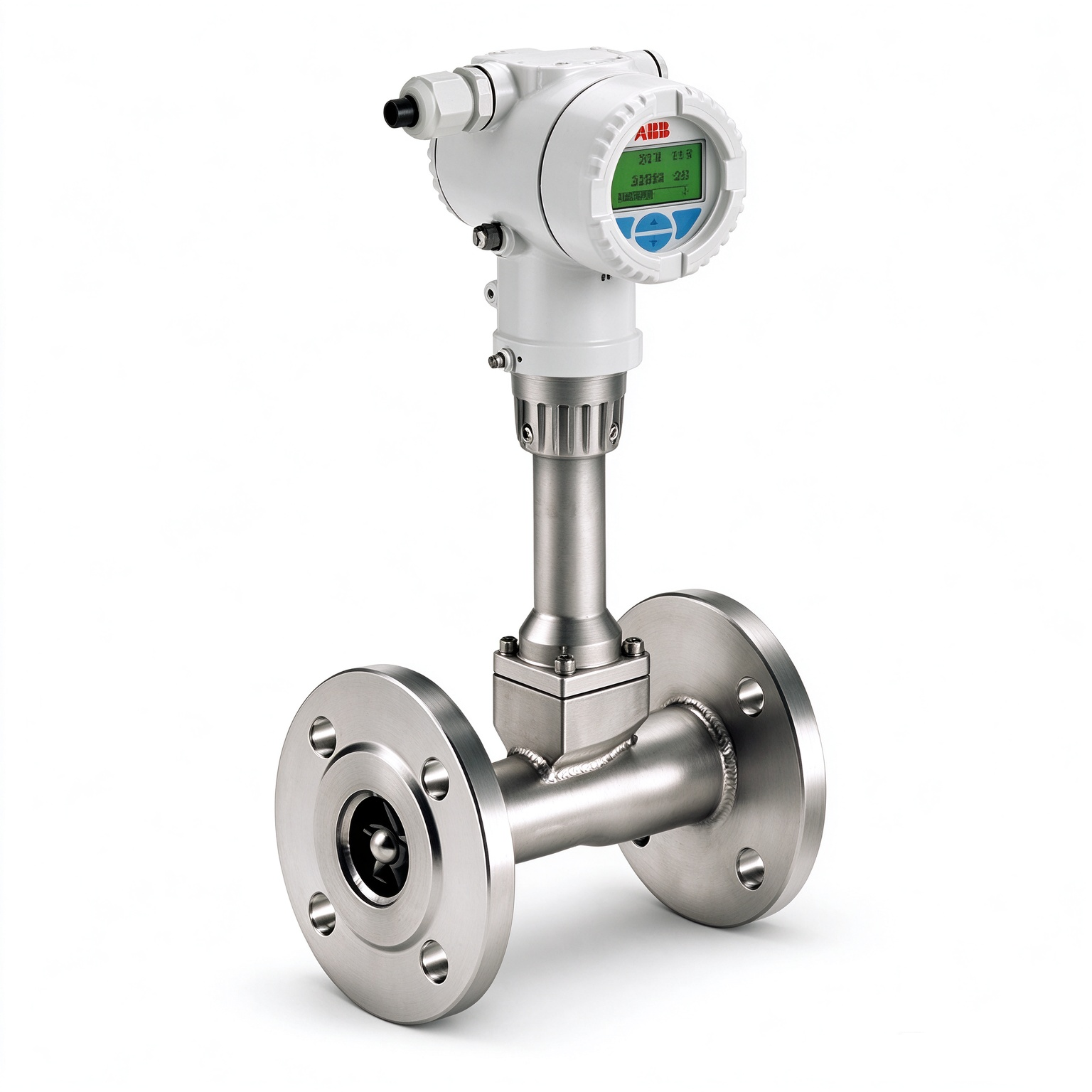
ABB FSS430Y0C1F040R0D4A1B1H5 Coriolis Flow Measurement Sensor
Product Overview
ABB FSS430Y0C1F040R0D4A1B1H5 is a configured flow measurement product associated with ABB’s FSS430 series and intended for industrial process instrumentation. The long configuration code identifies a specific product arrangement within the ABB measurement portfolio. Flow measurement equipment of this type is used where process operators and control systems require dependable information about the movement and characteristics of process media.
ABB’s Coriolis measurement technology is designed for applications in which mass flow, volume flow, density, temperature, or related process variables need to be monitored. The CoriolisMaster family provides measurement solutions for both liquid and gas applications and is designed for use across a broad range of industrial processes. The FSS430 identification should therefore be evaluated together with the complete equipment documentation when determining the exact configuration and application.
The product designation FSS430Y0C1F040R0D4A1B1H5 should be retained as a complete identification reference. Configuration codes are important for process instrumentation because individual characters can represent selected construction, measurement, connection, electronics, or application options. Treating only the basic series name as the product identification may not be sufficient when an exact configuration is required.
Flow Measurement Technology
Coriolis flow measurement is based on the interaction between flowing process media and the vibration of the measuring tubes inside the sensor. As fluid passes through the vibrating tubes, Coriolis forces create a measurable change in the tube motion. The measurement system detects this change and uses the resulting signal to determine the flow characteristics of the process medium.
One of the important characteristics of Coriolis measurement is its ability to directly determine mass flow. This differs from conventional volumetric flow measurement methods, where volume flow is measured first and mass flow may then be calculated using density information. Coriolis technology can therefore provide valuable process information in applications where mass-based measurement is important.
ABB CoriolisMaster technology also supports measurement of additional process variables. Depending on the specific instrument configuration, flow measurement systems can provide information relating to mass flow, volume flow, density, temperature, and concentration. The exact available functions depend on the selected model and configuration.
Industrial Process Instrumentation
Flow measurement is an essential part of modern process automation. Accurate flow information can be used by control systems to regulate production processes, monitor material movement, calculate consumption, and maintain operating conditions within defined limits. A flow instrument therefore forms an important interface between the physical process and the automation system.
ABB FSS430Y0C1F040R0D4A1B1H5 can be considered within this broader process measurement environment. The instrument is associated with ABB’s flow measurement portfolio and can form part of an integrated instrumentation architecture. Depending on the overall system design, measurement information can be used by local operators, process controllers, distributed control systems, supervisory systems, or other industrial automation equipment.
Industrial flow measurement is used in many sectors, including chemical processing, oil and gas, power generation, food and beverage production, water treatment, pharmaceutical manufacturing, and general process industries. The appropriate measurement technology depends on the physical characteristics of the medium, required accuracy, operating temperature, pressure, flow range, installation conditions, and system requirements.
Mass Flow Measurement
Mass flow is an important process variable when the quantity of a material needs to be determined independently of changes in fluid density. This is particularly relevant for applications involving liquids or gases whose density can change as a result of temperature, pressure, composition, or process conditions.
Coriolis measurement provides a direct approach to mass flow determination. The sensor responds to the physical behavior of the process medium inside the measuring tubes, allowing the instrument electronics to calculate the corresponding flow signal. This measurement principle is useful in processes where maintaining an accurate material balance is important.
In addition to mass flow, Coriolis technology can provide density information derived from the response of the measuring tubes. Temperature measurement can also form part of the instrument’s process-data capability. These additional variables can provide useful information for process monitoring and control.
Measurement of Liquids and Gases
ABB’s CoriolisMaster 430 family is designed for flow measurement of liquids and gases. The technology can therefore be applied to a wide variety of process media when the selected instrument configuration meets the physical and installation requirements of the application.
When selecting a Coriolis flow instrument, the characteristics of the process medium should be evaluated carefully. Density, viscosity, temperature, pressure, flow range, phase conditions, and chemical compatibility can all influence the suitability of a measurement device. The instrument configuration should correspond to the actual process conditions rather than being selected solely from the basic product family name.
For applications involving challenging fluids or changing process conditions, the measurement system may require additional configuration or specialized functions. ABB documentation describes enhanced Coriolis control options for certain CoriolisMaster configurations, particularly for applications involving multiphase conditions and other demanding measurement environments.
Process Measurement Accuracy
Measurement accuracy is an important consideration in process instrumentation. The required accuracy depends on the purpose of the measurement. Control applications may have different requirements from production accounting, process optimization, or custody transfer applications.
ABB’s CoriolisMaster portfolio includes instruments with different accuracy specifications depending on the selected model and configuration. The FCB430 family, for example, is documented with multiple accuracy classes for mass and volume flow measurement. The exact accuracy applicable to an individual configured product should be determined from its complete model information and corresponding technical documentation.
Proper installation also contributes to measurement performance. Although Coriolis flowmeters can offer installation advantages compared with some other flow technologies, the instrument should still be installed according to the manufacturer’s requirements. Pipe orientation, process connections, operating conditions, and fluid characteristics should all be considered during system design.
Integration with Automation Systems
A modern industrial flowmeter is more than a local measuring instrument. It can serve as an important source of process data for automation and control systems. Depending on the selected configuration, ABB CoriolisMaster products can support industrial communication technologies and modular input and output arrangements.
ABB documentation for the CoriolisMaster FCB430 and FCB450 families describes communication options including HART, PROFIBUS, Modbus, and Ethernet-based communication depending on the selected configuration. These interfaces allow process measurement data to be incorporated into plant-level automation architectures.
The actual communication capability of FSS430Y0C1F040R0D4A1B1H5 should be confirmed against the specific product configuration rather than inferred from the general ABB flowmeter family. This is particularly important when integrating the instrument into an existing control system with defined communication and I/O requirements.
Application in Process Plants
Flowmeters are installed throughout process plants to measure the movement of raw materials, intermediate products, finished products, utilities, and process fluids. Accurate measurement can help maintain stable production conditions and provide operators with information needed to evaluate equipment and process performance.
In chemical and petrochemical facilities, flow measurement can be used for process feed, product transfer, blending, and utility monitoring. In power plants, flow instruments can monitor process fluids and auxiliary systems. Food and beverage applications may require accurate measurement of liquid ingredients and production fluids, while water treatment facilities use flow measurement for distribution and process management.
The appropriate application for ABB FSS430Y0C1F040R0D4A1B1H5 depends on its exact configuration and the requirements of the process. Product identification should therefore be performed using the complete code and the associated technical documentation.
Installation Considerations
Correct installation is important for any industrial flow measurement instrument. The piping arrangement should provide a mechanically stable connection and maintain process conditions within the instrument’s specified operating limits. The instrument should also be positioned in accordance with the manufacturer’s installation recommendations.
Process connections must correspond to the selected instrument configuration. The material of the wetted parts should be suitable for the process medium, while the pressure and temperature ratings must correspond to actual operating conditions. These factors are particularly important in chemical and high-temperature industrial applications.
Electrical connections and communication interfaces should also be installed according to the applicable instrument documentation. Power supply requirements, signal wiring, grounding, communication configuration, and I/O assignments should be verified before the flowmeter is incorporated into the plant control system.
Maintenance and Diagnostics
Coriolis flowmeters are designed to provide continuous process measurement while minimizing mechanical wear within the measuring system. ABB describes the CoriolisMaster family as offering extended maintenance intervals and reduced maintenance effort as part of its overall design approach.
Routine maintenance should nevertheless consider the process conditions and installation environment. The instrument housing, process connections, wiring, display, and communication interfaces can be inspected as part of an appropriate maintenance program. Process-related changes should also be considered when unexpected measurement behavior occurs.
Modern ABB measurement instruments can provide diagnostic information that assists with troubleshooting and verification. Depending on the exact model and configuration, diagnostic functions can help identify instrument conditions, process abnormalities, or communication issues. The applicable diagnostic procedures should always be based on the documentation for the specific configured instrument.
Technical Specifications
| Specification | Details |
|---|---|
| Brand | ABB |
| Product Reference | FSS430Y0C1F040R0D4A1B1H5 |
| Product Family | FSS430 |
| Product Category | Flow Measurement Instrument |
| Measurement Technology | Coriolis Flow Measurement |
| Primary Measurement | Mass Flow |
| Related Process Variables | Volume Flow, Density and Temperature |
| Application | Industrial Process Instrumentation |
| Process Media | Liquids and Gases, subject to configuration |
| Manufacturer | ABB |
Product Identification
The complete code ABB FSS430Y0C1F040R0D4A1B1H5 should be retained when identifying the instrument. Long configuration numbers are particularly important for process instrumentation because a single product family can contain multiple combinations of process connections, sensor characteristics, electronics, outputs, communication options, and other application-specific selections.
When replacing or documenting an installed instrument, the complete identification should be compared with the equipment nameplate and the relevant technical documentation. The basic FSS430 series designation alone may not identify every characteristic of the installed configuration.
This approach is also useful when integrating the instrument with an existing automation system. Electrical interfaces, process connections, measurement range, communication functions, and other selected options should be confirmed from the complete product configuration before engineering work is finalized.
Conclusion
ABB FSS430Y0C1F040R0D4A1B1H5 is a configured flow measurement product associated with the ABB FSS430 series and intended for industrial process instrumentation applications. Coriolis measurement technology provides a valuable method for determining mass flow while also supporting related process measurements such as volume flow, density, and temperature depending on the specific instrument configuration.
ABB’s CoriolisMaster measurement portfolio is designed for applications involving both liquids and gases and supports a broad range of industrial process requirements. The technology can be integrated into process automation systems through appropriate electrical and communication interfaces according to the selected configuration.
Because the complete FSS430 product code represents a specific configuration, accurate identification should always use ABB FSS430Y0C1F040R0D4A1B1H5 rather than relying only on the general series designation. Confirming the exact process connections, measurement characteristics, electrical interfaces, and applicable technical specifications provides the most reliable basis for engineering, maintenance, and system integration.

评价
目前还没有评价