
ABB T7S 1250 PR231/P LS/I Circuit Breaker
Product Overview
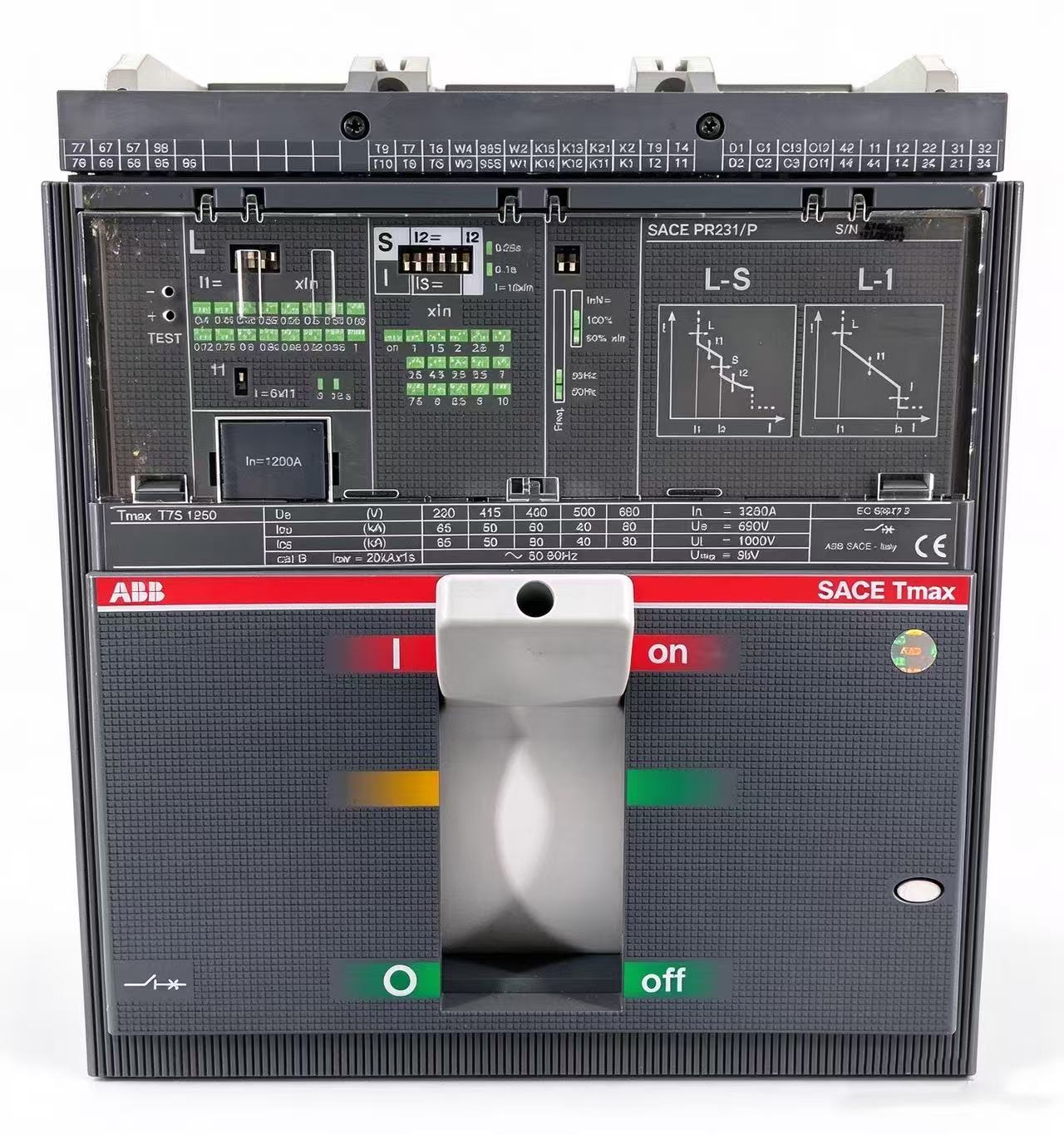
The ABB T7S 1250 PR231/P LS/I is an electronic-release configuration within the ABB TMax T7S family of molded case circuit breakers. With a rated current of 1250 A, this configuration is intended for low-voltage power distribution and electrical protection applications where a high-current molded case circuit breaker is required. ABB documentation identifies the corresponding electronic release as PR231/P LS/I, providing the protection functions associated with long-time, short-time, and instantaneous current conditions.
The T7S platform is part of the ABB TMax range and is designed for power distribution duties. ABB’s published catalogue identifies the T7S as a 50 kA circuit breaker at 400 V, with the service short-circuit breaking capacity specified at 100 percent of the ultimate breaking capacity in the relevant rating table. The T7S 1250 configuration is therefore positioned within a high-current low-voltage distribution application range.
The designation T7S 1250 PR231/P LS/I contains several important identification elements. T7S identifies the breaker family and interrupting class, 1250 identifies the rated current, and PR231/P LS/I identifies the electronic release and its protection functions. When documenting or selecting the product, these elements should be considered together because ABB offers several T7 configurations with different electronic releases and electrical characteristics.
ABB TMax T7S Circuit Breaker
The ABB TMax T7S is a molded case circuit breaker platform developed for power distribution applications. The circuit breaker combines the main current-carrying assembly with an electronic protection release, allowing the device to monitor electrical current and respond when configured protection thresholds are exceeded. This makes the T7S suitable for distribution systems where protection coordination and controlled interruption are important design requirements.
The T7S 1250 version has a rated uninterrupted current of 1250 A. This current rating places the breaker in the higher-current range of the T7S family. The breaker can be incorporated into low-voltage distribution systems where the required continuous current rating is compatible with the equipment design and where the available short-circuit level is within the applicable breaker rating.
ABB provides different T7S 1250 configurations according to pole count, terminal arrangement, operating mechanism, electronic release, and other configuration options. Consequently, the general T7S 1250 designation should not be treated as sufficient to identify every mechanical version. The complete product configuration and corresponding ABB identification should be checked when a particular installation requires an exact replacement or technical specification.
PR231/P LS/I Electronic Release
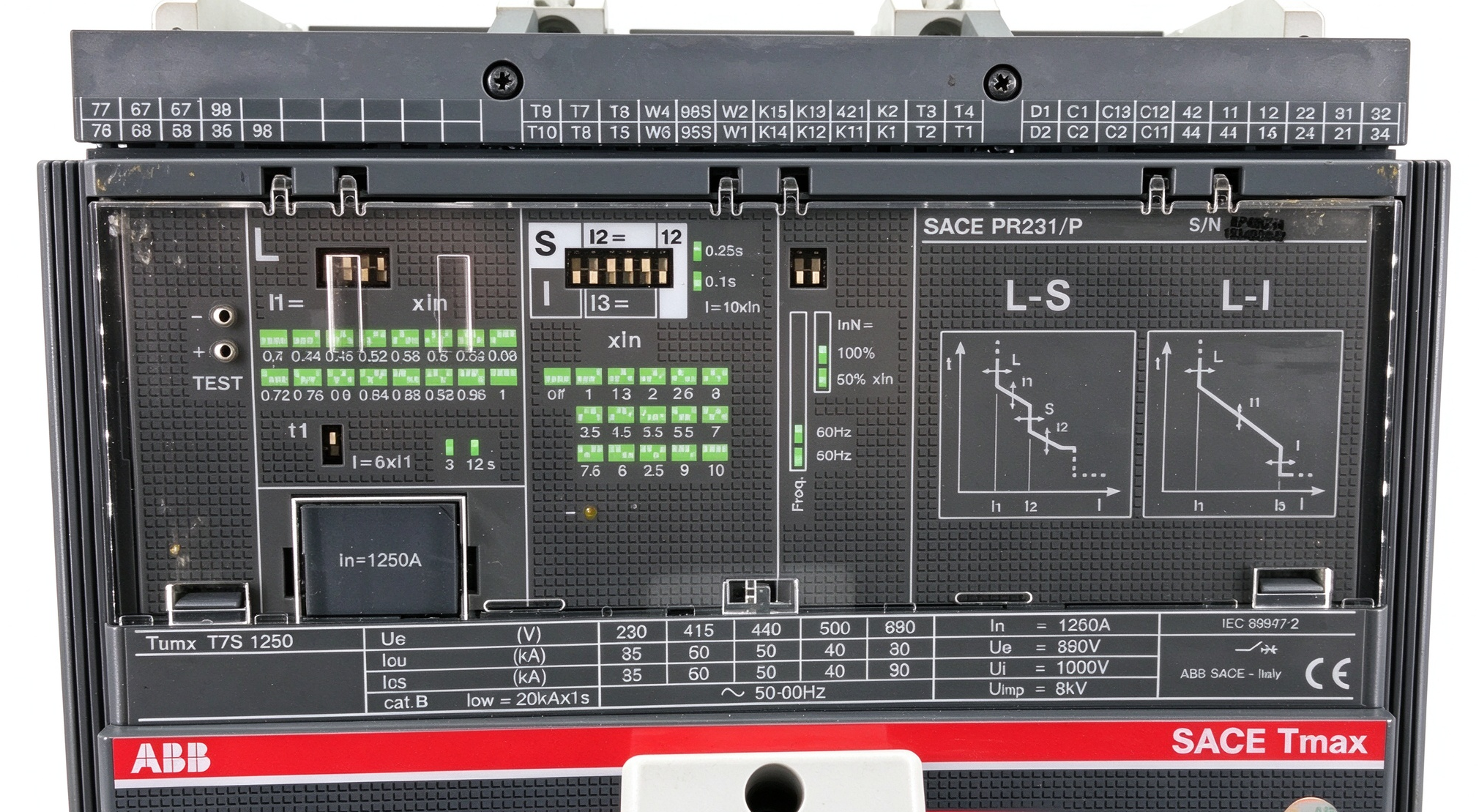
The PR231/P LS/I is the electronic release specified for this T7S configuration. The designation indicates the protection functions incorporated into the release. In the ABB TMax electronic protection system, L refers to long-time protection, S refers to short-time protection, and I refers to instantaneous protection. These functions allow the circuit breaker to respond differently to overload conditions and short-circuit events according to the configured protection parameters.
Long-time protection is associated with overload conditions that persist over a longer period. This function helps protect conductors and equipment from excessive current that remains above the normal operating level. Short-time protection is used for higher-current fault conditions and provides a defined time delay where selective coordination with upstream or downstream protective devices is required.
Instantaneous protection responds to very high fault currents without the intentional short-time delay used by the short-time function. The combination of L, S, and I protection functions gives the PR231/P release a protection structure suitable for many low-voltage distribution applications. The exact settings must be established according to the electrical system design, conductor ratings, fault levels, and coordination requirements.
1250 A Current Rating
The 1250 A rating is one of the main characteristics of the ABB T7S configuration. Rated uninterrupted current, commonly identified as Iu, represents the current that the circuit breaker is designed to carry continuously under its specified conditions. For the T7S 1250 configuration, ABB documentation identifies the rated current as 1250 A.
A 1250 A circuit breaker can be used in substantial low-voltage distribution assemblies, including main distribution sections, large feeders, industrial electrical systems, and other applications where the required continuous current exceeds the range of smaller molded case circuit breakers. The actual application must consider the installation environment, conductor ampacity, temperature, load profile, and applicable electrical standards.
The current rating should also be distinguished from the circuit breaker’s short-circuit breaking capacity. Rated current describes continuous current capability, while short-circuit performance concerns the circuit breaker’s ability to interrupt fault current under specified test and system conditions. Both characteristics are essential when selecting a protective device for a distribution system.
Short-Circuit Performance
ABB’s T7S documentation specifies an ultimate short-circuit breaking capacity of 50 kA at 400 V for the T7S class and a service short-circuit breaking capacity of 100 percent in the applicable catalogue table. These values are important when evaluating the breaker for a low-voltage distribution system because the prospective short-circuit current at the installation point must be compatible with the circuit breaker’s specified interrupting performance.
Short-circuit performance depends on the rated operational voltage and other conditions specified by the manufacturer. The 50 kA value should therefore be interpreted together with the corresponding voltage and technical rating tables rather than as a universal short-circuit value for every operating condition.
For system engineering, the available fault current should be calculated or otherwise established at the intended installation point. The circuit breaker’s short-circuit rating should then be compared with the system requirement. Protection coordination with upstream and downstream devices should also be considered to achieve the required selectivity and overall distribution-system performance.
Low-Voltage Power Distribution Applications
The ABB T7S 1250 PR231/P LS/I is designed for applications involving low-voltage power distribution and protection. It can be incorporated into industrial distribution boards, main electrical distribution systems, feeder circuits, large machinery power supplies, commercial electrical infrastructure, and other installations requiring a high-current molded case circuit breaker.
In a distribution assembly, the circuit breaker can provide protection for a feeder or main circuit while also providing a means of controlled circuit interruption. The electronic release allows protection characteristics to be configured according to the requirements of the electrical installation. This can be particularly useful in systems where different circuits have different load profiles and fault-protection requirements.
The T7S family is also suitable for applications where coordination between several protective devices is important. The L and S protection functions of the PR231/P LS/I release provide time-related characteristics that can be incorporated into a broader protection-coordination strategy.
Configuration and Selection
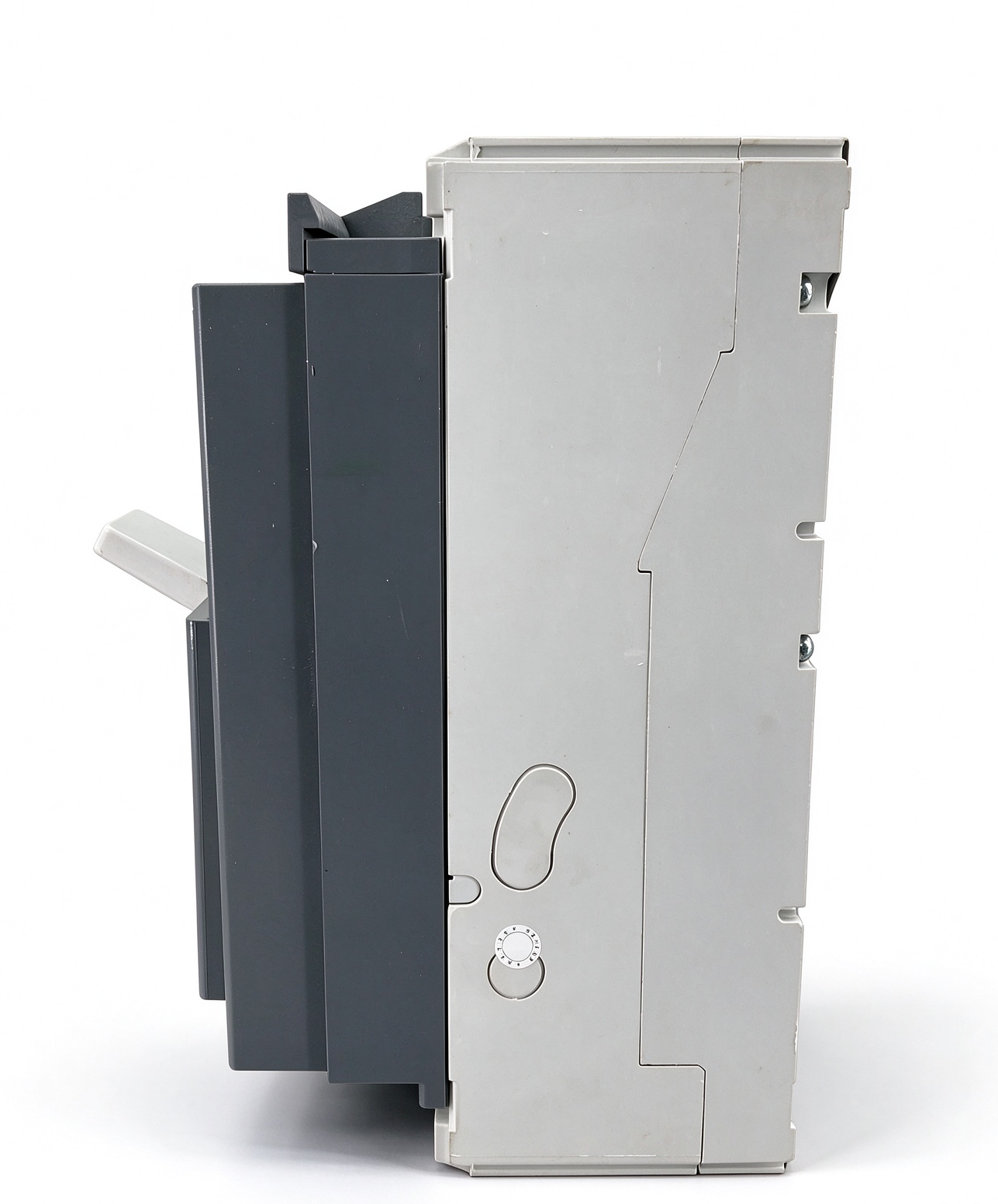
ABB offers the T7S 1250 PR231/P LS/I configuration in different physical arrangements. Published ABB tables show both three-pole and four-pole versions within the T7S 1250 PR231/P LS/I range. Other configuration characteristics can include fixed or other mounting arrangements, terminal configurations, operating mechanisms, and additional accessories.
This means that the designation T7S 1250 PR231/P LS/I should be used as the primary electrical and release reference, while the exact installation configuration should be confirmed separately. Pole count is particularly important because a three-pole breaker and a four-pole breaker have different circuit arrangements and cannot automatically be treated as interchangeable.
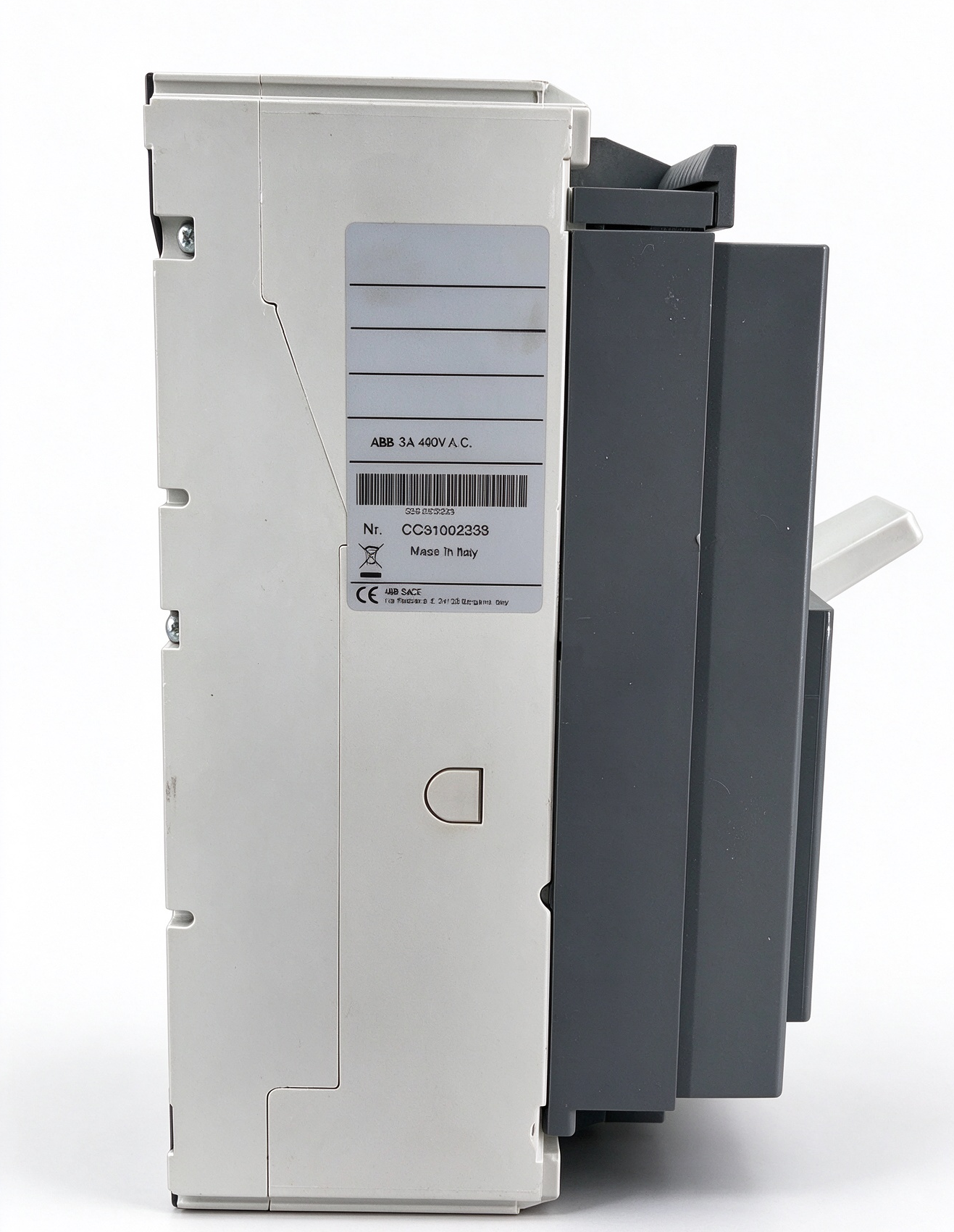
When identifying an existing breaker, the complete nameplate information should be checked. Important details include the T7S model, rated current, electronic release type, number of poles, rated voltage, interrupting capacity, terminal arrangement, and any additional configuration codes. These details provide a more reliable identification method than the general product family name alone.
Installation and Protection Considerations
Installation of the T7S 1250 circuit breaker should follow the technical requirements applicable to the specific ABB configuration. The electrical installation must be designed around the rated current, system voltage, prospective fault current, conductor characteristics, and protection coordination requirements.
The PR231/P LS/I electronic release should be configured according to the protection study for the installation. Long-time, short-time, and instantaneous functions have different purposes and should be coordinated with the characteristics of the protected circuit. Incorrect protection settings can affect selectivity and equipment protection, so settings should be established by qualified personnel using the actual system parameters.
Mechanical configuration is equally important. The breaker must correspond to the intended enclosure, terminals, mounting arrangement, and accessory configuration. Where the circuit breaker is installed as part of a larger ABB distribution assembly, all mechanical and electrical interfaces should be verified before commissioning.
Technical Specifications
| Specification | Details |
|---|---|
| Brand | ABB |
| Product Family | TMax T7S |
| Model | T7S 1250 |
| Electronic Release | PR231/P LS/I |
| Rated Current | 1250 A |
| Product Class | Molded Case Circuit Breaker |
| Protection Functions | Long-Time, Short-Time and Instantaneous |
| T7S Icu at 400 V | 50 kA |
| T7S Ics at 400 V | 100% of Icu |
| Application | Low-Voltage Power Distribution |
| Available Pole Configurations | 3 Pole and 4 Pole configurations are documented within the T7S range |
| Manufacturer | ABB |
Maintenance and Identification
Proper identification of an ABB T7S 1250 circuit breaker is important when maintaining an established low-voltage distribution system. The complete breaker designation should be recorded together with the electronic release, current rating, pole configuration, and other applicable identification information. This prevents different T7S configurations from being confused during technical work.
The PR231/P LS/I release should also be considered as part of the complete circuit breaker configuration. Although several ABB T7S 1250 versions share the same 1250 A rating, they can use different electronic releases and therefore provide different protection functions. Verifying the release designation helps establish the correct technical characteristics of the installed breaker.
Maintenance procedures should follow the documentation applicable to the exact T7S configuration. Electrical isolation, mechanical inspection, protection-release verification, terminal inspection, and functional checks should be performed according to the requirements of the installation and the manufacturer’s technical instructions.
Conclusion
ABB T7S 1250 PR231/P LS/I is a high-current molded case circuit breaker configuration within the ABB TMax T7S family. With a rated current of 1250 A and an electronic PR231/P LS/I release, it is designed for low-voltage power distribution and electrical protection applications. The L, S, and I protection functions provide long-time, short-time, and instantaneous protection characteristics for coordinated circuit protection.
ABB documentation identifies the T7S class with a 50 kA ultimate short-circuit breaking capacity at 400 V and 100 percent service short-circuit breaking capacity under the applicable rating conditions. The exact breaker configuration should nevertheless be confirmed by pole count, mounting arrangement, terminals, operating mechanism, and other applicable identification codes.
For equipment documentation and component identification, the complete designation ABB T7S 1250 PR231/P LS/I provides a clear reference to the breaker family, current rating, and electronic release. Verifying these details against the electrical and mechanical requirements of the intended installation is essential when selecting the appropriate T7S configuration for a low-voltage distribution system.
评价
目前还没有评价