

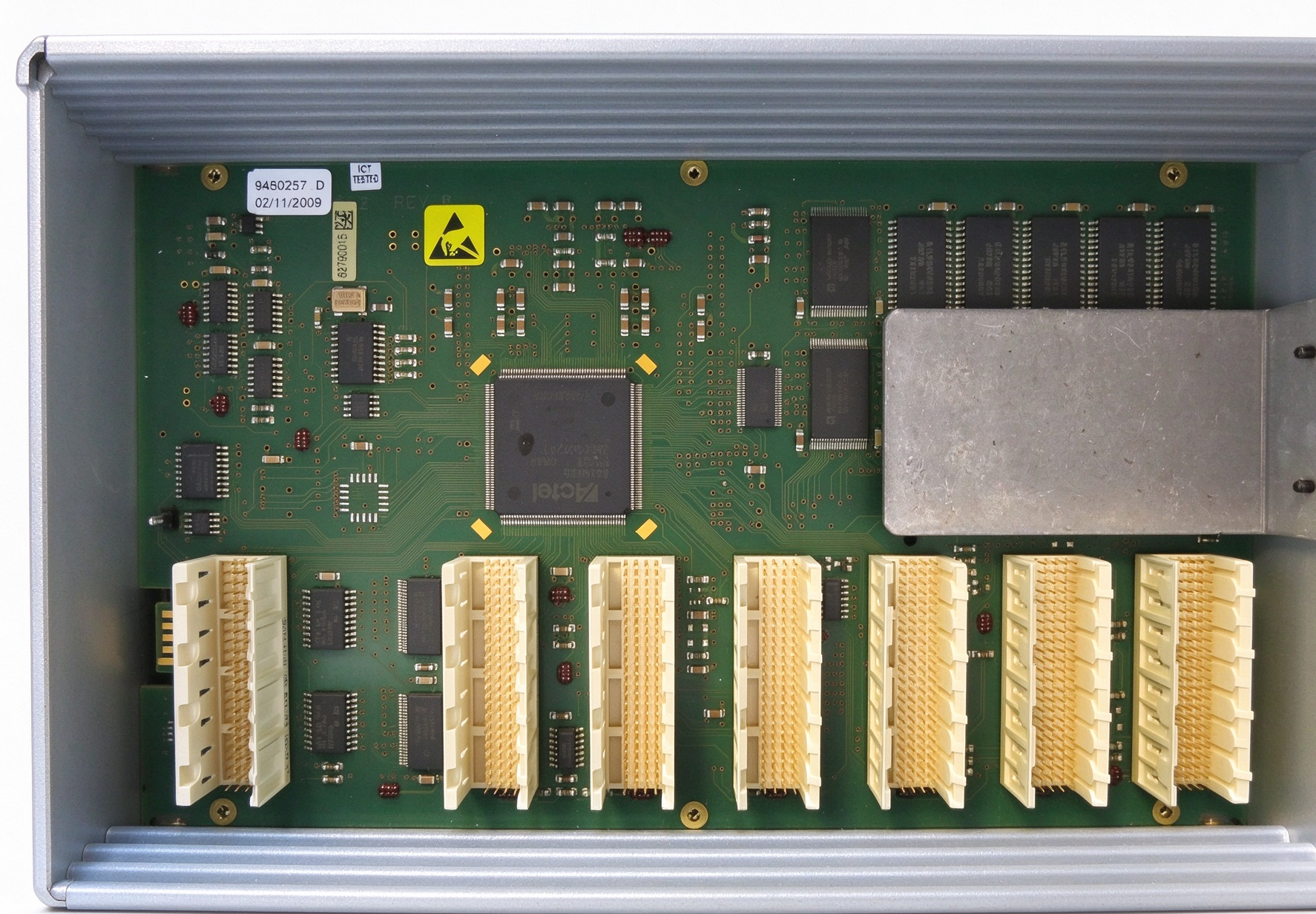
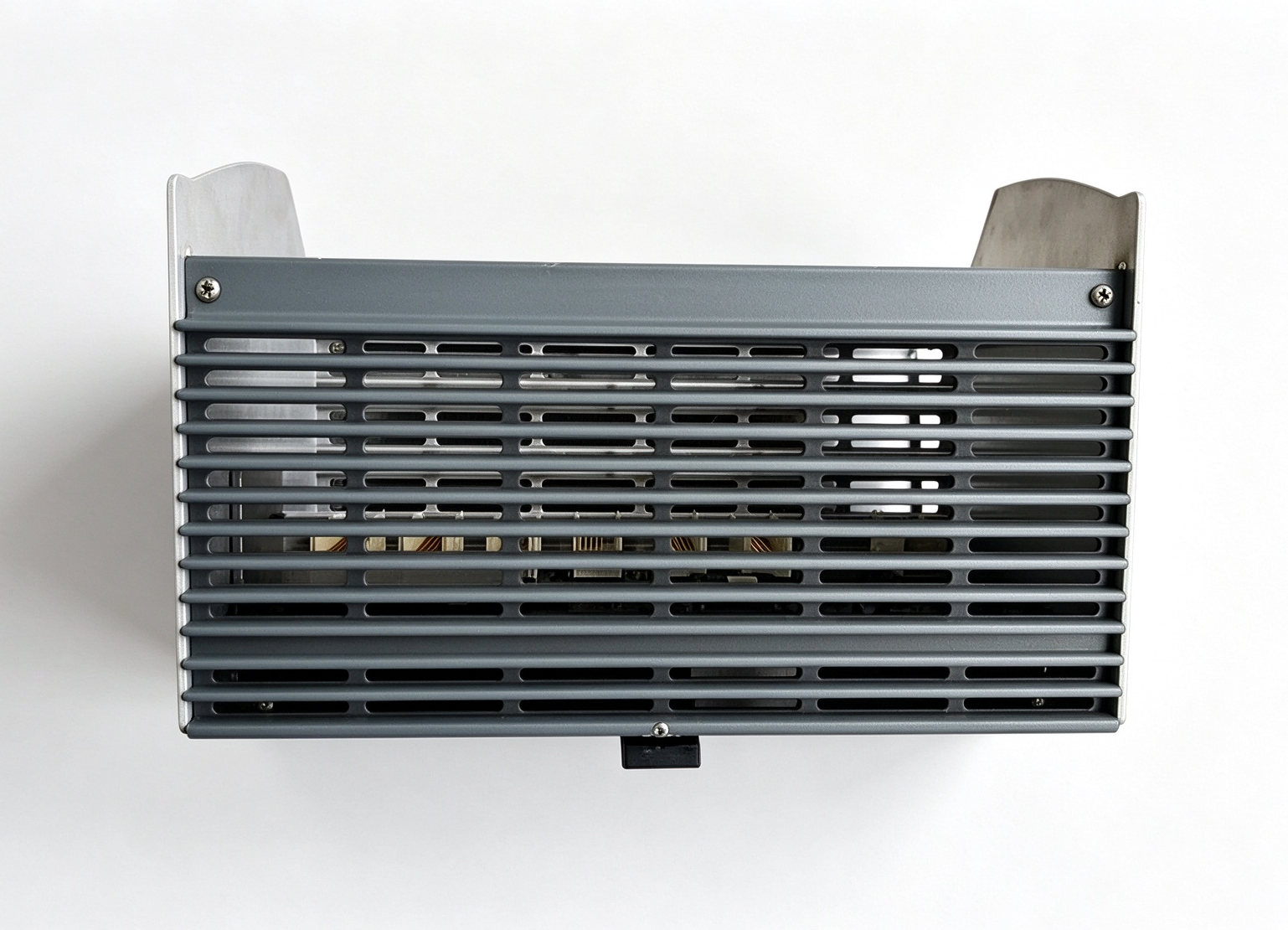
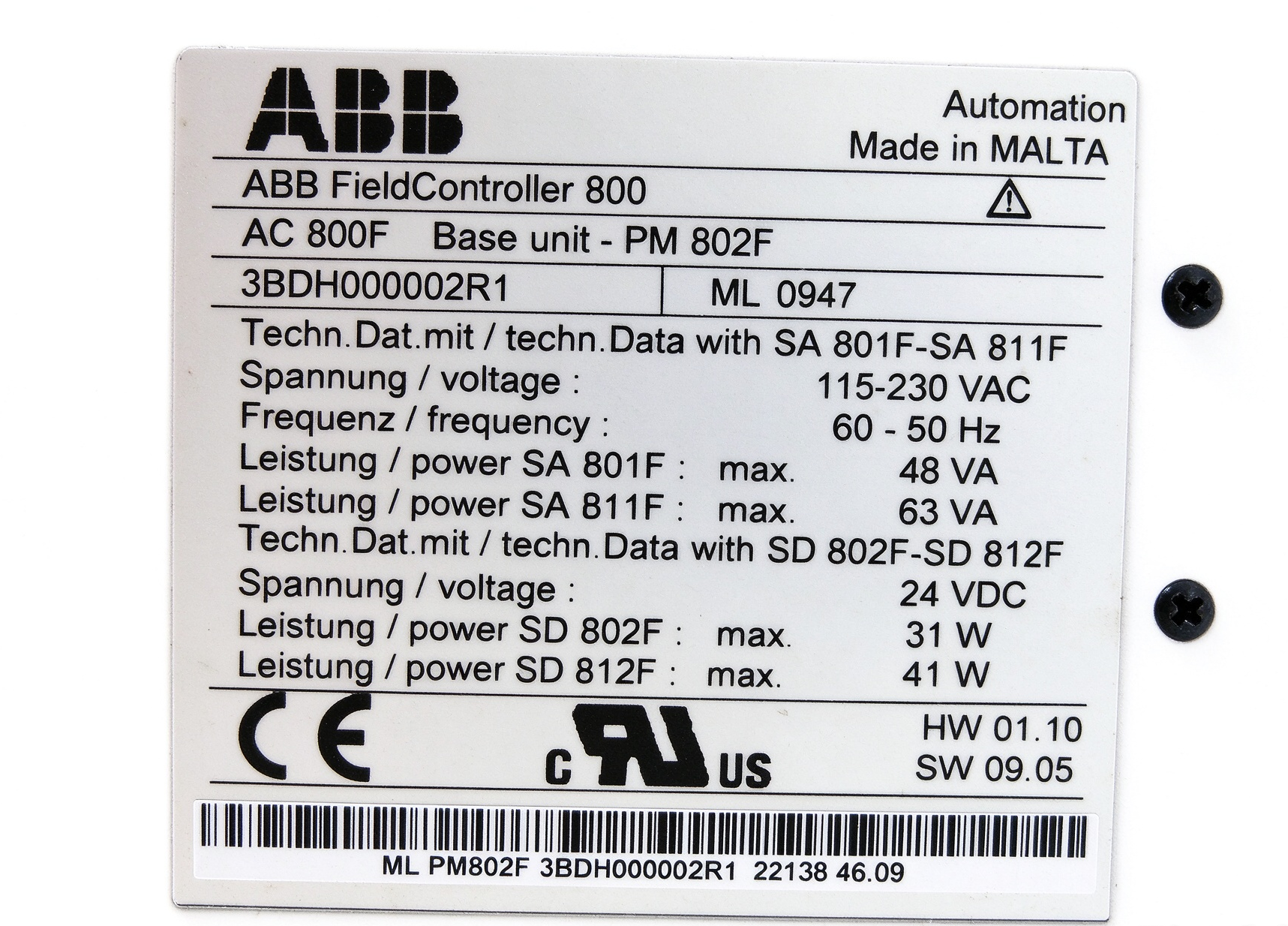
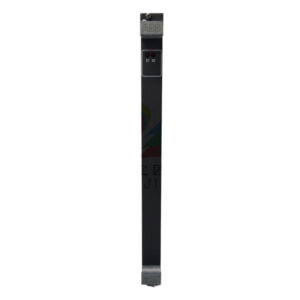
ABB 3BDH000002R1 PM802F Base Unit 4 MB Battery-Buffered Controller
The ABB 3BDH000002R1 is identified as the PM802F Base Unit,
a controller hardware component associated with the ABB AC 800F
industrial automation platform. The product designation specifies
a 4 MB memory configuration and battery-buffer functionality.
These characteristics are important when identifying the correct
controller hardware for process automation installations and
maintenance requirements. Understanding the product designation,
system architecture, and installation context helps engineers
evaluate its suitability for a particular control application.
Product Overview
Industrial process automation relies on controller hardware to
execute control strategies, coordinate system activities, and
maintain communication with associated equipment. The controller
forms part of a broader automation architecture that can include
engineering tools, communication interfaces, field devices,
operator stations, and distributed input and output hardware.
Each element must operate within the technical requirements of
the overall installation.
The PM802F Base Unit, identified by ABB part number 3BDH000002R1,
belongs to the hardware range associated with the AC 800F control
system. Its 4 MB memory designation and battery-buffer feature
provide useful identification details when reviewing equipment
records, controller inventories, and replacement requirements.
These identifiers should be preserved when documenting the installed
hardware or preparing a technical purchasing specification.
A base unit should be evaluated as part of its intended controller
platform rather than as an independent electronic component.
Compatibility depends on the associated system configuration,
hardware revision, software environment, and applicable installation
instructions. The complete product number therefore provides an
essential starting point for technical verification.
PM802F Base Unit and AC 800F Architecture
The ABB AC 800F platform is designed for industrial process
automation. Within an automation installation, controller hardware
provides the foundation for executing configured control functions
and coordinating relevant system components. Depending on the
application, the surrounding architecture may include field
communication, distributed I/O, operator interfaces, and
engineering facilities.
The PM802F Base Unit must be considered in relation to the specific
AC 800F equipment configuration in which it is installed. The
controller’s assigned role, connected interfaces, and supported
configuration should be established using the applicable ABB
system documentation. It is important not to assume that every
controller accessory or similarly named unit is interchangeable
across different generations of automation hardware.
In process control environments, a clearly documented controller
configuration helps maintenance personnel understand how individual
hardware elements contribute to overall operation. Accurate
identification also assists with fault investigation, equipment
planning, and the management of spare parts for long-running
industrial installations.
Memory Configuration and Battery Buffering
The 4 MB designation is an important identifying characteristic
of the ABB 3BDH000002R1 PM802F Base Unit. Memory forms part of the
controller’s hardware architecture and must be considered alongside
the supported software, configuration requirements, and application
design. The stated memory capacity should not be interpreted as
evidence of a particular user-program capacity or performance
specification without the corresponding technical documentation.
Battery-buffer functionality is another defining feature associated
with this product designation. In electronic control equipment,
battery buffering can support the retention of designated
information when the normal power source is unavailable. The exact
data-retention behavior, supported memory areas, battery type,
replacement interval, and service procedure depend on the
manufacturer’s design and instructions for the particular unit.
Maintenance personnel should therefore consult the relevant
PM802F documentation before replacing a battery or interrupting
controller power. Where configuration retention is important,
the applicable backup procedures should be followed before
maintenance begins. Battery condition and replacement requirements
should be managed according to the manufacturer’s specified
maintenance recommendations rather than an assumed generic interval.
Integration into Industrial Control Systems
Integrating controller hardware into an established automation
installation requires a clear understanding of the system
architecture. For the ABB 3BDH000002R1, engineers should confirm
the controller family, equipment designation, hardware revision,
mounting arrangement, and associated interface requirements before
planning an installation or replacement.
Controller integration may involve coordination with field
communication networks, I/O assemblies, engineering workstations,
and other automation components. The supported interfaces and
connection arrangements must be confirmed from the appropriate
AC 800F documentation. Connector appearance or a similar product
designation alone is not sufficient evidence of electrical or
functional compatibility.
The engineering configuration should also be reviewed before
hardware changes are introduced. Depending on the application,
maintenance planning may need to account for controller
configuration files, application backups, communication settings,
and system recovery procedures. Any required configuration transfer
or commissioning activity should follow the approved process for
the installed equipment.
Industrial Applications and Process Control
Controller hardware is used in industrial environments where
automated processes require coordinated monitoring, control,
and communication. Applications can include manufacturing,
utilities, and process industries, although the suitability of
a specific controller depends on its documented capabilities and
the requirements of the installation.
Within an AC 800F-based installation, the PM802F Base Unit should
be assessed according to the control system in which it operates.
The surrounding configuration determines how controller functions
interact with field instrumentation, control logic, supervisory
software, and other connected equipment.
Reliable operation depends on maintaining the complete system
rather than considering the controller in isolation. Hardware
identification, configuration records, appropriate environmental
conditions, and documented maintenance procedures all contribute
to effective lifecycle management. When a controller component
requires attention, engineers should consider both the suspected
hardware issue and the condition of associated system elements.
Inspection and Maintenance Considerations
A structured maintenance process helps preserve the integrity of
industrial control installations. Before inspecting or removing
the ABB 3BDH000002R1, qualified personnel should follow the safety
procedures applicable to the installed equipment. Relevant power
sources and other hazardous energy sources must be managed according
to site requirements and manufacturer instructions.
Initial inspection should include verification of the product
label, part number, equipment reference, mounting arrangement,
and visible connector condition. Signs of contamination, physical
damage, overheating, or deteriorated connections should be
documented as part of the maintenance record. Visual inspection
alone cannot establish the full operational condition of the
controller.
Controller diagnostics, configuration records, and system event
information can help determine whether a reported problem originates
in the base unit, a connected interface, the power supply, or
another part of the installation. Diagnostic methods must be
appropriate to the specific AC 800F configuration.
Before maintenance that could affect stored information, personnel
should establish which backups are required and how the controller
configuration will be restored if necessary. Battery-related
service must follow the applicable instructions to avoid unintended
loss of retained information. All maintenance activities should
be documented to support future troubleshooting and lifecycle
planning.
Replacement Selection and Compatibility Verification
Selecting a replacement for ABB 3BDH000002R1 requires confirmation
of the complete part number and the installed equipment context.
The PM802F designation, 4 MB memory identification, and
battery-buffer feature provide important reference points, but
they do not independently establish compatibility with every
controller configuration.
Before ordering a replacement, compare the existing component
identification with the proposed unit and review the applicable
manufacturer documentation. Confirm any relevant hardware revision,
controller family requirements, installation constraints, and
approved replacement relationships. If an alternative part number
is proposed, its suitability should be supported by documented
technical information.
Photographs of the nameplate and installed assembly can help
resolve discrepancies between equipment records and supplier
descriptions. The controller model, cabinet identification, and
available system documentation can provide further context when
evaluating the correct component.
A documentation-based selection process helps reduce errors in
purchasing and maintenance. It also supports traceability by
recording why a particular hardware unit was selected for a
specific installation.
Frequently Asked Questions
What is ABB 3BDH000002R1?
ABB 3BDH000002R1 is identified as the PM802F Base Unit, associated
with a 4 MB memory configuration and battery-buffer functionality
for the AC 800F industrial automation platform.
What does the 4 MB designation mean?
It identifies the memory configuration associated with the
product. Specific memory allocation and application limits should
be confirmed in the applicable ABB technical documentation.
What is the purpose of battery buffering?
Battery buffering can support retention of designated information
when normal power is unavailable. The exact retention behavior
and battery maintenance requirements depend on the controller’s
documented design.
Can the PM802F be replaced by another controller unit?
Replacement suitability depends on the controller platform,
hardware revision, configuration, and approved compatibility
information. Confirm these requirements before installation.
Conclusion
The ABB 3BDH000002R1 PM802F Base Unit is a controller hardware
component associated with the AC 800F industrial automation
platform. Its 4 MB memory designation and battery-buffer feature
are useful identifiers when reviewing controller inventories,
maintaining existing installations, and evaluating replacement
requirements.
Correct product identification, appropriate configuration
management, battery-related maintenance, and verification against
manufacturer documentation are essential to responsible controller
lifecycle management. By confirming the complete part number and
the requirements of the installed system, engineers can make
informed decisions about hardware integration and maintenance
while reducing the risk of compatibility errors.

评价
目前还没有评价