
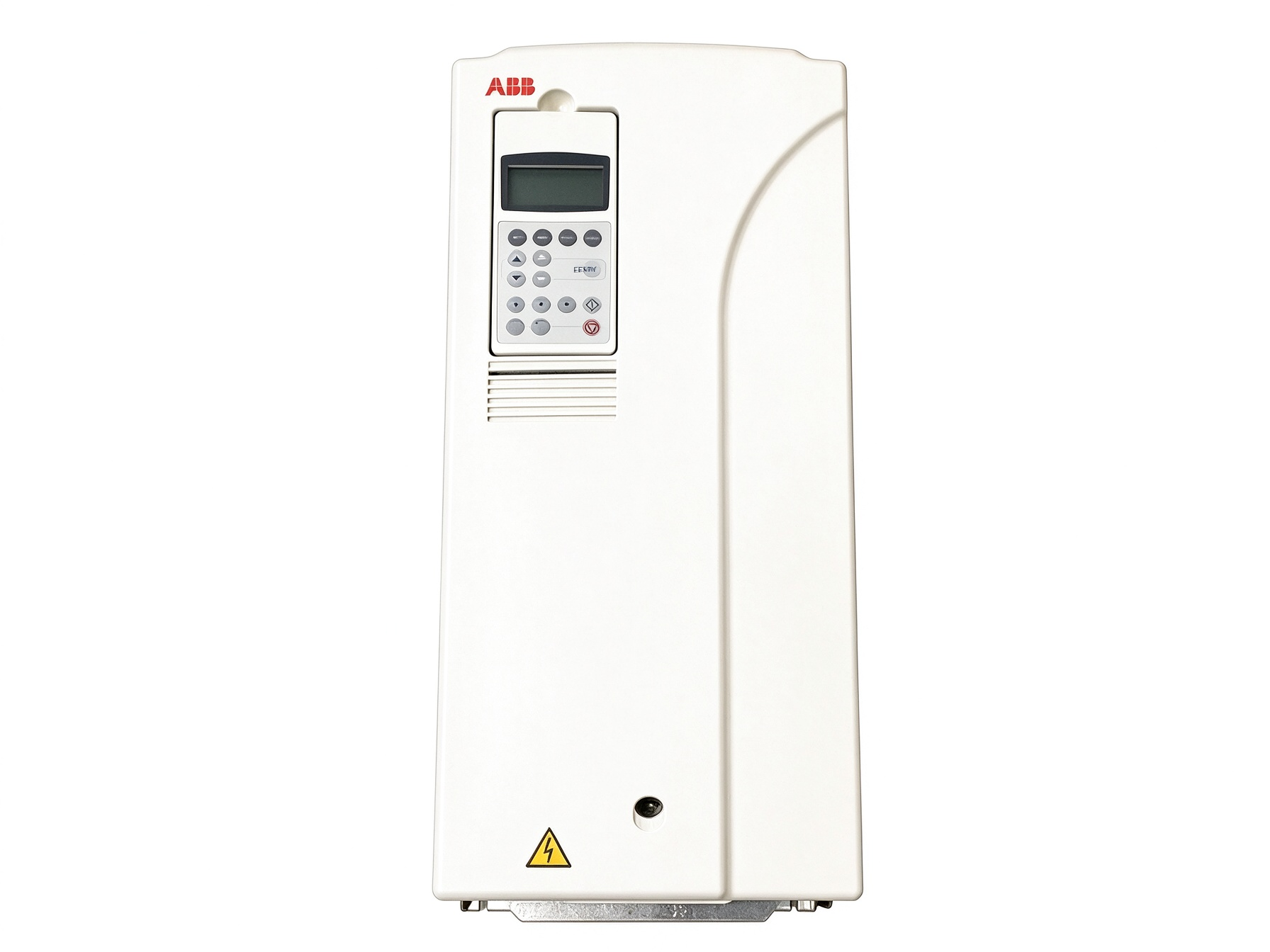
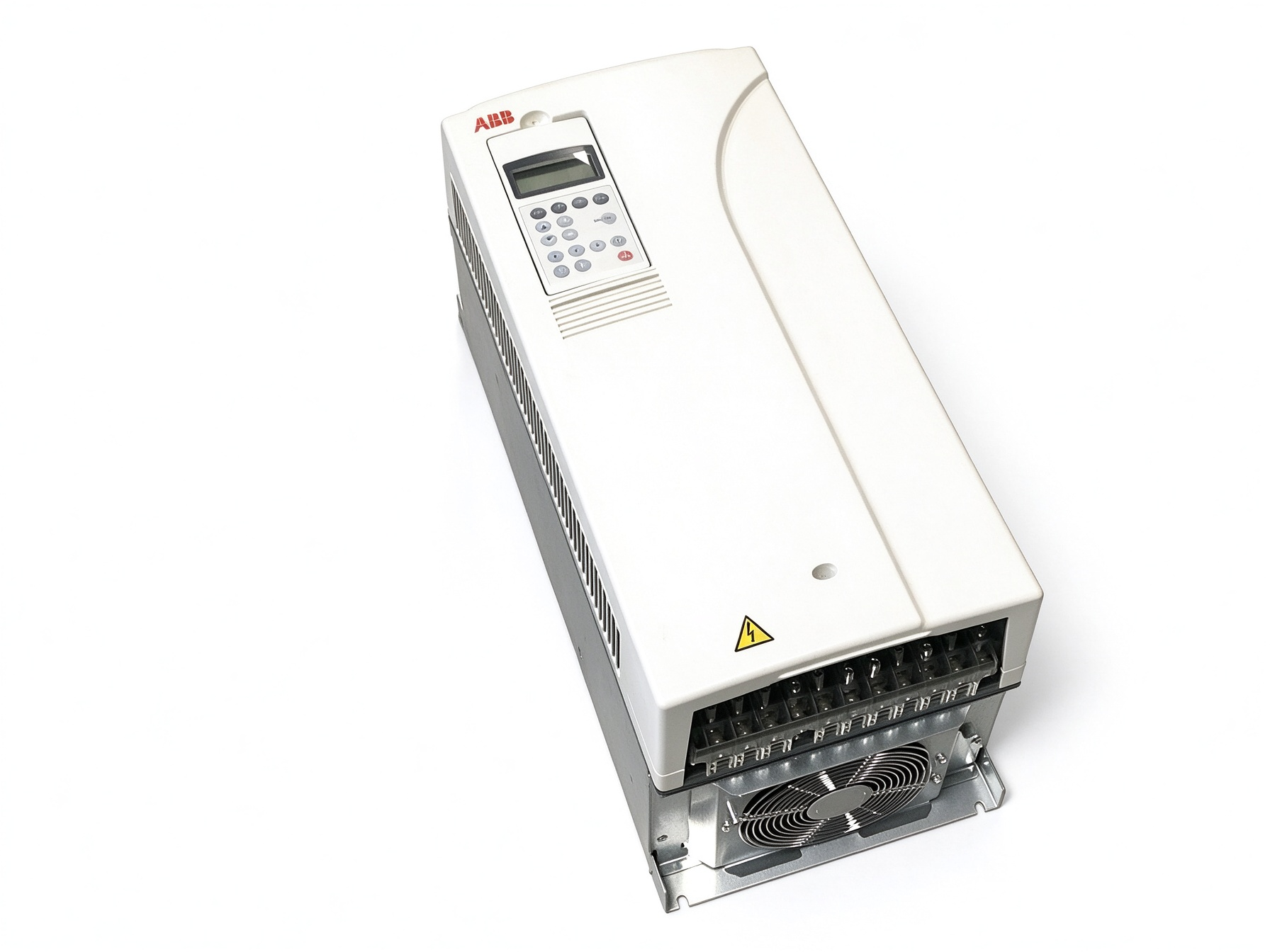
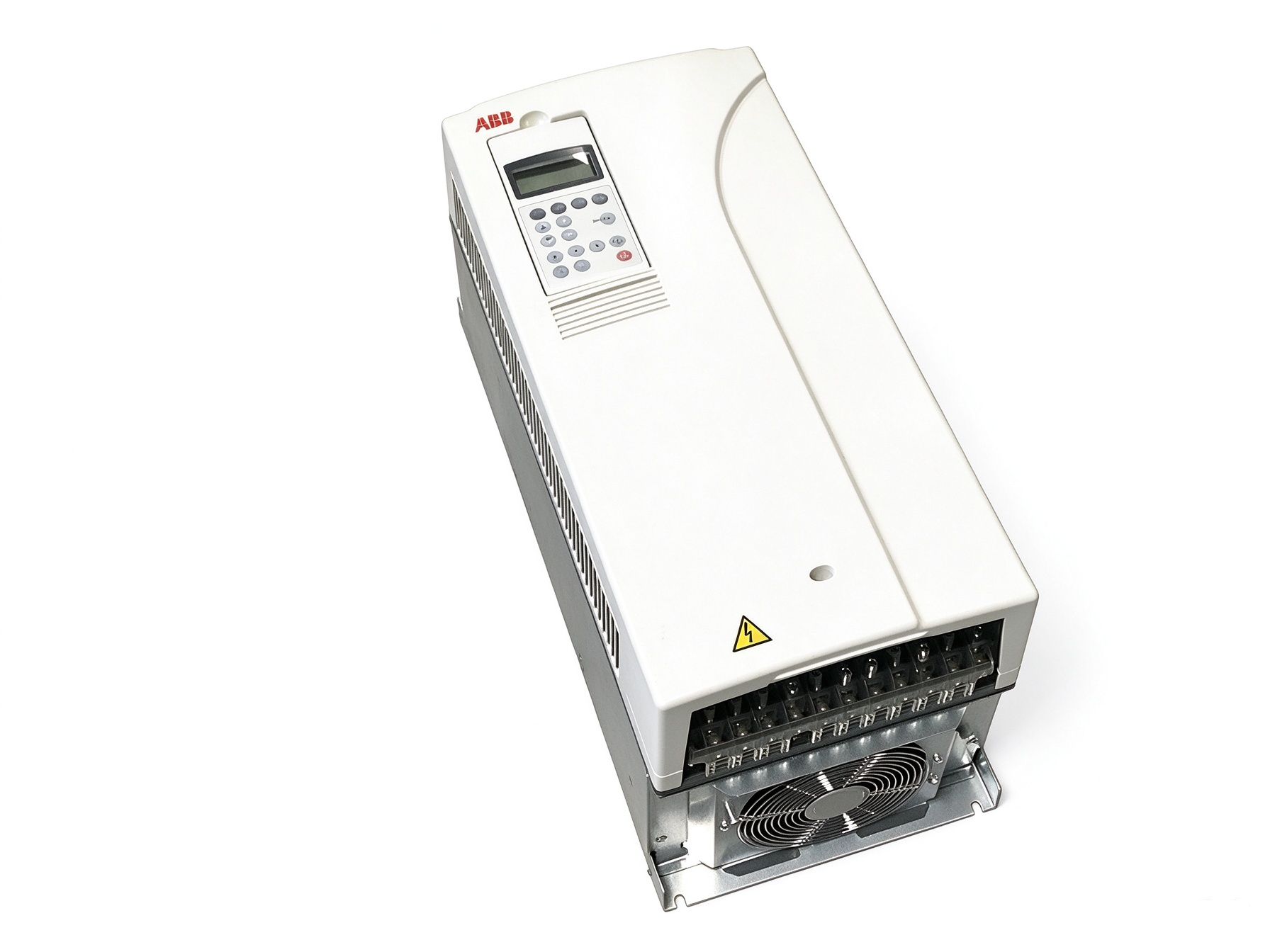
ABB ACS800-01-0075-3 D150 P901 75kW Variable Frequency Drive
Product Overview
The ABB ACS800-01-0075-3+D150+P901 is a variable frequency drive designed for industrial motor speed control. It belongs to ABB’s ACS800 general-purpose drive family and is intended for applications that require controlled motor operation, adjustable speed, and integration into industrial electrical systems. This configuration has a rated power of 75 kW and is designed as a wall-mounted single drive.
The ACS800 series uses ABB Direct Torque Control (DTC) technology to regulate motor operation. By controlling motor torque and flux according to the drive’s control principles, the system supports responsive performance across a range of industrial operating conditions. The drive can be applied to compatible motors and machinery where the required speed, torque, and operating characteristics fall within the equipment specifications.
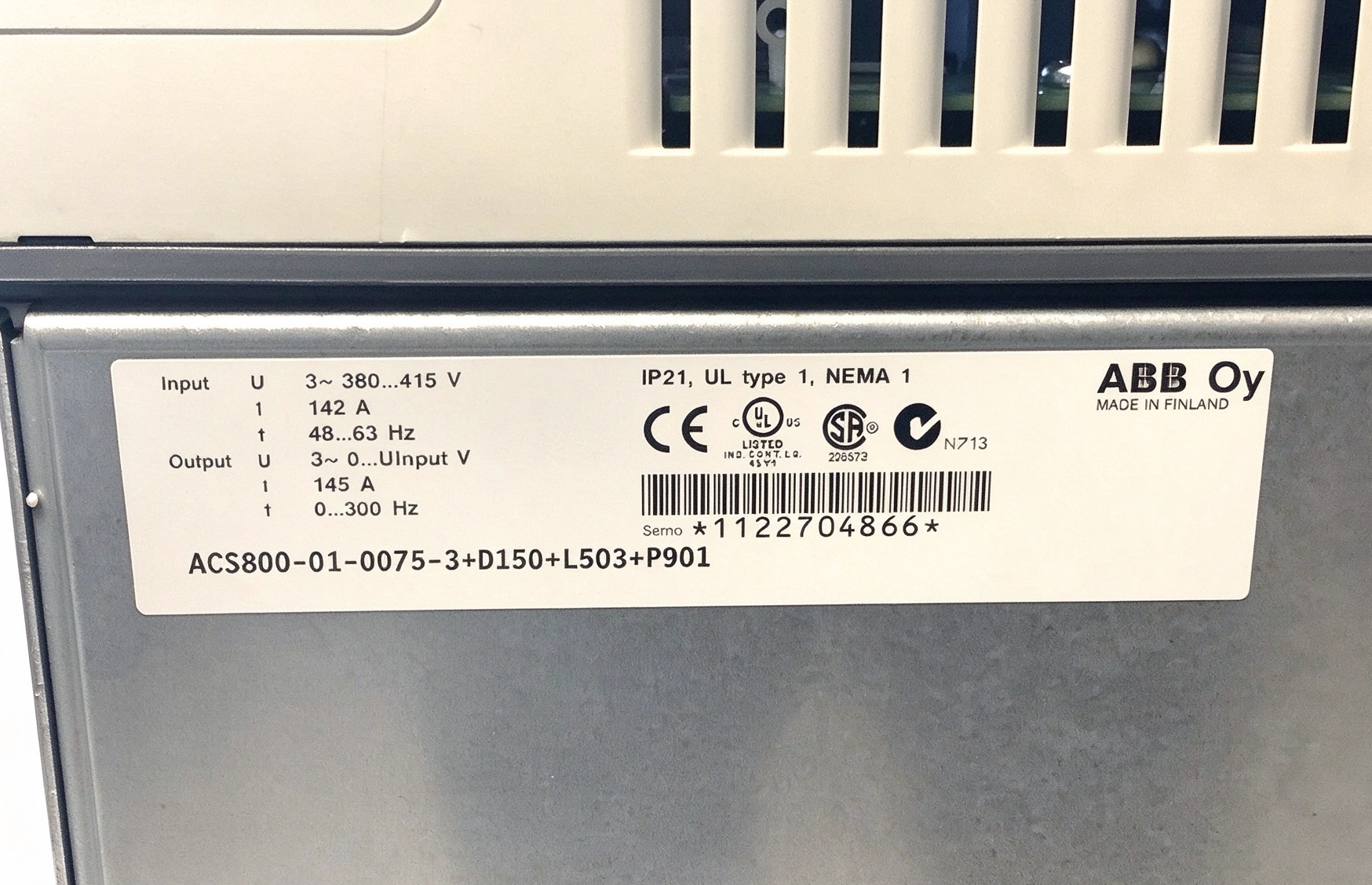
The complete type designation includes two option codes. D150 identifies the braking chopper option, while P901 identifies coated circuit boards. These options form part of the drive configuration and should be retained when identifying the equipment or selecting a compatible replacement. The complete ordering designation should be checked against the drive nameplate and its applicable technical documentation.
Technical Specifications
The main identification and rating information for the ACS800-01-0075-3+D150+P901 configuration includes the following:
- Manufacturer: ABB
- Product family: ACS800 general-purpose drives
- Type designation: ACS800-01-0075-3+D150+P901
- Drive type: Wall-mounted variable frequency drive
- Rated output power: 75 kW
- Typical normal-duty output current: 145 A
- Input supply: Three-phase 380–415 V AC, subject to the applicable rating and documentation
- Enclosure class: IP21 for the cited standard configuration
- D150 option: Braking chopper
- P901 option: Coated circuit boards
- Motor control principle: Direct Torque Control (DTC)
These values describe the commonly listed configuration and should not replace the ratings on the installed unit. Actual suitability depends on the drive nameplate, motor characteristics, load profile, ambient conditions, and the applicable ABB hardware manual. Current and power ratings may differ according to operating duty and installation conditions.
Motor Speed Control and Direct Torque Control
The ACS800 drive adjusts the electrical power supplied to a motor to regulate its operating speed and torque. This allows machinery to operate according to process demand rather than running continuously at a fixed speed. Appropriate speed control can improve process flexibility and help coordinate motor operation with pumps, fans, conveyors, mixers, and other driven equipment.
ABB Direct Torque Control is a core feature of the ACS800 family. DTC is designed to control motor torque and flux directly, supporting dynamic motor response in applications where accurate control is important. The actual performance achieved depends on motor data, parameter settings, control mode, load characteristics, and commissioning quality.
During setup, the motor nameplate data must be entered correctly and the commissioning procedure must be completed according to ABB instructions. Incorrect motor parameters can affect speed regulation, torque response, protection behavior, and overall system performance. The drive should be configured for the connected motor and the requirements of the driven machine.
D150 Braking Chopper Option
The D150 option identifies a braking chopper configuration. During deceleration or other operating conditions in which the motor returns energy to the drive, the DC link voltage may rise. In a compatible braking arrangement, the braking chopper controls the connection of an external braking resistor so that excess energy can be dissipated as heat.
This function can support applications that require controlled deceleration or experience regenerative energy during operation. Typical examples may include machinery with changing loads or frequent speed transitions. The braking arrangement must be designed according to the drive documentation, the required stopping behavior, and the specifications of the compatible braking resistor.
The presence of the D150 option does not by itself establish the permissible braking power, duty cycle, or stopping time for every application. These parameters depend on the complete drive configuration, resistor selection, thermal limits, and operating profile. Engineers should consult the relevant ABB documentation before designing or modifying the braking circuit.
P901 Coated Circuit Board Option
The P901 option identifies coated circuit boards in the drive configuration. Protective coating is intended to provide an additional layer of protection for electronic assemblies against environmental influences specified for the equipment design. This option can be relevant in industrial installations where environmental conditions require consideration during equipment selection.
Coated circuit boards do not remove the need to observe the drive’s environmental limits. Ambient temperature, humidity, condensation, conductive contamination, vibration, enclosure conditions, and cooling requirements must still be evaluated according to the manufacturer’s instructions.
When identifying a drive for maintenance or replacement, retain the P901 suffix as part of the full ordering designation. A drive without the same option should not automatically be assumed to have identical environmental characteristics. Any substitution should be assessed against the requirements of the original installation.
Industrial Applications
The ACS800 general-purpose drive family is used in a range of industrial motor-control applications. Depending on the load and engineering design, compatible applications can include pumps, fans, conveyors, mixers, and other machinery requiring adjustable speed. The appropriate drive rating depends on the motor, required torque, load characteristics, acceleration and deceleration requirements, and operating environment.
In pump systems, variable speed control can help match flow delivery to process demand. Fan applications can use speed adjustment to regulate air movement. Conveyors and process machinery may require controlled acceleration, speed adjustment, or coordinated operation with other equipment. Each application should be assessed individually to ensure that the drive and motor are correctly sized.
The drive must be selected based on the actual load duty rather than rated motor power alone. Heavy-duty operation, frequent starts, high ambient temperatures, and other demanding conditions may affect the permissible output current or require additional engineering measures.
Installation and Electrical Integration
Installation should follow the applicable ABB hardware manual and the site’s electrical safety procedures. Before mounting the drive, verify the supply voltage, protective earthing, required clearances, ventilation, cable routing, and environmental conditions. The drive must be installed in a location that satisfies its enclosure and cooling requirements.
Power wiring, motor cables, control wiring, and communication connections should be installed according to the approved electrical drawings. Correct cable sizing and grounding are important for electrical safety and reliable operation. The installation should also account for electromagnetic compatibility and any requirements associated with the motor cable or surrounding equipment.
Before energizing the drive, inspect the electrical connections and verify that the motor and driven equipment can operate safely. Commissioning should include checking the supply and motor data, verifying parameter settings, testing control commands, and confirming the intended direction of rotation. The braking circuit, where used, must be checked against the applicable configuration and instructions.
Maintenance and Troubleshooting
Routine maintenance should follow ABB recommendations and the maintenance policy of the facility. Relevant checks may include inspecting cooling paths, reviewing drive diagnostics, examining electrical connections, and checking the condition of the installation environment. Maintenance intervals should reflect the equipment’s duty and operating conditions.
If the drive reports a fault, record the displayed fault information before resetting the equipment. Investigate the relevant supply conditions, motor circuit, load, cooling system, parameter settings, and braking arrangement as appropriate. Repeatedly resetting a drive without identifying the cause can obscure the original problem and may expose connected equipment to further risk.
When replacing the drive or one of its components, verify the complete type designation and relevant configuration options. Preserve the existing parameter backup where available and confirm that the replacement is suitable for the motor, control system, and application. Any return to service should follow the approved testing and commissioning procedure.
Product Identification and Configuration Control
The full designation ACS800-01-0075-3+D150+P901 is important for equipment records and spare-parts identification. The base model identifies the drive family and rating, while the option codes identify additional configuration features. Omitting these suffixes can lead to confusion between units that appear similar but do not have the same configuration.
Equipment records should include the complete type designation, serial number, relevant parameter backup, installation location, and applicable documentation references. These records help maintenance personnel verify compatibility and reduce the risk of selecting an unsuitable replacement.
When planning a system modification, review the motor data, load profile, supply arrangement, braking requirements, environmental conditions, and control-system interfaces. The replacement or modified configuration should satisfy the complete application requirements rather than matching only the nominal power rating.
Conclusion
The ABB ACS800-01-0075-3+D150+P901 is a 75 kW variable frequency drive for industrial motor control. It combines the ACS800 drive platform and Direct Torque Control technology with the D150 braking chopper option and P901 coated circuit board option. These configuration details are important when evaluating the drive for an installation or identifying a compatible replacement.
Correct application requires verification of the nameplate ratings, motor requirements, braking design, installation conditions, and applicable ABB documentation. Maintaining accurate configuration records and following established commissioning and maintenance procedures supports reliable integration into industrial automation systems.
评价
目前还没有评价