
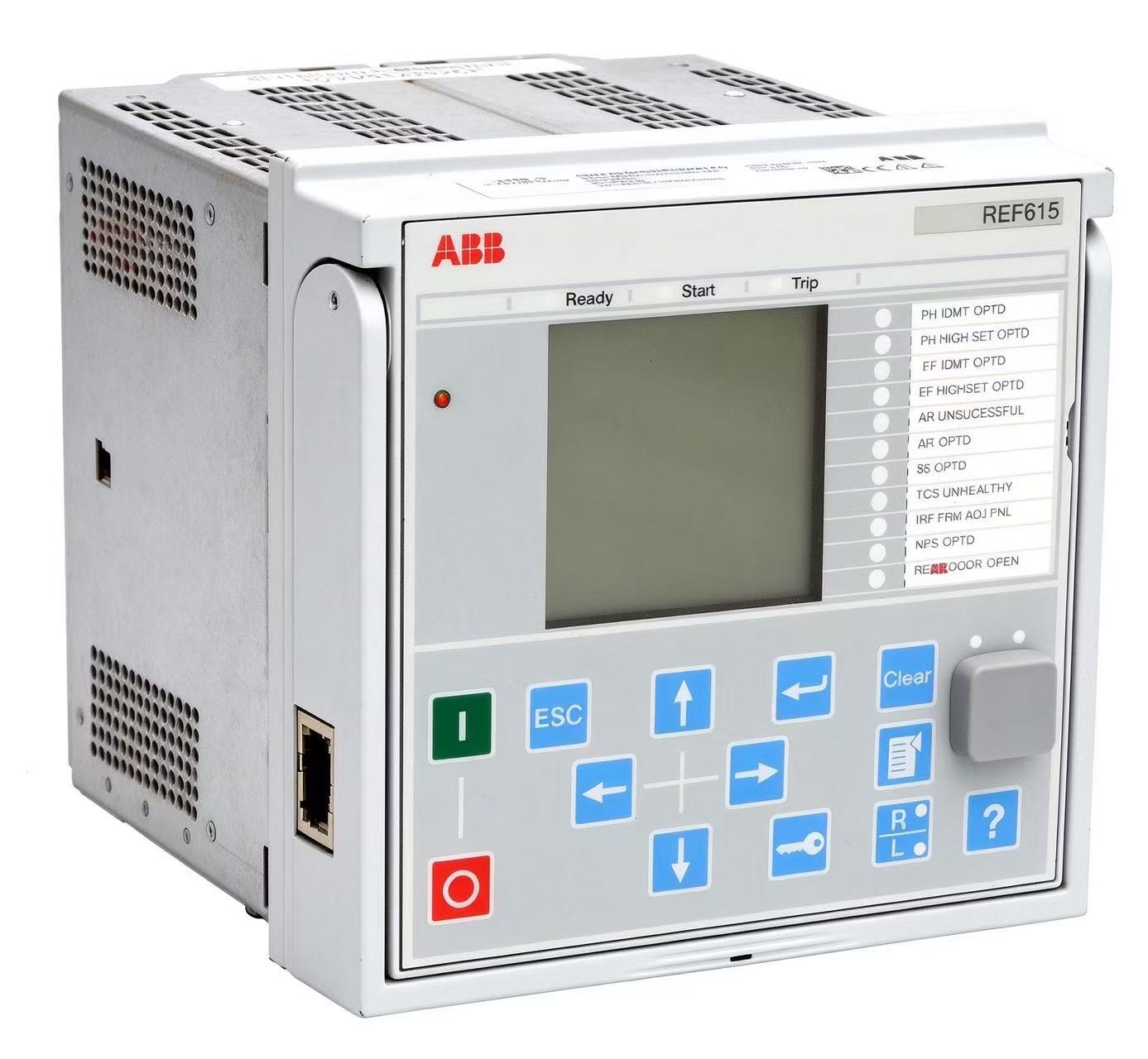
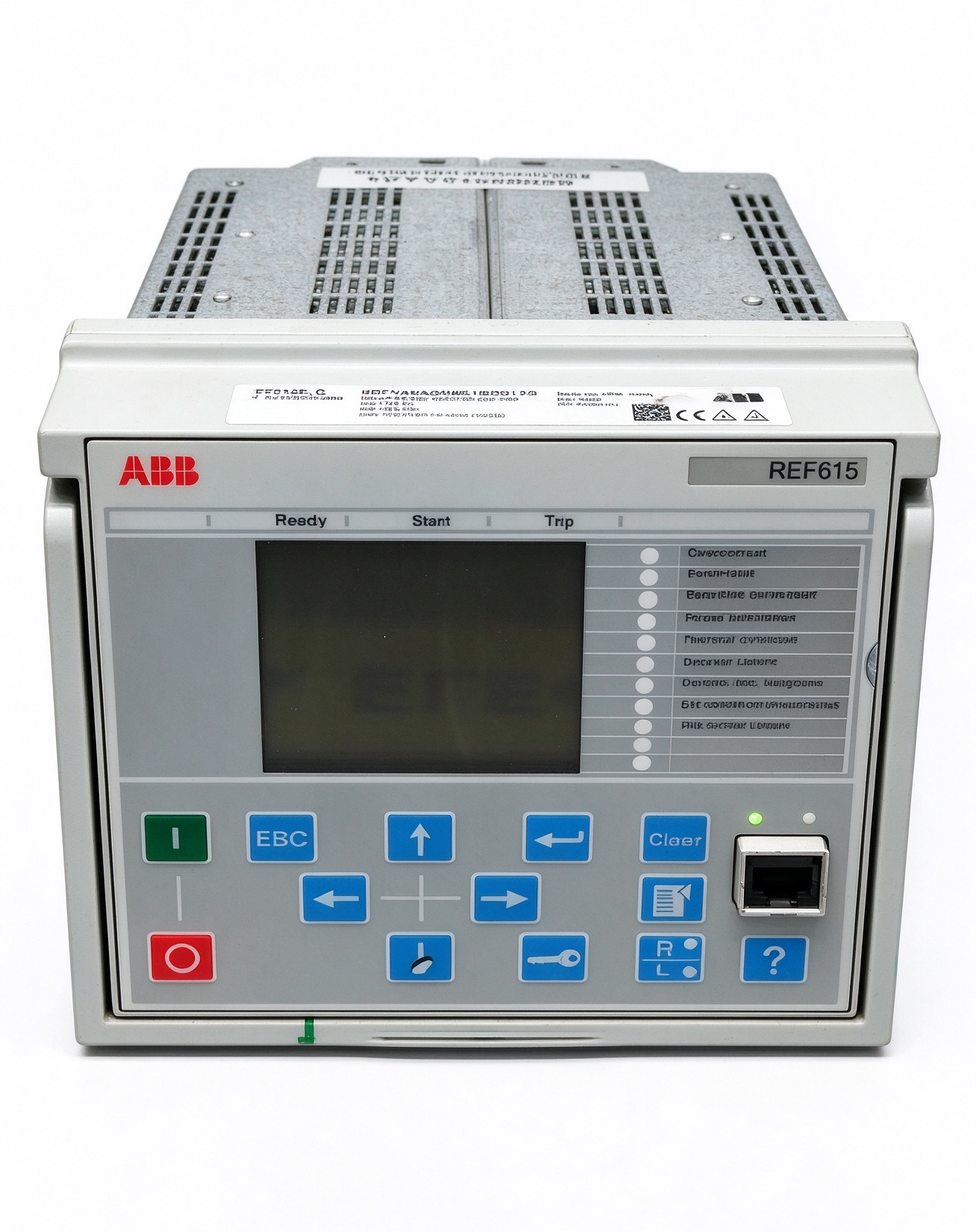
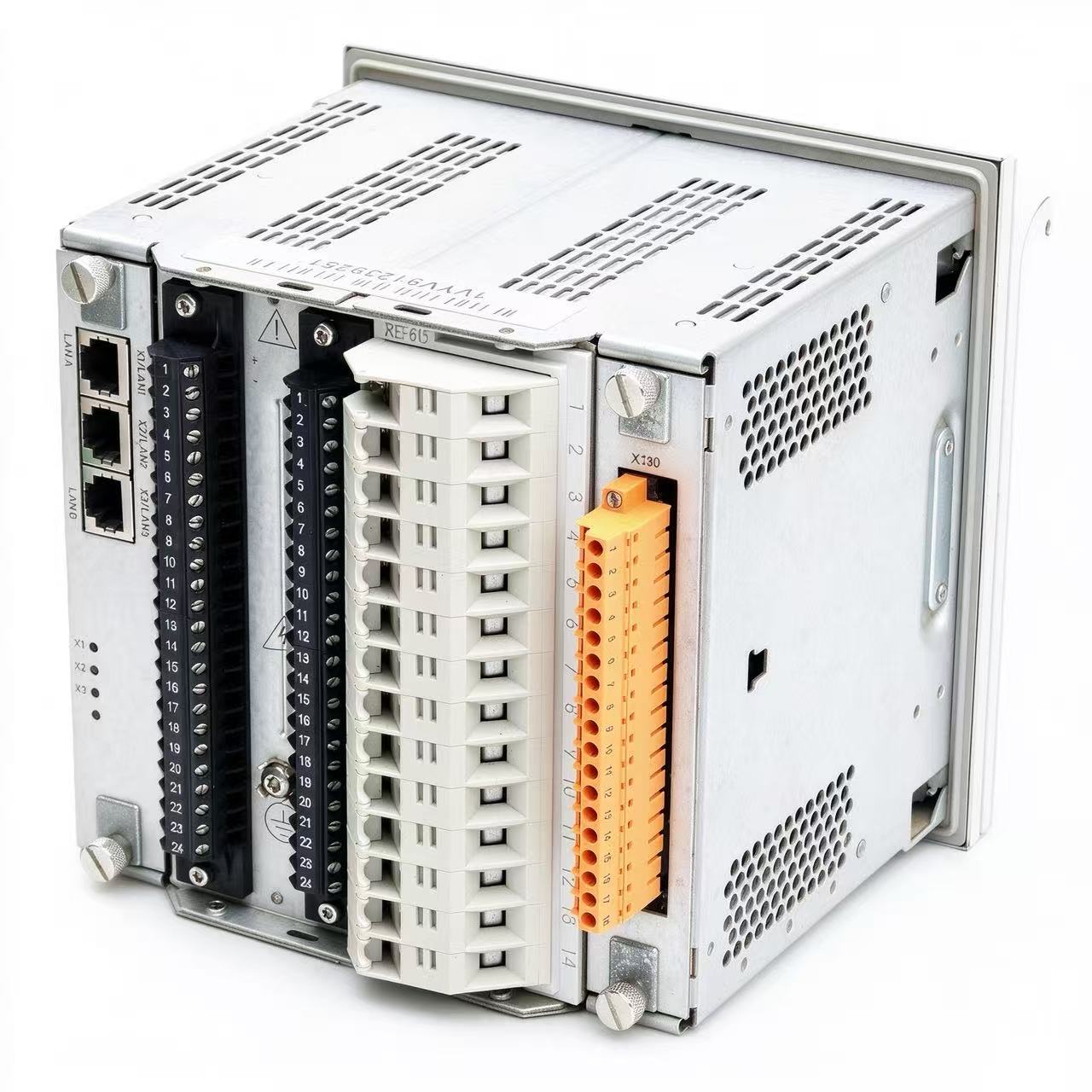
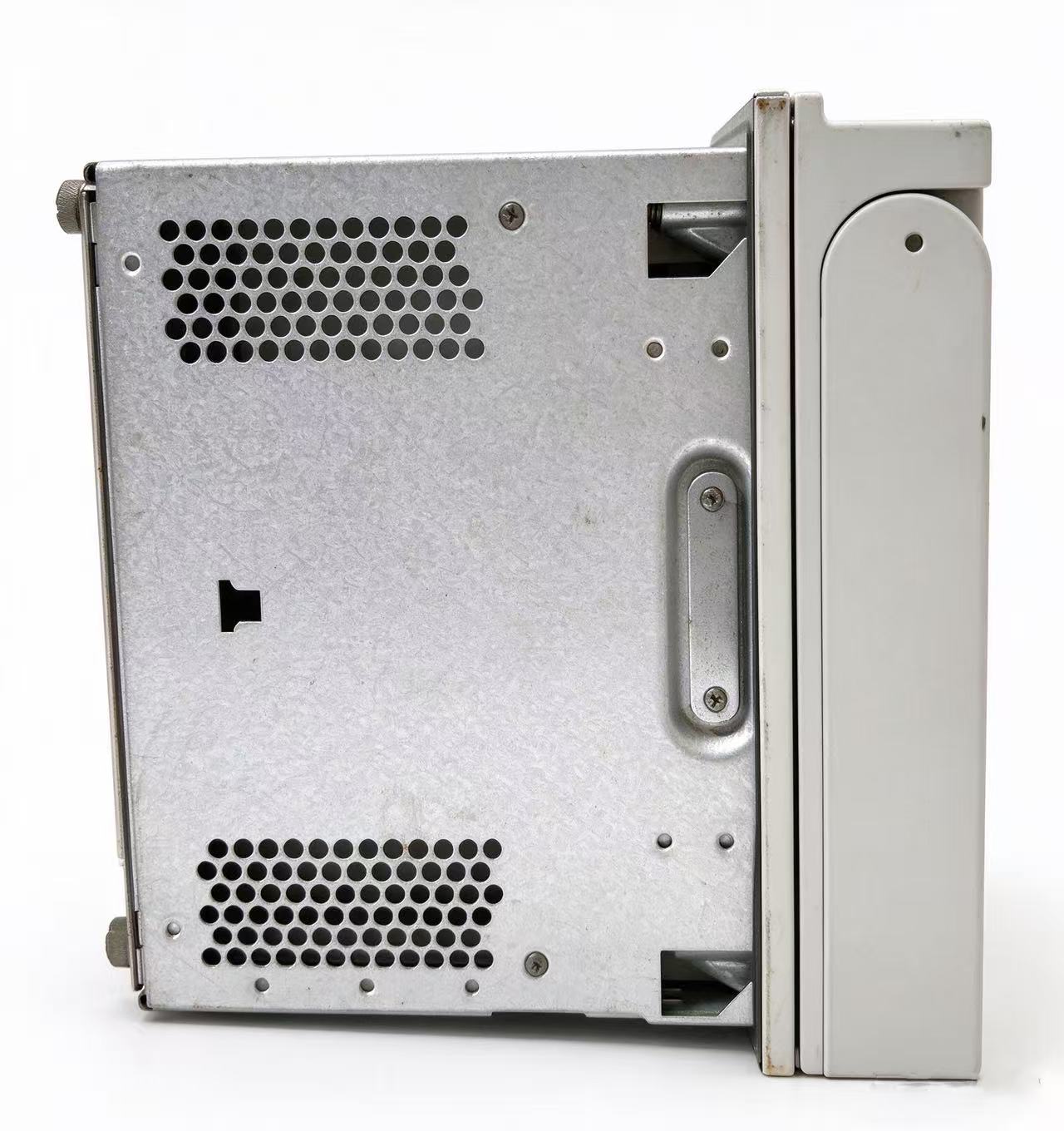
ABB REF615 615HBFJAEAGNCC1BGA1XG Feeder Protection and Control Relay
Product Overview
The ABB REF615 is a feeder protection and control intelligent electronic device (IED) belonging to the Relion 615 series. It is designed for use in distribution power systems where feeder protection, control, monitoring, and supervision are important parts of electrical network operation. The device combines protection functions and control-related capabilities within a dedicated relay platform intended for power distribution applications.
The ordering designation 615HBFJAEAGNCC1BGA1XG is supplied as the identifier for the specific device addressed on this page. ABB uses structured ordering codes to distinguish hardware and configuration choices in the 615 series. Because individual characters can represent different options, the complete code should be checked against the product nameplate and the relevant ABB ordering documentation before making detailed claims about its exact inputs, outputs, communication interfaces, or protection configuration.
In a distribution installation, a feeder protection relay monitors electrical quantities and applies configured protection logic to identify abnormal operating conditions. Depending on the selected configuration and engineering settings, a protection IED can participate in tripping, alarms, event recording, measurement, and communication with a wider control system. The actual functions available in a particular REF615 unit depend on its ordered configuration, installed hardware, application settings, and firmware version.
Feeder Protection and Control
Electrical feeders connect distribution equipment to downstream circuits and loads. Faults or abnormal operating conditions on a feeder can affect equipment availability, power quality, and the continuity of supply. A feeder protection relay provides a defined mechanism for monitoring the electrical system and initiating the actions configured by the protection engineer.
The REF615 platform is intended to support feeder protection and control in compatible distribution applications. Protection functions are selected according to the network design, grounding arrangement, equipment characteristics, coordination study, and applicable operating standards. Relay settings must therefore be developed for the actual installation rather than copied from an unrelated feeder or another device configuration.
Protection coordination is an essential engineering consideration. The selected settings should allow the protection system to distinguish between operating conditions that require intervention and conditions that can be tolerated temporarily. Coordination with upstream and downstream protective devices helps limit the impact of a fault while maintaining the intended selectivity of the distribution network.
The relay’s control role may also be integrated with circuit-breaker operation and related substation automation functions when supported by the ordered configuration. The exact control logic and available signals must be established from the approved application design and the applicable device documentation.
Monitoring, Measurements, and Event Information
Monitoring functions help operating personnel understand the condition of a feeder and investigate abnormal events. Depending on the selected hardware and software configuration, an IED in the REF615 family can provide electrical measurements, status information, protection indications, and event-related data. These capabilities support operational awareness and can help engineers review the sequence of events surrounding a disturbance.
Measurements and indications should always be interpreted in the context of the configured instrument-transformer ratios, signal assignments, protection settings, and application logic. An incorrect configuration can cause displayed values or protection behavior to differ from the intended engineering design. Commissioning procedures should include checks of measurement scaling, binary signals, trip circuits, and communication mappings where applicable.
Event records and disturbance information, when available in the configured device, can assist with fault investigation and maintenance planning. Personnel should follow the relevant ABB operating instructions to retrieve and interpret records. The presence and format of specific recording functions should be verified for the actual relay version rather than assumed from the product-family name alone.
Communication and System Integration
Modern protection IEDs may exchange measurements, status signals, alarms, and control information with station automation or supervisory systems. In the REF615 family, available communication interfaces and protocols depend on the selected communication hardware and configuration. The full ordering code is therefore important when determining whether a particular relay can meet a project’s communication requirements.
Before integrating the relay into a substation network, engineers should verify the physical interface, supported protocol, network topology, addressing scheme, and configuration tools required by the installation. Communication parameters should be coordinated with the station design and documented so that future maintenance personnel can understand how the relay exchanges information with other equipment.
Interoperability also depends on correct signal mapping and engineering configuration. A physical connection alone does not establish that protection indications or control commands will be interpreted correctly by the receiving system. Integration testing should confirm the intended data points and operating behavior in accordance with the approved commissioning plan.
Configuration and Ordering Code Identification
The designation 615HBFJAEAGNCC1BGA1XG should be retained exactly as supplied when recording or identifying the requested device. ABB ordering codes are structured identifiers, and individual code positions can represent the product series, application, I/O arrangement, communication hardware, power-related options, or other configuration details. The meaning of each character must be interpreted using the ordering key that applies to the correct product version.
Do not infer every hardware option from a similar-looking ordering code. Differences in a single character may correspond to a different interface, input arrangement, output arrangement, or other selection. For engineering or replacement purposes, compare the complete order code with the label on the installed relay and consult the appropriate ABB product guide.
Useful identification records include the product family, full order code, serial number, hardware revision where available, firmware information, and the equipment location. These details help maintenance teams distinguish between units that share the same product-family name but have different configuration options.
Installation and Commissioning Considerations
Installation and commissioning should be performed by qualified personnel following the applicable ABB instructions and the site’s electrical safety procedures. Before connecting the relay, confirm the panel design, mounting arrangement, auxiliary supply requirements, current and voltage circuit assignments, grounding provisions, and terminal wiring against the approved drawings.
Current-transformer and voltage-transformer circuits require particular attention. Their ratios, polarity, phase assignment, and terminal connections must correspond to the protection design. Incorrect wiring or configuration can affect measurements and protection performance. Work on instrument-transformer circuits must follow appropriate safety procedures and the relevant equipment instructions.
During commissioning, verify the installed hardware against the project specification. Review the application settings, protection coordination, binary inputs and outputs, trip-circuit interfaces, alarms, and communication parameters as applicable. Functional checks should follow an approved test plan, and results should be documented before the relay is placed into service.
Maintenance and Troubleshooting
Maintenance of a feeder protection relay includes reviewing device status, inspecting the installation, checking relevant diagnostics, and maintaining accurate configuration records. The inspection interval and required checks should be determined by the site’s maintenance policy, operating environment, risk assessment, and applicable manufacturer recommendations.
If an abnormal indication occurs, begin by reviewing the relay’s available diagnostic information and event records. Check the auxiliary supply, wiring, instrument-transformer circuits, configuration settings, and communication path where relevant. Avoid assuming that a relay fault is the cause of every feeder problem; external wiring, circuit-breaker mechanisms, network conditions, or incorrect settings may also contribute.
Before changing protection settings or replacing hardware, preserve the existing configuration and follow the approved maintenance procedure. Any replacement unit should be checked for the correct ordering code and compatible configuration. After maintenance, verify the required protection and control functions and update the equipment records.
Applications in Distribution Networks
Feeder protection and control IEDs are used in distribution substations and industrial electrical networks where feeder circuits require monitoring and coordinated protective action. Typical engineering considerations include the network topology, short-circuit levels, grounding method, connected loads, circuit-breaker characteristics, and the requirements of the supervisory control system.
The REF615 should be selected and configured to suit the electrical design of the installation. A product-family description alone does not define the complete application, because the available functions and interfaces depend on the ordered version and the engineering settings. Protection studies, approved drawings, and the manufacturer’s documentation remain the basis for applying the device correctly.
Conclusion
The ABB REF615 is a feeder protection and control IED in the Relion 615 series, intended for compatible distribution network applications. It provides a platform for implementing configured protection, control, monitoring, and system-integration functions. The exact capabilities of an individual unit depend on its ordered hardware configuration, software version, and application settings.
For the designation 615HBFJAEAGNCC1BGA1XG, retain the full code in product records and confirm the configuration against the relay nameplate and applicable ABB documentation. Correct identification and engineering verification are essential when selecting, installing, integrating, or maintaining a protection relay in an operational power system.

评价
目前还没有评价