
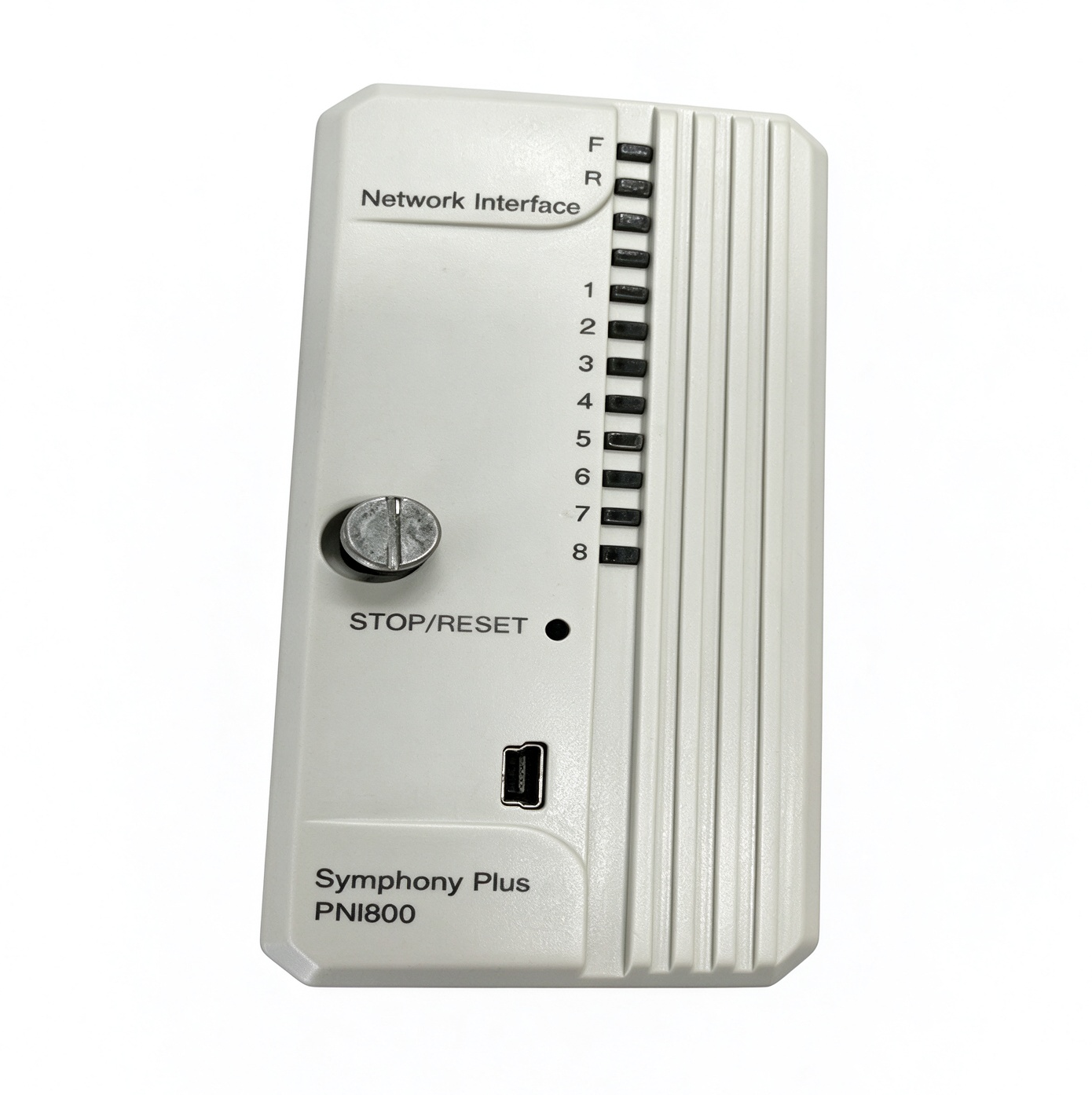
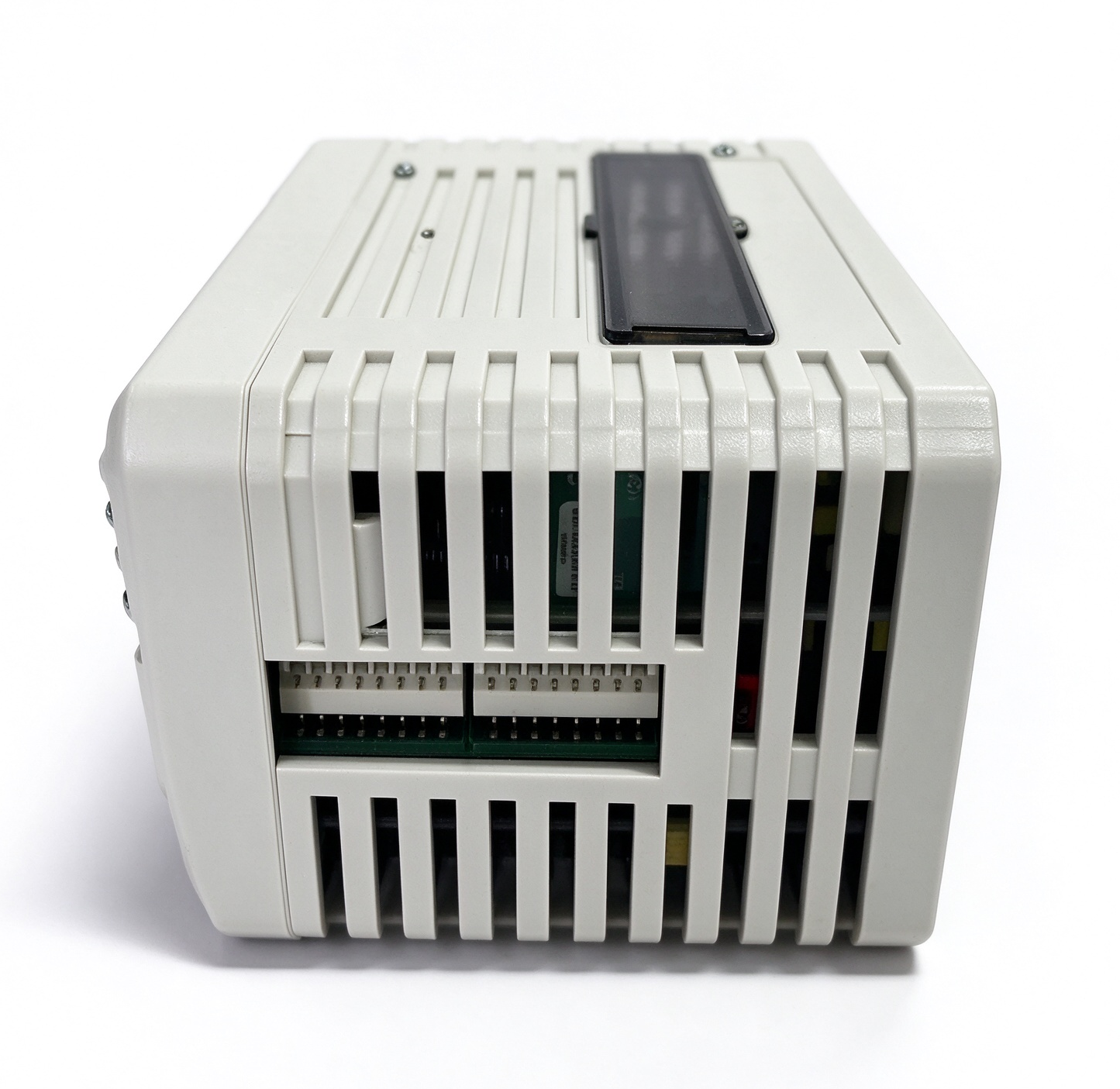
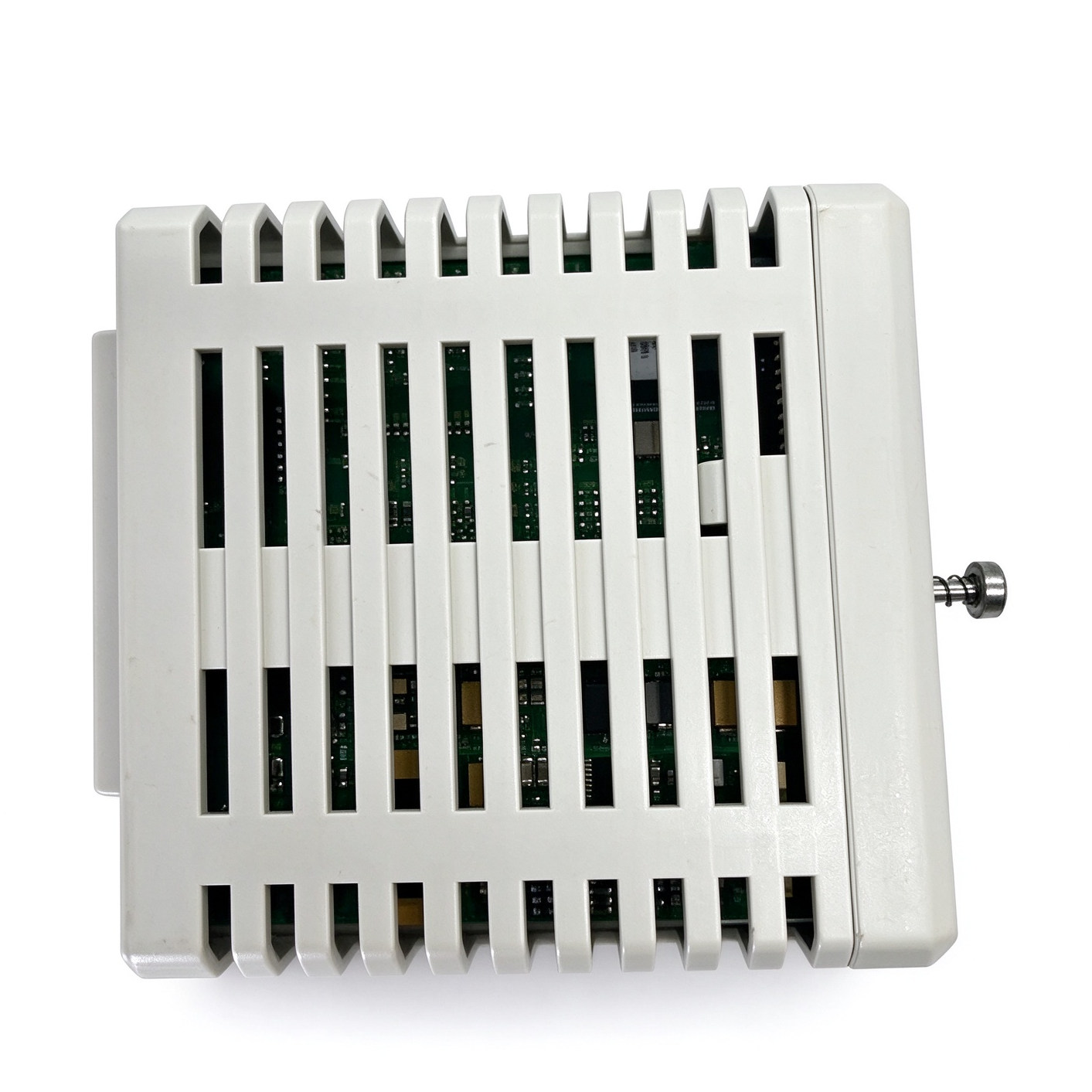
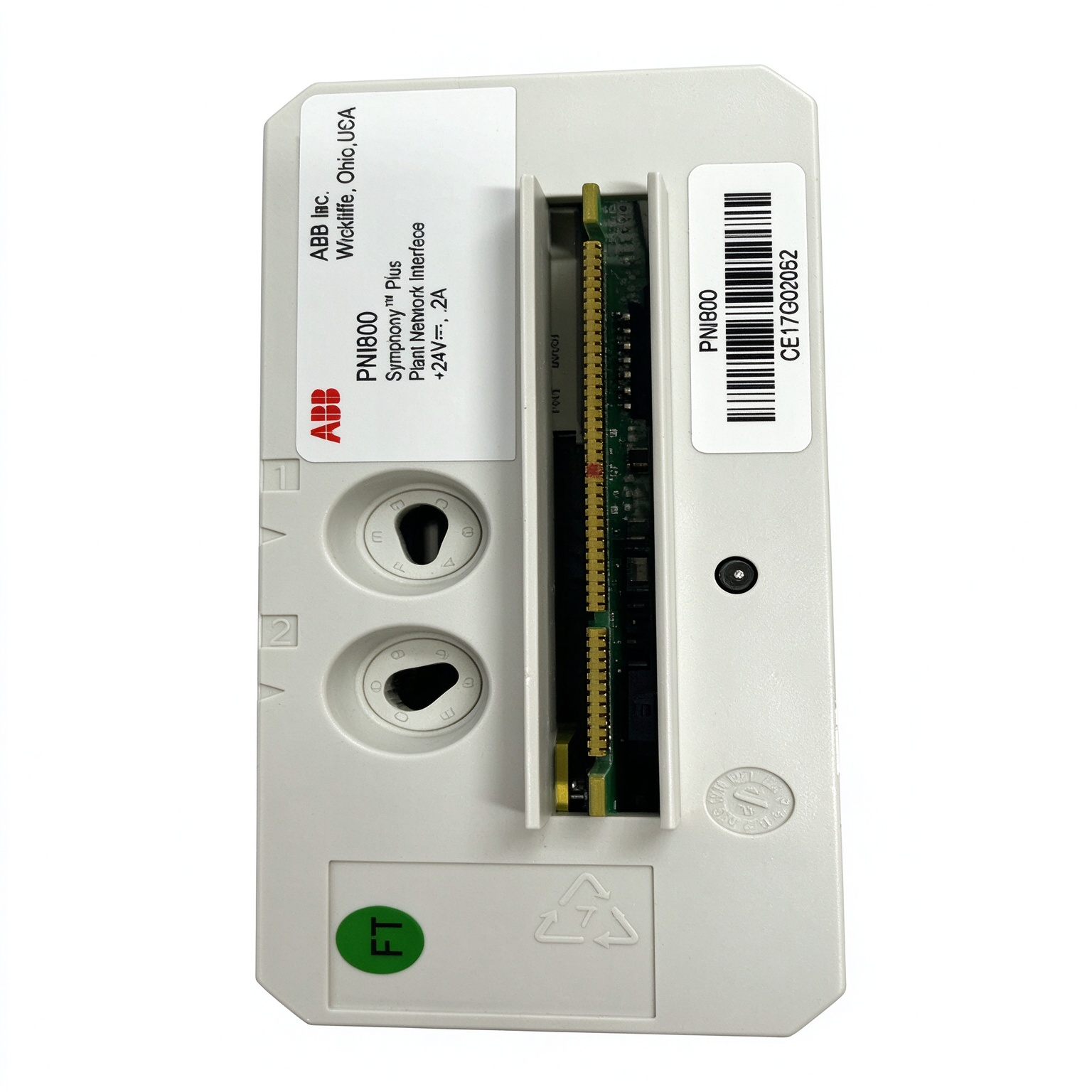
ABB PNI800A Plant Network Interface
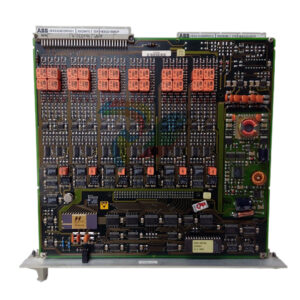
The ABB PNI800A is associated with plant network communication in ABB Symphony Plus industrial automation environments. Plant network interfaces provide a communication path between control-system resources and supervisory applications, helping engineering, operator interface, and monitoring software exchange process information with controllers.
Product Overview
Modern industrial automation systems rely on dependable communication between controllers, engineering workstations, operator stations, and supervisory applications. In a distributed control system (DCS), these communication paths allow authorized software applications to access process data and support plant operation. The ABB PNI800 interface family is designed for this role within the Symphony Plus SD Series architecture.
PNI800 is identified as a Plant Network Interface. Its documented function is to provide real-time, bidirectional communication between SD Series controllers and PC workstations running applications such as S+ Engineering, Symphony Plus Operations, 800xA Operations, or compatible general-purpose interface software. The precise capabilities of a particular PNI800A unit should be checked against its applicable product documentation.
The interface belongs to the broader Symphony Plus control and I/O environment, which is designed to integrate process control, field-device information, and higher-level plant applications. Its role is communication-oriented rather than that of a standalone process controller or a conventional field input/output module.
Role in the ABB Symphony Plus System
ABB Symphony Plus is a distributed control system platform used for process automation in applications such as power generation, water treatment, and other industrial operations. It combines controllers, communication interfaces, I/O components, engineering tools, operator interfaces, and supervisory functions within an integrated architecture.
Within this environment, a plant network interface supports communication between the control network and compatible software applications. Engineering workstations can use the network to carry out supported engineering tasks, while operator and supervisory applications can access process information for display, monitoring, and operation according to system permissions and configuration.
This communication role helps separate controller-level process execution from the higher-level applications used by engineers and operators. The interface does not independently determine the plant control strategy. Instead, it provides communication functionality within a correctly configured automation system.
System compatibility depends on the controller family, network architecture, software version, hardware configuration, and applicable interface settings. These elements should be reviewed together when planning an installation, expansion, or replacement.
PN800 Plant Network Communication
The PNI800 product family is associated with the PN800 real-time control network used in the Symphony Plus SD Series. This network supports communication between SD Series controllers and connected engineering or supervisory applications. The documented PNI800 architecture uses Ethernet-based communication for its connection to the plant network.
PNI800 provides bidirectional communication, meaning information can be exchanged between supported applications and controllers in accordance with the system configuration. The actual data available to an application depends on the controller configuration, software functionality, engineering database, and access permissions.
For maintenance and system planning, it is important to distinguish the plant network interface from the physical network infrastructure. Network switches, cabling, redundant network paths, controller connections, and workstation configuration all influence overall communication behavior. A correctly selected interface must operate within the intended Symphony Plus architecture and supported software environment.
Before connecting or replacing a unit, engineers should verify the required network topology, connector arrangement, base or mounting requirements, and software compatibility. These checks help prevent configuration errors and unnecessary interruption to plant communication.
Network Redundancy and Availability
Availability is an important consideration in industrial control networks because communication interruptions can affect operator visibility, engineering access, and the exchange of process information. The documented PN800 plant network supports Parallel Redundancy Protocol (PRP), defined by IEC 62439.
PRP uses two separate local area networks, commonly identified as LAN A and LAN B, with corresponding network topologies. A compatible dual-attached node can communicate through both networks. This arrangement is intended to maintain communication when a failure affects one network path or a network component, without requiring a conventional switchover between the paths.
In the documented PNI800 architecture, the interface functions as a dual-attached node for the redundant PN800 network. This provides line redundancy at the network connection level. It should not be confused with module redundancy: ABB’s PNI800K01 hardware data identifies line redundancy but does not list module redundancy for that particular model.
Redundancy depends on the complete network design. Both network paths, compatible infrastructure, correct configuration, and suitable monitoring are important. A redundant interface alone cannot guarantee system availability if other critical components or both network paths are affected.
Because the exact suffix PNI800A has not been independently confirmed against a dedicated technical datasheet here, engineers should verify the redundancy behavior and supported topology for the precise hardware version before applying these details to a live system.
Integration with Engineering, HMI, and SCADA Applications
Plant network interfaces support the exchange of information between controllers and software used throughout an automation project. In a Symphony Plus installation, engineering software may be used to configure or maintain supported system resources. Operator interface applications present process information and allow authorized personnel to interact with the plant. SCADA or other compatible applications may provide additional monitoring and data-access functions.
The PNI800 documentation identifies S+ Engineering, Symphony Plus Operations, 800xA Operations, and general-purpose interface software such as Harmony OPC Server among the application environments associated with this communication function. Actual support depends on the relevant product release, licensing, and system configuration.
During integration, engineers should confirm application versions, controller compatibility, network addressing, access permissions, and communication settings. Any changes to a running control network should follow the plant’s approved management-of-change procedures and operational safety requirements.
Hardware and Configuration Considerations
Hardware selection should be based on the exact product designation rather than a family name alone. The PNI800K01 datasheet lists two Ethernet RJ45 connections on an MB805 base, a mini-USB diagnostic port on the module front, horizontal-row mounting, and a hot-swap capability. These are documented details for PNI800K01 and should not automatically be treated as confirmed specifications for every PNI800A variant.
Before ordering or replacing a module, compare the complete part number, installed base or mounting arrangement, connector layout, system generation, and supported firmware or software versions. If the existing installation uses a specific hardware revision, verify whether the proposed replacement is compatible with the current configuration.
Where network redundancy is used, confirm that the physical network paths and associated equipment are arranged according to the system design. Network labels, cabling records, configuration backups, and maintenance documentation should be kept current to support future troubleshooting.
Do not assume that two modules with similar model numbers are interchangeable without checking their technical documentation. A suffix can identify a particular variant, revision, or environmental specification that affects selection and installation.
Installation and Maintenance Guidelines
Installation and replacement should be performed by personnel familiar with the relevant ABB Symphony Plus system and the site’s control-network procedures. Before work begins, identify the module, confirm its position and connections, review the applicable instructions, and determine whether the planned activity could affect controller communication or operator access.
Follow the documented requirements for electrical safety, grounding, handling, mounting, and connection. Do not disconnect network cables or remove hardware from an operating system unless the approved procedure explicitly permits the action and the operational impact has been assessed.
For troubleshooting, review the module indicators and available diagnostics, then check the network connections, switch status, communication configuration, and application-side alarms. Compare the observed behavior with the system documentation rather than assuming that every communication issue originates in the interface itself.
Maintain records of the installed part number, hardware revision, system configuration, replacement history, and any changes made during maintenance. These records can simplify future fault diagnosis and help engineers confirm compatibility when equipment is serviced or upgraded.
Industrial Applications
The PNI800 interface family is relevant to industrial plants that use ABB Symphony Plus SD Series controllers and require communication with engineering or supervisory applications. Potential application environments include process facilities where operators need access to controller data, engineers maintain system configurations, and supervisory software supports plant monitoring.
In these environments, reliable communication contributes to operational visibility and coordination between control and supervisory layers. The exact application depends on the installed Symphony Plus architecture, the software used, and the role assigned to the interface within the overall network design.
Conclusion
The ABB PNI800A is associated with the plant network interface role in Symphony Plus automation systems. The documented PNI800 family provides real-time, bidirectional communication between SD Series controllers and supported PC-based engineering, HMI, SCADA, or general-purpose interface applications. The PN800 network supports PRP-based line redundancy as part of its communication architecture.
For accurate product selection, installation, and replacement, confirm the exact PNI800A designation against the applicable ABB datasheet and system documentation. Particular attention should be paid to hardware compatibility, network connections, redundancy design, and software support before the module is integrated into an operating control system.
评价
目前还没有评价