
ABB TBC9.30.10 Three-Pole Contactor for Industrial Motor Control
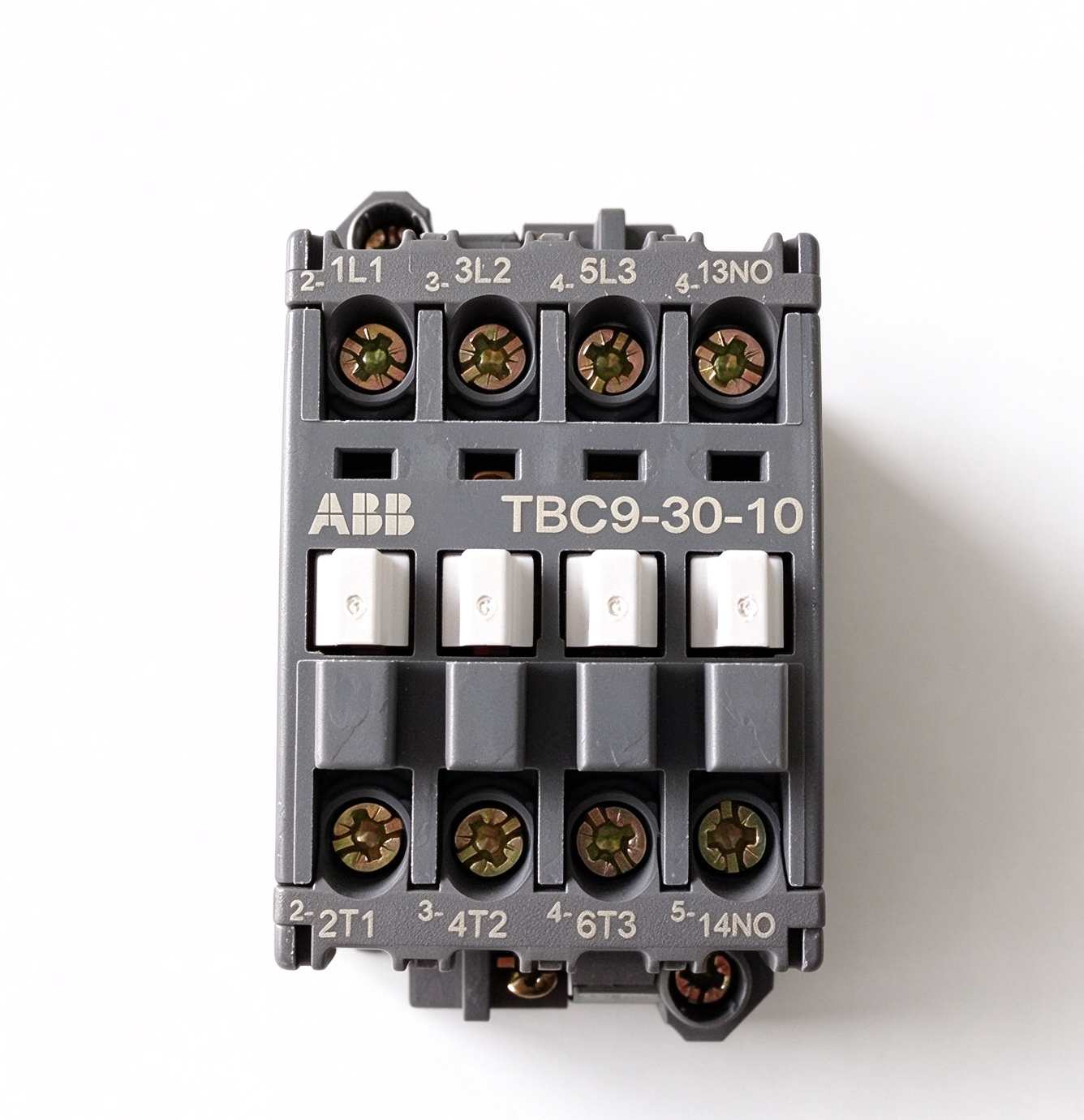
The ABB TBC9.30.10 is a three-pole contactor belonging to the ABB TBC9 contactor family. It is designed for industrial electrical control systems where switching of three-phase circuits is required. The TBC9-30-10 configuration combines three main power poles with one normally open auxiliary contact, providing both load switching and an additional control contact within a compact contactor assembly. Its configuration makes it suitable for motor control panels, machinery, industrial automation systems and electrical distribution applications.
ABB TBC9.30.10 Contactor Overview
The ABB TBC9.30.10, also identified as TBC9-30-10 in ABB technical documentation, is part of the TBC range of industrial contactors. The TBC series was developed for electrical switching applications and includes different contact configurations for controlling motors and other three-phase loads.
The TBC9.30.10 configuration is based on three main poles and one normally open auxiliary contact. The three main poles are used to connect or disconnect the three phases of a power circuit, while the auxiliary contact provides an additional electrical signal for control logic, indication or interlocking.
This configuration allows the contactor to perform more than a simple power-switching function. The main contacts handle the primary electrical circuit, while the auxiliary contact can interact with the control circuit of the machine or electrical installation.
TBC9-30-10 Contact Configuration
The designation TBC9-30-10 provides useful information about the contactor configuration. The TBC9 identifies the product family and size, while the 30-10 configuration represents a three-main-pole arrangement with one normally open auxiliary contact.
The three main poles are intended for switching a three-phase electrical circuit. When the contactor is energized, its main contacts change state together according to the mechanical design of the contactor. This coordinated operation allows the three phases of a motor or other three-phase load to be controlled from a single contactor.
The additional normally open auxiliary contact can be used for control and feedback purposes. For example, it can participate in a holding circuit, provide a contactor-state signal, or contribute to an electrical interlocking arrangement. The exact function depends on the control-system wiring.
Three-Phase Motor Control
Contactors are widely used in industrial motor control because they provide an electrically controlled method of connecting motors to their power supply. The ABB TBC9.30.10 is configured with three main poles, making it appropriate for switching three-phase circuits within systems designed for its electrical ratings.
In a conventional motor starter, the contactor works together with an overload relay and associated control components. The contactor switches the motor circuit while the overload protection device monitors the motor current and provides protection against sustained overload conditions.
The control circuit can use a pushbutton, selector switch, PLC output, relay or another control device to operate the contactor coil. When the coil receives the appropriate control signal, the contactor changes the state of its main contacts and auxiliary contact according to its configuration.
Auxiliary Contact Function
The normally open auxiliary contact included in the TBC9-30-10 configuration provides an additional switching point for the control circuit. Unlike the main power contacts, the auxiliary contact is primarily intended for control, signaling and logic functions rather than carrying the main motor load.
One common application is the contactor holding circuit. After a start command energizes the contactor, the auxiliary normally open contact can be incorporated into the control circuit so that the contactor remains energized after the momentary start command is released. A separate stop command can then interrupt the control circuit.
The auxiliary contact can also be used for status indication. A control system can monitor the auxiliary contact to determine whether the contactor is in its expected operating state. This type of feedback can be useful in industrial machinery and automated electrical systems.
Industrial Automation Applications
The ABB TBC9.30.10 can be incorporated into a range of industrial electrical applications where three-phase switching is required. Typical applications include motor starters, machine control cabinets, industrial production equipment, pumps, fans, conveyors and other motor-driven machinery.
In machine automation, a contactor can act as the power-switching interface between the electrical supply and the motor. A PLC or other controller can operate the contactor through an appropriate control circuit, while the auxiliary contact can provide an additional feedback or interlocking signal.
Contactors can also be used in systems containing multiple motors. Individual contactors can be assigned to different motors or operating functions, while auxiliary contacts can help establish logical relationships between different circuits. This approach is commonly used in industrial machinery where different loads must operate in a defined sequence.
Electrical Control Architecture
The TBC9.30.10 is normally used as one element within a larger electrical control architecture. A complete motor control circuit may include a circuit breaker or fuse, contactor, overload relay, control transformer or power supply, pushbuttons, selector switches and a programmable controller.
The contactor provides the switching function, while the surrounding components determine how the motor is started, stopped and protected. Correct coordination between these components is important for safe and reliable operation.
The auxiliary normally open contact can be connected to the control circuit according to the machine design. It may be used for self-holding logic, contactor-state feedback, sequence control or electrical interlocking. The specific terminal assignment should always be checked against the applicable contactor documentation.
Coil and Control Considerations
The operating coil is responsible for actuating the contactor mechanism. When the appropriate control voltage is applied to the coil, the electromagnetic mechanism moves the contact system and changes the state of the main and auxiliary contacts.
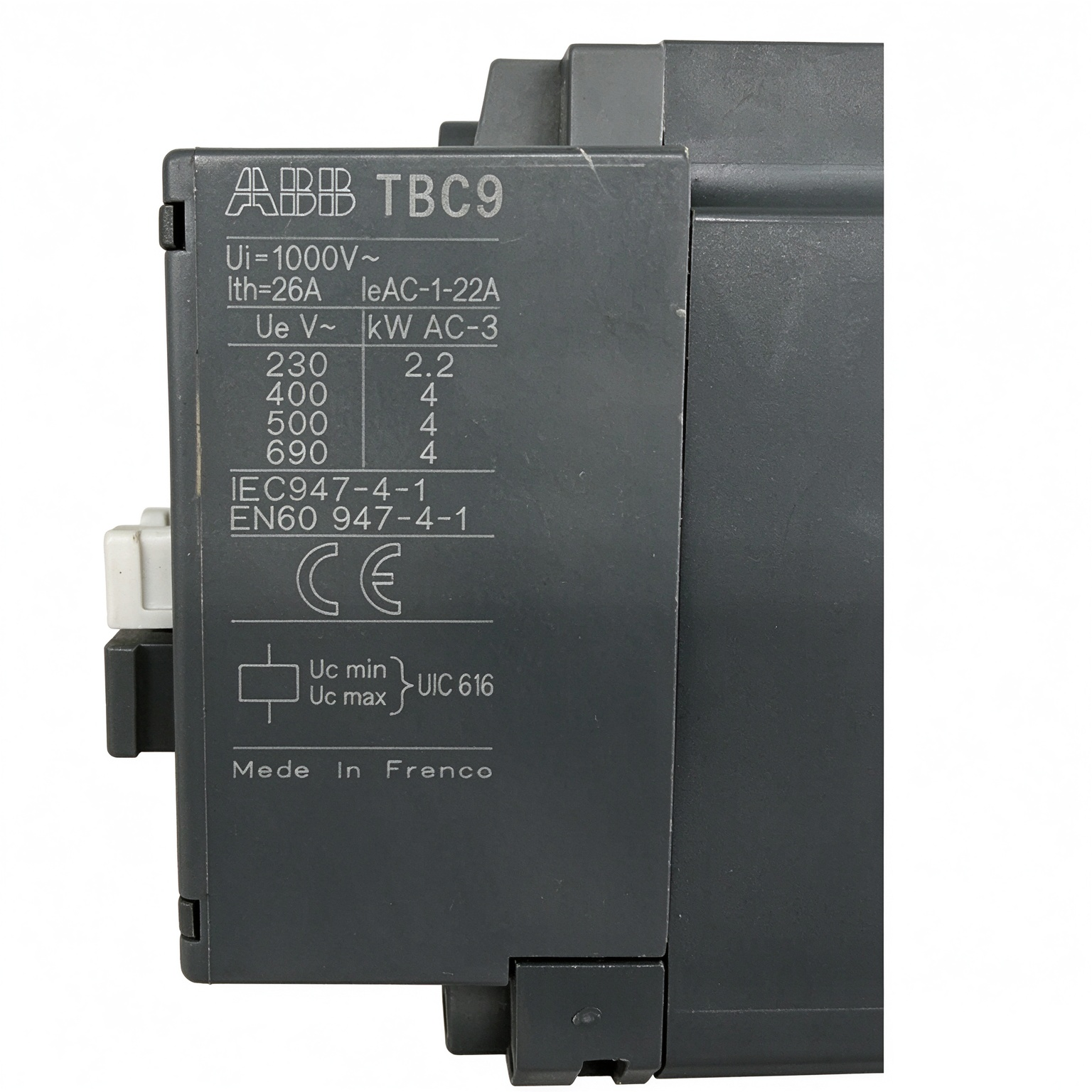
It is important to distinguish the TBC9.30.10 contact configuration from the complete coil specification. Historical ABB documentation lists TBC9 through TBC30 contactors in multiple configurations, and coil versions can have additional designation information. Therefore, the exact coil voltage should be confirmed from the complete product marking or ordering code rather than inferred from TBC9.30.10 alone.
When integrating the contactor into an existing control cabinet, the coil voltage must correspond to the available control supply. Applying an incorrect coil voltage can prevent proper operation and may damage the coil or associated control equipment.
Mechanical Integration
The TBC9.30.10 is designed as part of the ABB TBC contactor system and can be integrated into industrial control assemblies using the appropriate mounting arrangement. The physical installation should provide sufficient clearance for electrical connections and allow the contactor to operate without mechanical interference.
Contactors are commonly installed inside control cabinets together with overload relays and other switching equipment. The arrangement should provide suitable ventilation and separation between power and control wiring according to the requirements of the complete electrical system.
During installation, the main terminals and auxiliary terminals should be wired according to the applicable electrical schematic. Correct conductor sizing, terminal tightening and protective grounding should be considered as part of the complete installation.
Technical Configuration
| Specification | ABB TBC9.30.10 |
|---|---|
| Manufacturer | ABB |
| Product Family | TBC |
| Type Designation | TBC9.30.10 |
| Common Documentation Format | TBC9-30-10 |
| Product Type | Contactor |
| Main Poles | 3 |
| Main Contact Configuration | 3 Main Poles |
| Auxiliary Contacts | 1 Normally Open |
| Application | Three-Phase Motor and Industrial Load Switching |
| Mounting | Industrial Contactor Assembly |
| Control Function | Electrical Switching and Auxiliary Control |
| Coil Voltage | Configuration Dependent |
Maintenance and Replacement Considerations
When replacing a TBC9.30.10 contactor, the complete product designation should be checked against the installed component and the original electrical documentation. The TBC9 family contains multiple configurations, including variations in main and auxiliary contact arrangements, so the complete type code is important when selecting the corresponding component.
The coil specification is another important consideration. Because TBC contactors were available with different coil configurations, the coil voltage should be confirmed from the contactor marking or associated ordering information before connection to the control circuit.
The main contact configuration should also be compared with the existing electrical schematic. The TBC9-30-10 configuration provides three main poles and one normally open auxiliary contact, but another TBC configuration may have a different auxiliary arrangement.
Electrical maintenance should be carried out by qualified personnel. Before working on the contactor or connected circuits, the equipment should be isolated from its power source and appropriate electrical safety procedures should be followed.
ABB TBC9.30.10 in Industrial Electrical Systems
The ABB TBC9.30.10 provides a straightforward contactor solution for three-phase switching applications. Its three main poles allow a three-phase circuit to be controlled from a single electromagnetic switching device, while the normally open auxiliary contact provides an additional interface for control logic and electrical feedback.
This combination makes the contactor suitable for traditional motor starter arrangements and industrial control panels. When combined with appropriate circuit protection and overload protection, the contactor can form part of a complete motor control system.
For automation engineers, maintenance personnel and system integrators, the complete TBC9.30.10 identification provides an important reference when reviewing legacy control equipment. Matching the exact contactor configuration and coil specification with the existing electrical documentation helps maintain the intended function of the machine or process.
Conclusion
The ABB TBC9.30.10 is a three-pole contactor from the TBC9 family, with three main power poles and one normally open auxiliary contact. It is designed for industrial electrical switching and three-phase motor control applications, where a contactor is required to control a motor or other electrical load through an external control circuit.
The auxiliary contact provides additional possibilities for holding circuits, status feedback, interlocking and sequence control. The contactor can therefore function as an important switching element within motor starters, machinery control cabinets and industrial automation systems.
When selecting or replacing an ABB TBC9.30.10, the complete model designation, main contact configuration and coil specification should be verified against the original equipment documentation. In particular, the coil voltage should not be assumed from the TBC9.30.10 contact configuration alone. Correct electrical selection, wiring and installation are essential for integrating the contactor into an industrial control system.
评价
目前还没有评价