
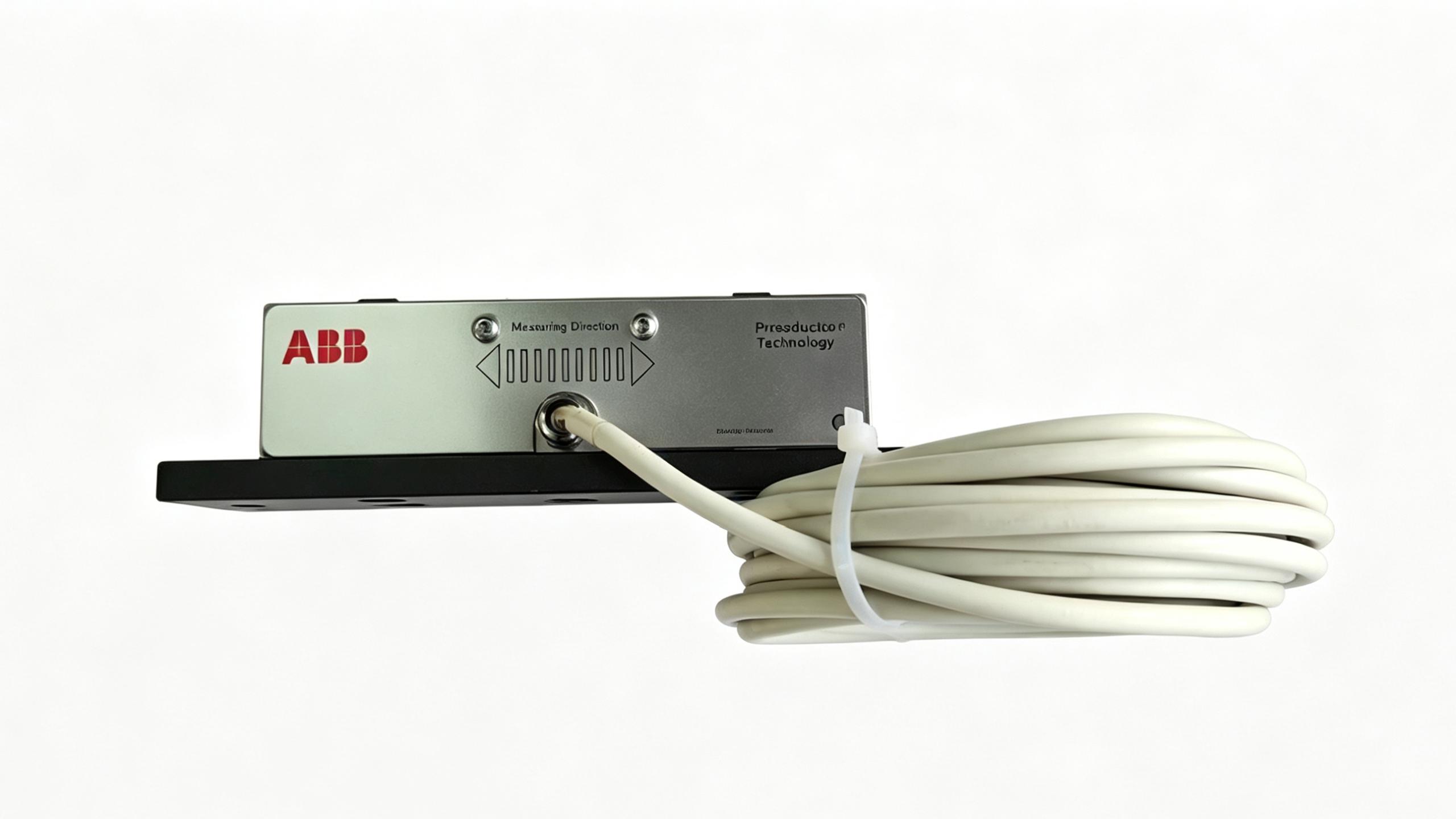
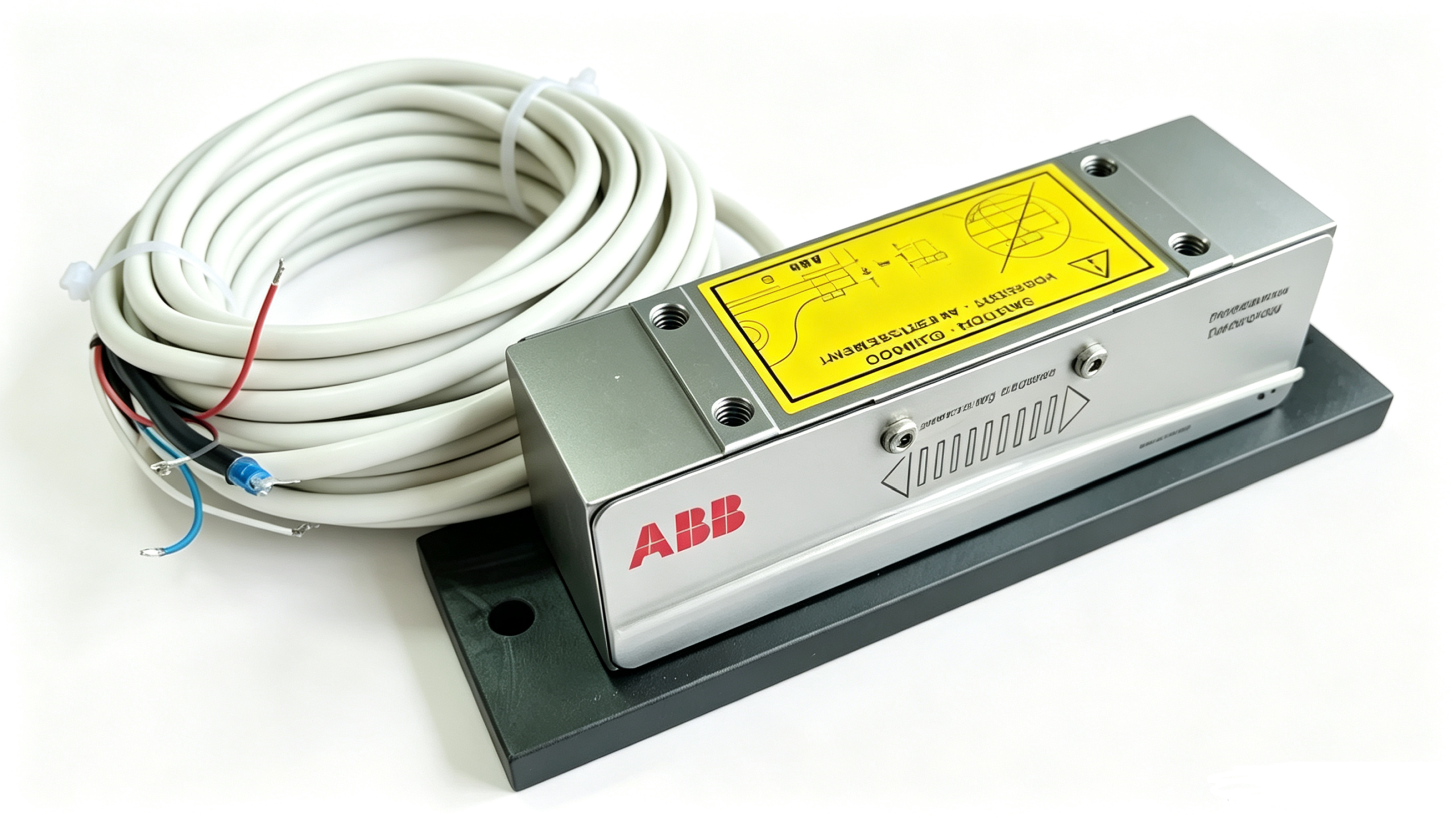
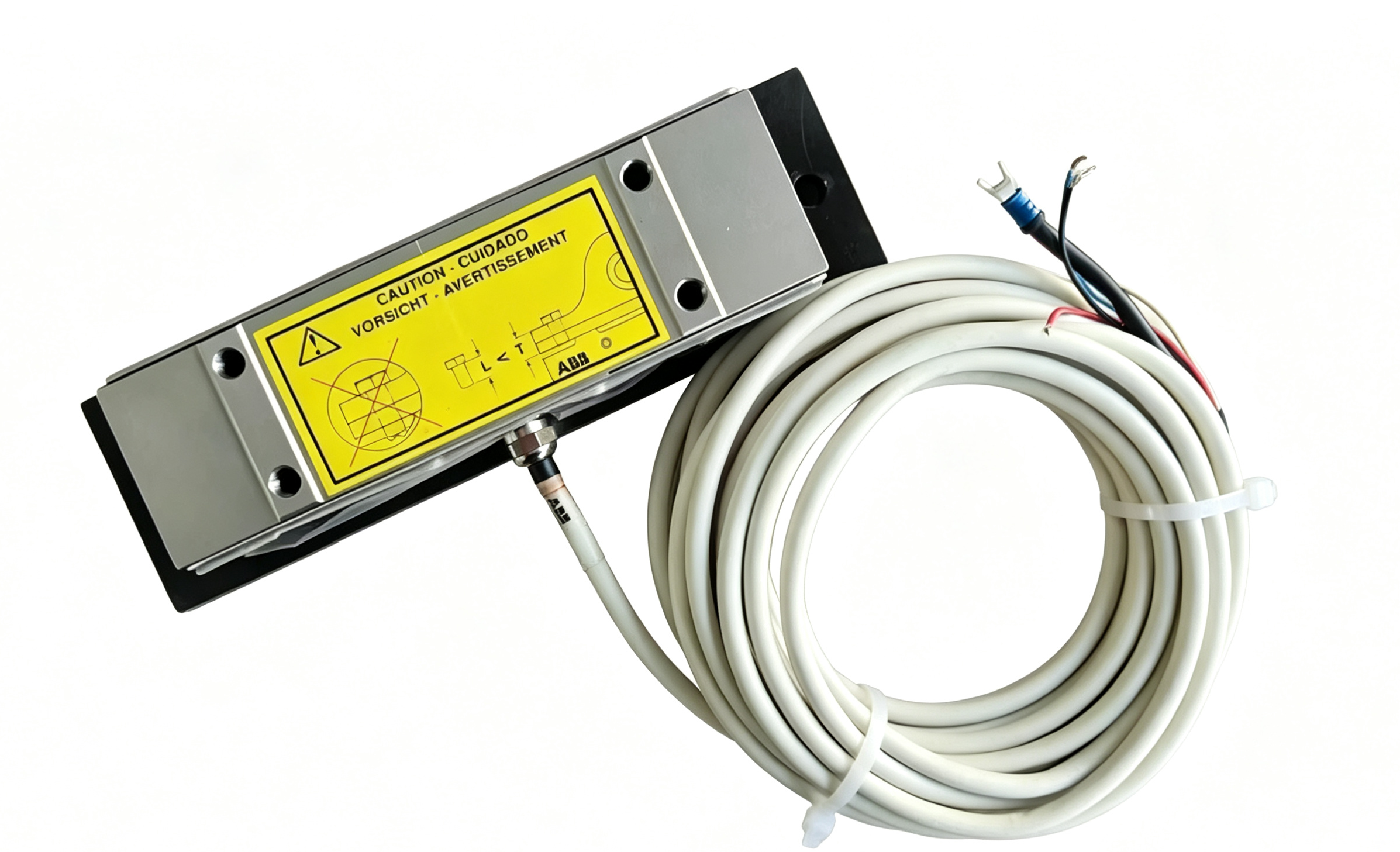
ABB 3BSE007913R50 PFTL 201C-50.0 Pressductor PillowBlock Load Cell
ABB 3BSE007913R50 is the order number for the PFTL 201C-50.0 Pressductor pillowblock load cell. This component belongs to ABB’s PFTL 201 series of web tension measurement devices and is designed for measuring tension forces in continuous web and strip processing applications. The PFTL 201C configuration uses ABB Pressductor technology to convert mechanical force acting on the sensor into an electrical measurement signal.
According to ABB technical documentation, the PFTL 201C/CE family is available with nominal load ratings of 10.0, 20.0, and 50.0 kN. The ABB order number 3BSE007913R50 corresponds specifically to the PFTL 201C-50.0 version, with a nominal load of 50.0 kN in the measuring direction. The corresponding rated capacity is 11,250 lb. This makes the 3BSE007913R50 identification particularly important when selecting the correct capacity within the PFTL 201C product family.
ABB 3BSE007913R50 Product Overview
The PFTL 201C-50.0 is a pillowblock load cell intended for web tension measurement. ABB describes the PFTL 201 family as transverse pillowblock load cells that are mainly used for measuring applications on processing lines, including annealing, pickling, and galvanizing lines. The sensor measures the tension force generated by the web or strip rather than simply measuring the weight of the roll. This distinction is important in applications where material tension must be controlled during continuous processing.
The PFTL 201C design incorporates a Cannon connector for cable connection and is identified by ABB as a configuration particularly suitable for processing lines. The related PFTL 201CE configuration uses a fixed cable with protective covering and is intended for rolling-mill environments. The distinction between the C and CE versions should therefore be considered when identifying an existing installation or selecting a corresponding component.
Pressductor Measurement Technology
ABB PFTL 201C load cells use Pressductor technology, an electromagnetic measurement principle developed for force and tension measurement. Instead of relying on conventional mechanical displacement of a sensing element, the Pressductor principle detects changes in the magnetic characteristics of the sensing material when mechanical force is applied.
ABB describes the sensing element as a solid steel structure containing four openings through which two mutually perpendicular coils are arranged. One coil receives an alternating current while the other functions as the measuring coil. Under an unloaded condition, the perpendicular arrangement produces minimal magnetic coupling between the coils. When mechanical force acts on the sensor, the magnetic properties of the steel change, altering the magnetic flux distribution and producing an induced voltage in the secondary measurement coil.
The resulting electrical signal is related to the applied force. This principle allows the PFTL 201C to provide a direct measurement of tension force while maintaining a compact pillowblock construction. ABB identifies the Pressductor principle as the foundation of its Millmate web tension measurement systems.
50 kN Nominal Load Capacity
ABB 3BSE007913R50 corresponds specifically to PFTL 201C-50.0, which has a nominal load capacity of 50.0 kN in the measuring direction. ABB’s technical documentation gives the equivalent rated capacity as 11,250 lb. For the PFTL 201C/CE family, the documented extended load for the 50.0 kN version is 75.0 kN, or 16,875 lb. ABB notes that operation in the extended range can involve some reduction in measurement accuracy.
The documented permitted transverse load for the 50.0 kN PFTL 201C/CE version is 250.0 kN when the specified geometry condition of h = 300 mm is applied. The overload capacity in the horizontal measuring direction is specified as 500.0 kN, while the corresponding transverse overload capacity is 250.0 kN under the stated conditions. These values describe the load-cell construction and should be applied according to ABB’s installation and mechanical specifications.
Mechanical Characteristics
The PFTL 201C/CE family uses a solid stainless-steel construction. ABB identifies the material as SIS 2387 and DIN X4CrNiMo165, with corrosion-resistance properties similar to AISI 304. The solid construction provides the mechanical structure required for measuring large tension forces while allowing the load cell to be integrated into the pillowblock arrangement of a processing roll.
For the 50.0 kN PFTL 201C/CE version, ABB specifies a deflection of 0.050 mm at nominal load. The corresponding spring constant is 1,000 kN/mm. These characteristics describe the mechanical response of the load cell under the rated measurement condition and are useful when considering the sensor’s relationship with the supporting roll and machine structure.
Accuracy and Measurement Performance
ABB technical documentation specifies an accuracy class of 0.5% for the PFTL 201C/CE and PFTL 201D/DE load-cell families. The stated repeatability error is less than ±0.05%. ABB defines the accuracy class as the maximum deviation expressed as a percentage of sensitivity at nominal load, including linearity deviation, hysteresis, and repeatability error.
The documented operating range is 30:1. ABB also specifies zero-point drift of less than ±0.005% per °C and sensitivity drift of less than ±0.010% per °C within the stated reference temperature conditions. These specifications describe the load-cell family and provide important technical information for applications where stable tension measurement is required over changing operating conditions.
Working Temperature Range
The ABB PFTL 201C/CE technical documentation specifies a working temperature range from -10 to +90 °C, corresponding to 14 to 194 °F. The documented temperature-drift specifications are referenced to the 20 to 80 °C range. These values should be considered when integrating the load cell into a processing machine, particularly where the sensor is located close to heated material, process rolls, or other temperature-generating equipment.
The temperature specification applies to the load-cell family under the conditions defined by ABB. Actual system design should also consider the temperature characteristics of the connecting cable, connector arrangement, mounting structure, and associated signal-processing equipment.
Web and Strip Tension Measurement
One of the primary applications of the PFTL 201 series is tension measurement in continuous web and strip processing. ABB describes these pillowblock load cells as suitable for processing lines such as annealing, pickling, and galvanizing lines. In these systems, the material moves continuously through multiple rolls, and maintaining the correct web tension is an important part of the production process.
The PFTL 201 load cell measures the transverse force generated by the tension in the moving strip or web. Because the sensor is integrated into the roll-support arrangement, the resulting signal can be processed by the associated tension measurement electronics and control system. This allows the measured tension to be used as an input for monitoring and tension-control functions.
Integration with Tension Measurement Systems
ABB PFTL 201C load cells form part of a larger web tension measurement system rather than operating as an isolated control device. ABB documentation lists compatible tension measurement electronics such as the PFEA family together with the PFTL and PFCL sensor ranges. The load cell generates the measurement signal, while the associated electronics provide signal processing and system-level functions.
The correct load-cell capacity must be selected according to the mechanical forces present in the application. For ABB 3BSE007913R50, the relevant nominal capacity is 50.0 kN. Selecting the correct load rating helps ensure that the sensor operates within the intended measurement conditions and that the associated tension-control system receives a signal appropriate to the machine configuration.
Product Identification
The primary ABB identification is 3BSE007913R50. The corresponding type designation is PFTL 201C-50.0. Within the ABB PFTL 201C/CE family, the related order numbers include 3BSE007913R10 for PFTL 201C-10.0, 3BSE007913R20 for PFTL 201C-20.0, and 3BSE007913R50 for PFTL 201C-50.0. This ordering structure makes the load capacity an important part of model identification.
When checking equipment documentation, the complete combination of ABB order number, PFTL type, load rating, connector configuration, and mechanical arrangement should be considered. PFTL 201C-50.0 and related PFTL 201CE-50.0 devices have different connection arrangements even though they share the same nominal load capacity.
Conclusion
ABB 3BSE007913R50 is the order number for the PFTL 201C-50.0 Pressductor pillowblock load cell. It is designed for web and strip tension measurement and belongs to ABB’s PFTL 201 series of transverse pillowblock load cells. The 50.0 kN nominal measurement capacity corresponds to 11,250 lb, while the ABB Pressductor electromagnetic principle converts mechanical force into an electrical measurement signal.
With its stainless-steel construction, 50 kN rated capacity, 0.5% accuracy class, and defined mechanical and temperature characteristics, the PFTL 201C-50.0 is designed as a force-sensing component for continuous tension measurement systems. For accurate identification and application, ABB 3BSE007913R50 should be referenced together with the PFTL 201C-50.0 type designation and the mechanical and electrical requirements of the associated web tension system.
评价
目前还没有评价