
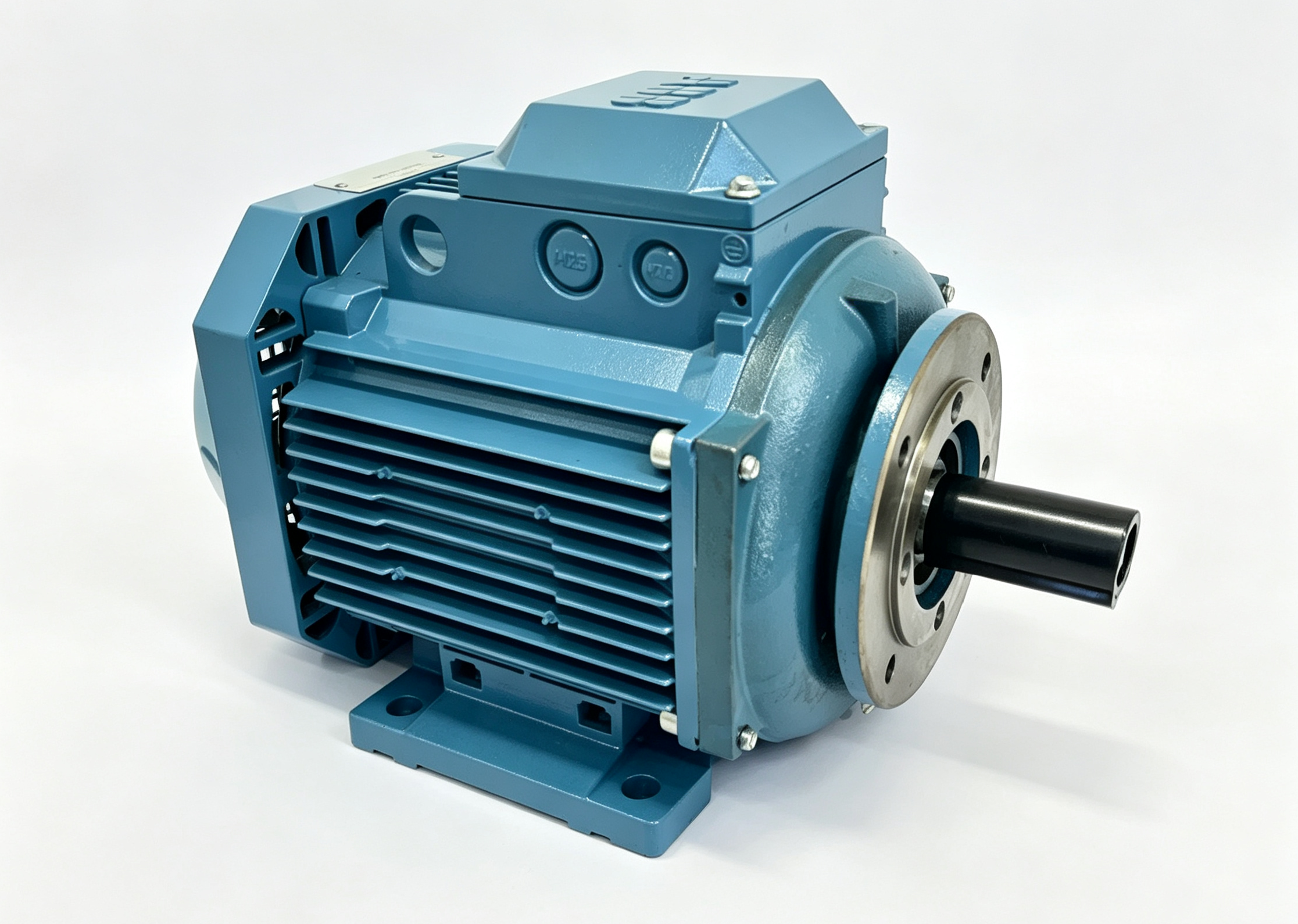
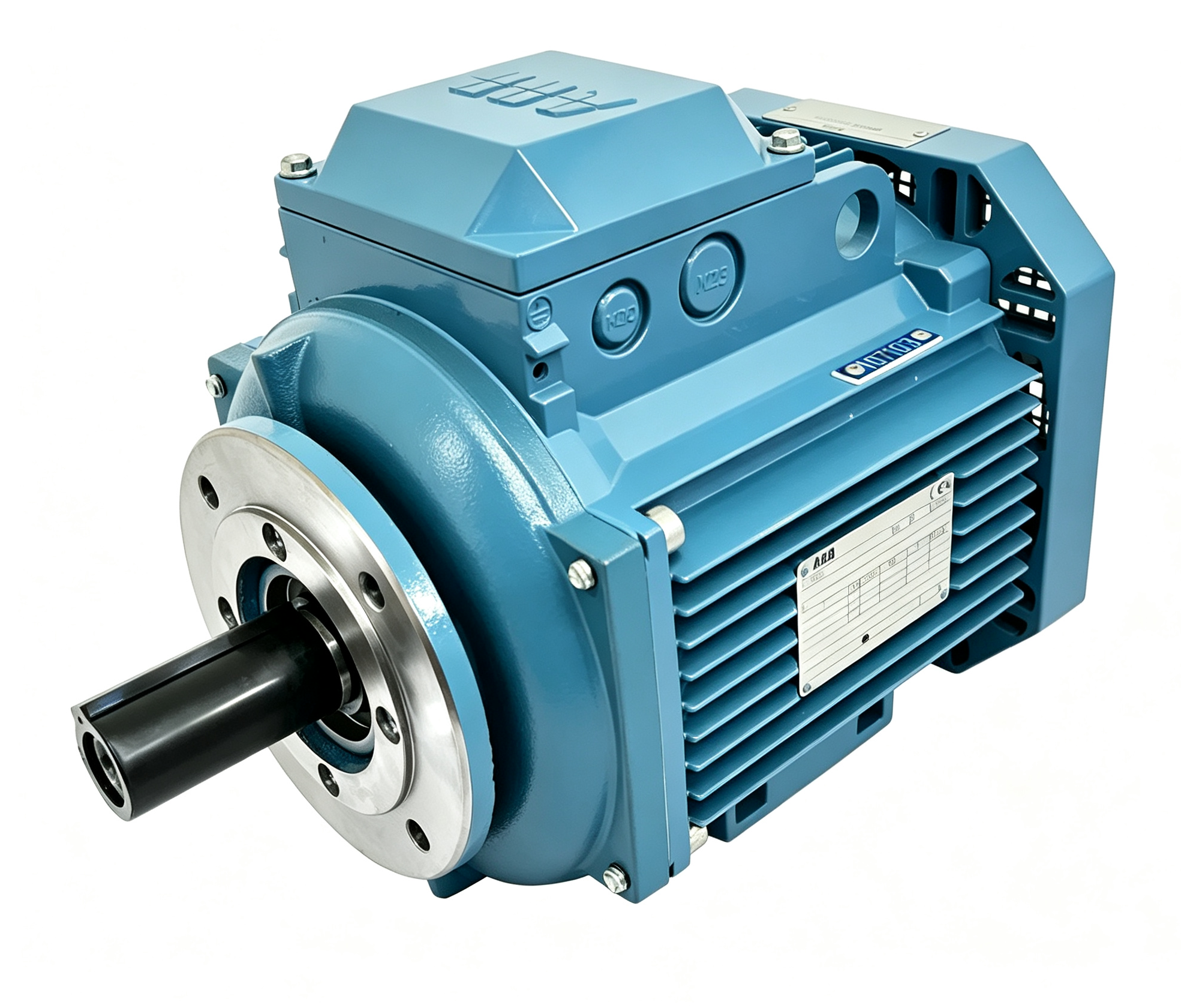
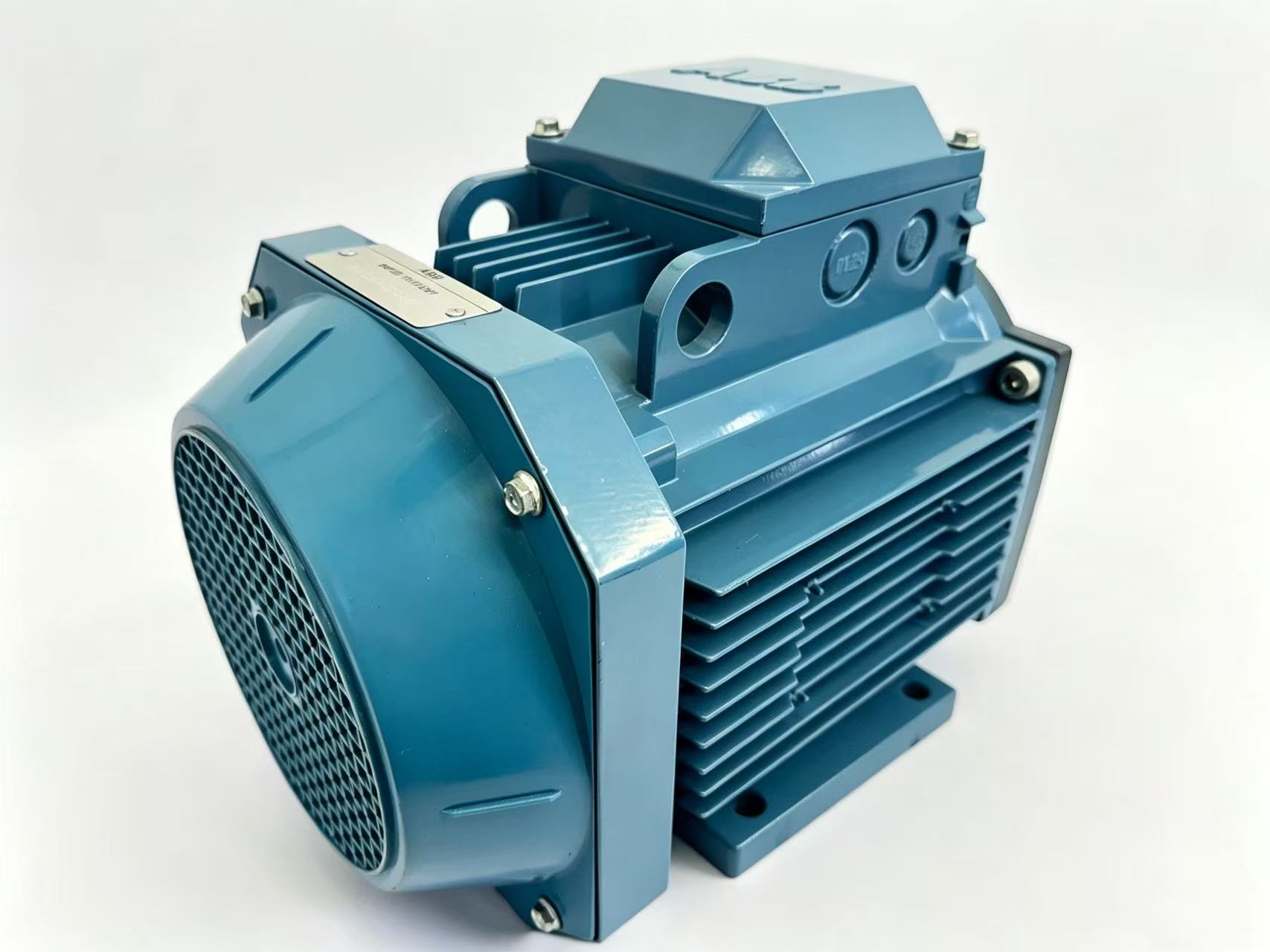
ABB M2ARS 100 LC-6 Brake Motor 2.2 kW 6-Pole Three-Phase Industrial Motor for Yaw Systems
The ABB M2ARS 100 LC-6 is a three-phase squirrel-cage brake motor from the ABB M2ARS motor family. The motor is designed for applications where controlled rotational movement and braking capability are required. With a six-pole configuration, 2.2 kW rated power, and an operating speed of approximately 925 r/min at 690 V and 50 Hz, the motor is particularly suited to industrial drive systems requiring moderate speed and controlled mechanical movement.
The M2ARS 100 LC-6 is also associated with wind turbine yaw applications. In a wind turbine, yaw motors are used within the yaw system to rotate the nacelle and maintain the correct orientation of the turbine relative to wind direction. The motor’s brake configuration provides an important function when controlled stopping and holding of the mechanical system are required.
Product Identification
| Item | Specification |
|---|---|
| Manufacturer | ABB |
| Model | M2ARS 100 LC-6 |
| Alternative Model Format | M2ARS100LC6 |
| Product Type | Three-phase brake motor |
| Motor Design | Squirrel-cage induction motor |
| Frame Size | 100 |
| Number of Poles | 6 |
| Rated Power | 2.2 kW |
| Rated Speed | Approximately 925 r/min |
| Rated Voltage | 690 V, Star |
| Frequency | 50 Hz |
| Nominal Current | Approximately 3.0 A |
| Power Factor | Approximately 0.79 |
| Thermal Class | F |
| Protection Class | IP54 |
ABB M2ARS 100 LC-6 Brake Motor Design
The ABB M2ARS 100 LC-6 combines the conventional operating principle of a three-phase squirrel-cage induction motor with an integrated braking function. The induction motor provides the rotational drive while the brake mechanism is used to control stopping and holding of the driven equipment.
This arrangement is useful in applications where the motor must not only generate rotational movement but also remain controlled when the drive command is removed. A brake motor can provide additional control over mechanical positioning and can help prevent unwanted movement of the connected equipment.
The six-pole configuration gives the motor a lower operating speed than a typical four-pole industrial motor. At 50 Hz, the theoretical synchronous speed of a six-pole motor is approximately 1000 r/min. Because an induction motor operates with slip, the actual rated speed of the M2ARS 100 LC-6 is approximately 925 r/min.
Rated Power and Speed
The M2ARS 100 LC-6 has a rated mechanical output of 2.2 kW. Its approximately 925 r/min operating speed makes it suitable for applications that require controlled rotational movement without the higher speed associated with two-pole or four-pole motor configurations.
The combination of 2.2 kW power and six-pole operation provides a useful balance between motor speed and available mechanical torque. This characteristic is particularly relevant to mechanical systems where the motor must drive a load at a relatively moderate speed while maintaining controlled movement.
Electrical Characteristics
The listed configuration operates at 690 V and 50 Hz with a star connection. The nominal current is approximately 3.0 A, while the listed power factor is approximately 0.79.
The electrical supply must be matched to the complete motor nameplate and installation requirements. When integrating the M2ARS 100 LC-6 into an existing system, the voltage, frequency, connection arrangement, starting method, protection equipment, and motor control system should all be checked before commissioning.
Brake Function
The braking function is one of the defining characteristics of the M2ARS 100 LC-6. Unlike a standard induction motor, a brake motor incorporates a braking mechanism that can be used to control mechanical stopping and holding.
In applications where a motor drives a mechanical system that must remain in a controlled position after the motor stops, the brake can provide an important additional function. The exact braking behavior depends on the complete motor configuration, brake supply arrangement, control circuit, and driven equipment.
For replacement or maintenance purposes, the complete motor identification should therefore be checked carefully. Brake voltage and control requirements can vary between configurations, so the motor nameplate and technical documentation should be used when determining the correct electrical connection.
Wind Turbine Yaw Applications
The ABB M2ARS 100 LC-6 is associated with wind turbine yaw systems. A wind turbine yaw system controls the orientation of the nacelle and rotor assembly relative to the wind direction. Maintaining the correct orientation helps the turbine operate effectively as wind direction changes.
Yaw motors provide the mechanical drive required to rotate the nacelle through the yaw mechanism. Because the yaw system must be able to control and hold the nacelle position, brake motors are particularly useful for this type of application.
The M2ARS 100 LC-6 has appeared in wind turbine spare-parts and procurement records specifically as a yaw motor, confirming its application within wind energy equipment. :contentReference[oaicite:2]{index=2}
Mechanical Construction
The motor uses a 100-size frame designation. The frame size is important when installing or replacing the motor because mechanical dimensions determine compatibility with the existing mounting arrangement, shaft connection, coupling, and driven equipment.
The complete motor configuration should always be checked before replacement. Even when two motors have the same basic power and frame designation, differences in mounting arrangement, brake configuration, voltage, terminal arrangement, and mechanical dimensions may affect interchangeability.
Protection and Thermal Class
The commonly listed M2ARS 100 LC-6 configuration has an IP54 protection class and Class F thermal insulation. IP54 provides protection against harmful dust deposits and water splashing from applicable directions, while Class F insulation provides the motor windings with a defined thermal insulation capability.
The actual suitability of the motor for a particular environment depends on the complete installation. Ambient temperature, altitude, ventilation, duty cycle, contamination, humidity, and mechanical loading should be considered when applying the motor in an industrial system.
Industrial Applications
The ABB M2ARS 100 LC-6 is primarily associated with applications requiring a controlled, moderate-speed drive and integrated braking. Wind turbine yaw systems are an important application, but the general brake-motor design can also be relevant to industrial machinery requiring controlled stopping or holding.
Potential applications include positioning mechanisms, mechanical drive systems, material-handling equipment, industrial machinery, and other installations where controlled motor stopping is required. The suitability of the motor should always be evaluated against the torque, speed, duty, brake characteristics, and mechanical requirements of the complete system.
Technical Specifications
- Manufacturer: ABB
- Model: M2ARS 100 LC-6
- Product Type: Three-phase brake motor
- Motor Design: Squirrel-cage induction motor
- Frame Size: 100
- Number of Poles: 6
- Rated Power: 2.2 kW
- Rated Speed: Approximately 925 r/min
- Rated Voltage: 690 V
- Connection: Star
- Frequency: 50 Hz
- Nominal Current: Approximately 3.0 A
- Power Factor: Approximately 0.79
- Thermal Class: F
- Protection Class: IP54
- Application: Industrial drive and wind turbine yaw systems
Installation and Replacement Considerations
When replacing an ABB M2ARS 100 LC-6, the complete nameplate should be compared with the replacement motor. Particular attention should be given to rated voltage, frequency, current, brake configuration, mounting arrangement, shaft dimensions, and terminal connections.
The brake circuit should also be considered separately from the main motor supply. The correct brake control method depends on the specific motor configuration and system design. Incorrect brake wiring can affect the operation of the motor and the mechanical equipment connected to it.
For wind turbine applications, additional factors such as yaw gearbox compatibility, mounting position, mechanical coupling, environmental conditions, and the turbine control system should also be verified. The motor should be treated as one component within the complete yaw drive assembly.
Conclusion
The ABB M2ARS 100 LC-6 is a six-pole three-phase brake motor with a rated output of 2.2 kW and an approximate rated speed of 925 r/min at 690 V and 50 Hz. Its brake-motor construction makes it suitable for applications where controlled rotational movement, stopping, and holding are required.
The model is particularly associated with wind turbine yaw systems, where reliable motor-driven positioning and controlled stopping are important functions. Its 100-size frame, six-pole configuration, Class F insulation, and IP54 protection provide a configuration suited to industrial mechanical drive applications.
For accurate identification and replacement, the complete ABB motor designation and nameplate information should be retained. Electrical voltage, frequency, brake configuration, mounting dimensions, shaft dimensions, and application requirements should be verified together before the motor is integrated into an existing system.
评价
目前还没有评价