
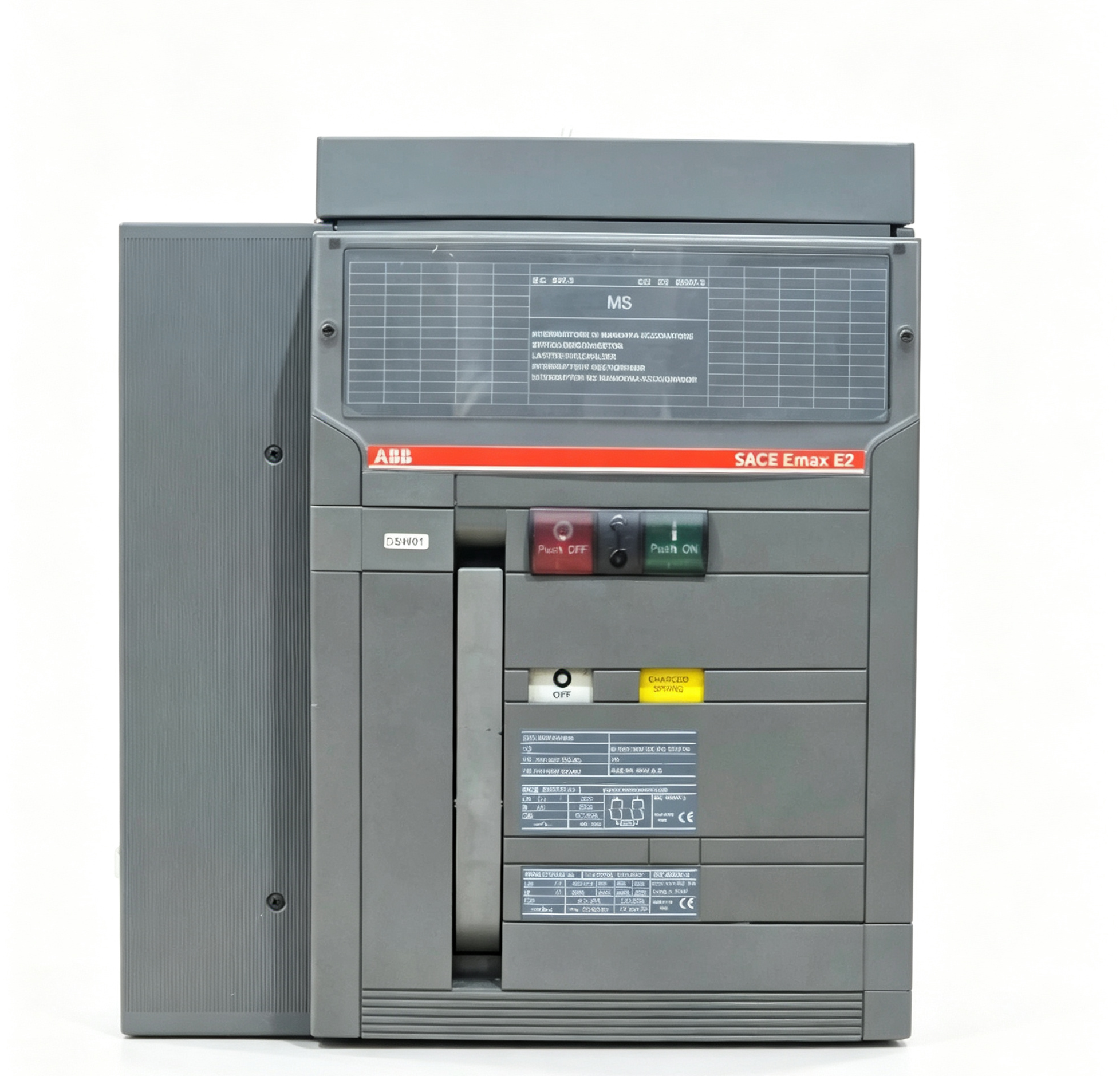
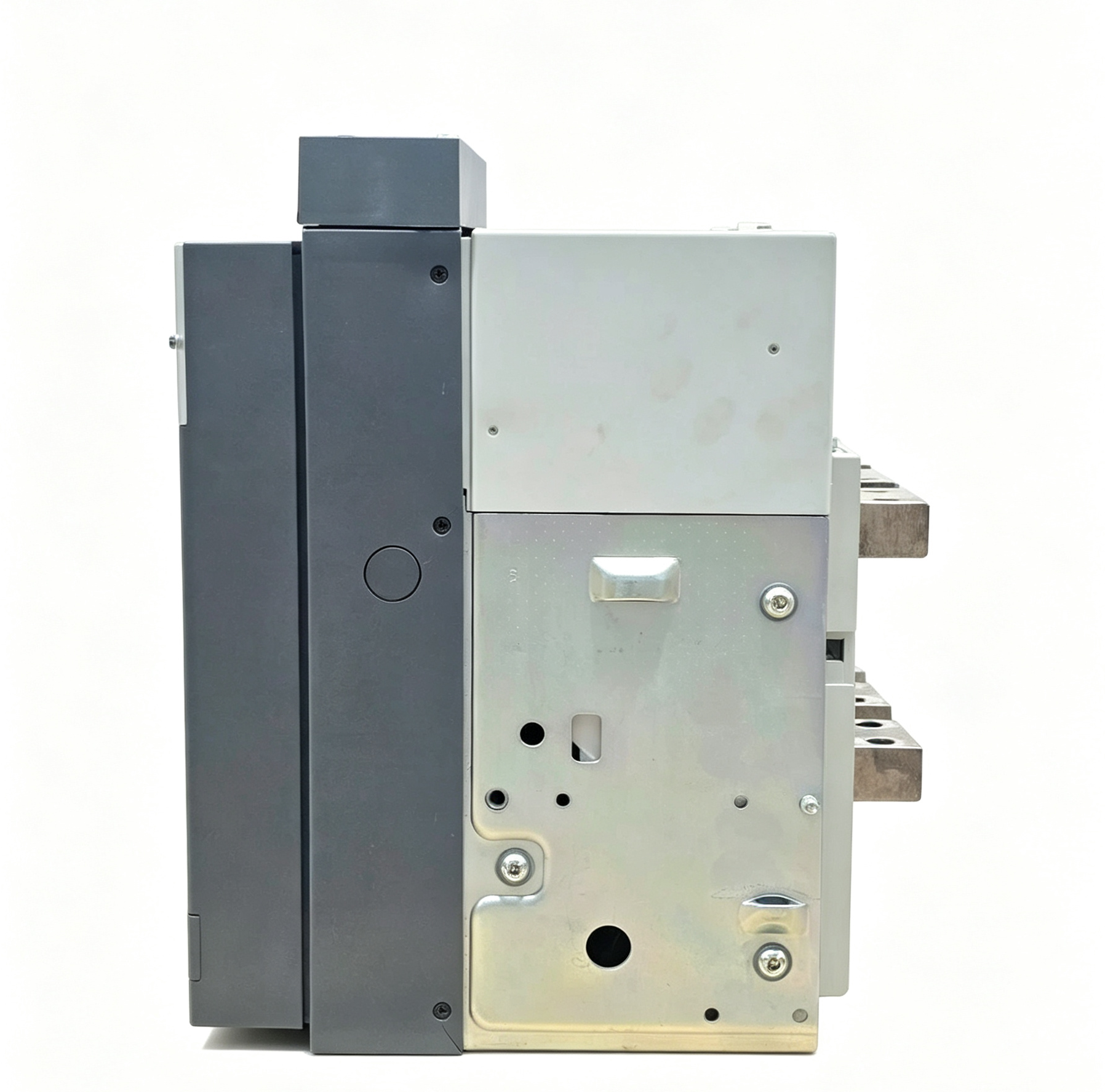
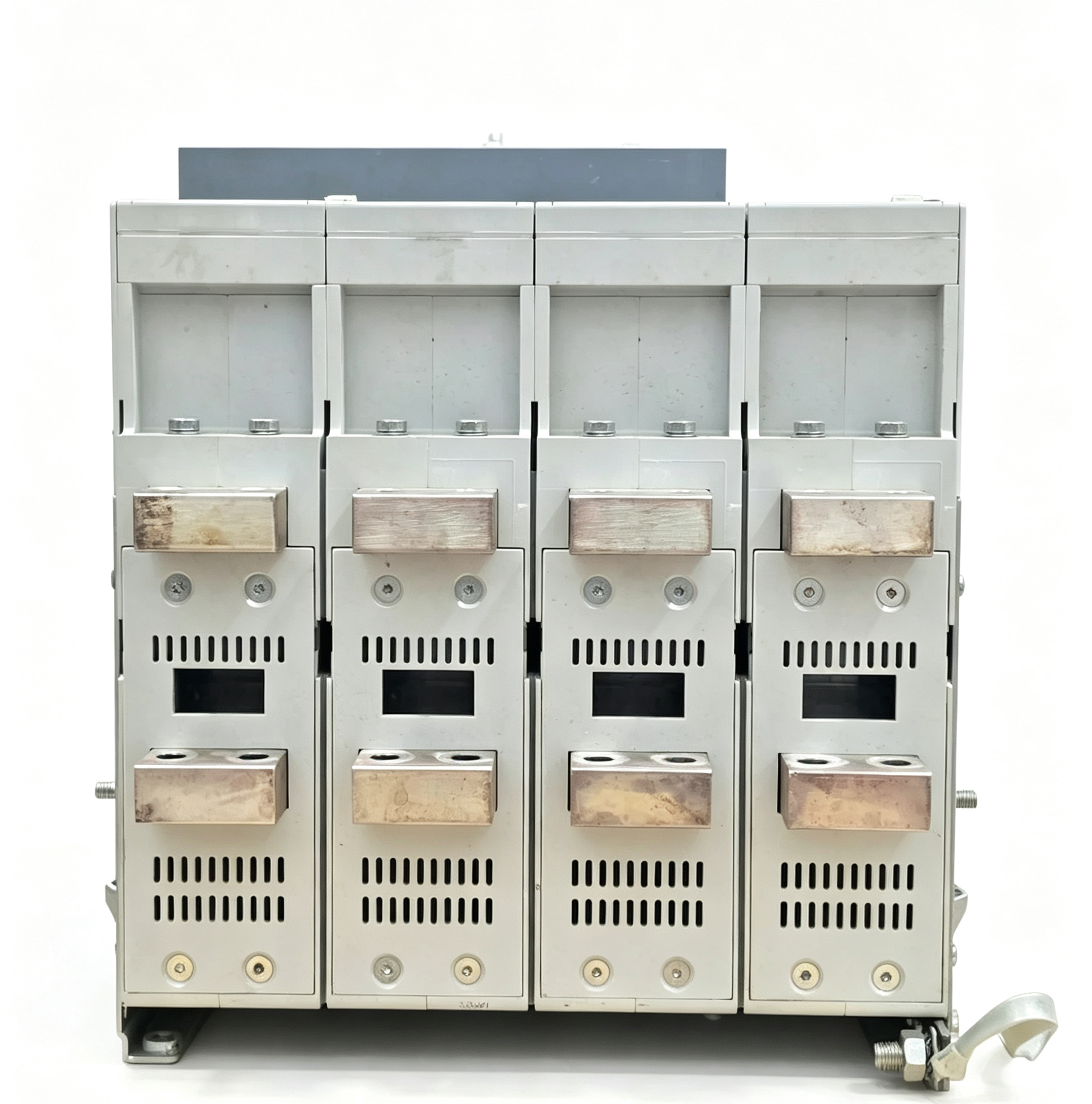
ABB SACE E2N 20 Air Circuit Breaker 2000A for Emax Low Voltage Power Distribution
the SACE Emax family of low-voltage power circuit breakers. With a
maximum rated uninterrupted current of 2000 A at 40 °C, the E2N 20
provides a high-capacity switching and protection platform for electrical
distribution systems, industrial power installations, and other
applications requiring controlled interruption of high currents.
The E2N 20 is part of the E2 frame of the SACE Emax range and can be
configured with different electrical, mechanical, protection, and
installation options. ABB’s Emax platform was developed to provide
flexible circuit-breaker configurations for power distribution while
supporting coordination between upstream and downstream protective
devices.
ABB SACE E2N 20 Product Overview
The SACE E2N 20 is an air circuit breaker designed for high-current
low-voltage applications. Unlike compact molded-case circuit breakers,
the Emax architecture is intended for larger power distribution systems
where higher current ratings, adjustable electronic protection,
accessories, and system-level coordination are important.
The E2N 20 designation identifies the E2 frame with a 2000 A rated
uninterrupted current. ABB documentation lists the E2N family in
three-pole and four-pole configurations, providing flexibility for
different distribution-system architectures.
The breaker can be integrated into fixed or withdrawable installations
depending on the selected configuration. The withdrawable arrangement
allows the circuit breaker to be mechanically separated from the fixed
part of the installation, which can be advantageous in switchboards
requiring structured maintenance and circuit isolation procedures.
2000 A Current Rating
One of the defining characteristics of the ABB SACE E2N 20 is its
2000 A maximum rated uninterrupted current at 40 °C. This rating places
the breaker within the high-current section of the Emax E2 platform and
makes it suitable for power distribution circuits with substantial
continuous load requirements.
The actual permissible operating current depends on the installation
conditions, ambient temperature, enclosure arrangement, connection
configuration, and selected circuit-breaker version. System designers
should therefore evaluate the complete thermal environment rather than
treating the 2000 A value as an unrestricted current value under every
installation condition.
The high current capability of the E2N 20 is particularly relevant to
main distribution feeders, bus-section applications, transformer
secondary distribution, industrial switchboards, and other electrical
systems where a large amount of power must be controlled through a
single circuit-breaker frame.
Electrical Protection and Short-Circuit Performance
The SACE E2N family is designed to provide protection against overload
and short-circuit conditions through electronic trip-unit technology.
Depending on the selected configuration, the breaker can use an
electronic protection unit providing adjustable protection functions
for different types of electrical faults.
ABB documentation for E2N configurations includes electronic trip units
such as the PR121, PR122, and PR123 families. These trip units provide
different levels of protection and measurement capability. The exact
protection functions available on a particular E2N 20 depend on the
specified trip-unit configuration and associated options.
For a system engineer, this modular approach allows the circuit breaker
to be matched to the protection requirements of the electrical network.
Protection settings can be coordinated with other breakers to improve
selectivity and reduce the extent of an interruption during a fault.
SACE Emax E2N Architecture
The E2N 20 forms part of the SACE Emax E2 architecture, which was
developed around a modular approach to power circuit-breaker design.
The breaker assembly can include the main switching mechanism, electronic
trip unit, auxiliary contacts, releases, communication functions,
mechanical interlocks, and other accessories.
This modular construction allows the same basic circuit-breaker family
to be adapted to different switchboard requirements. Depending on the
selected version, the circuit breaker can be supplied as a fixed unit
or as a withdrawable unit with the corresponding fixed part and terminal
arrangement.
Accessory selection is particularly important when identifying an
existing E2N 20. The frame designation alone does not describe every
electrical and mechanical feature of an individual breaker. Trip-unit
type, number of poles, installation type, auxiliary releases, motor
operator, undervoltage release, shunt trip, auxiliary contacts, and
communication accessories may all form part of the final configuration.
Fixed and Withdrawable Configurations
ABB SACE Emax E2 circuit breakers can be arranged in different mounting
configurations. In a fixed version, the breaker is installed directly
within the switchboard structure through the corresponding connection
system. In a withdrawable version, the breaker is mounted on a moving
portion that interfaces with a dedicated fixed part.
The withdrawable configuration provides distinct operating positions
associated with the mechanical design of the Emax system. This allows
the breaker to be managed within a structured switchboard arrangement
while maintaining the required electrical and mechanical interlocking
functions.
When identifying an E2N 20 for replacement or system documentation, it
is therefore important to establish whether the required configuration
is fixed or withdrawable. The breaker frame designation should not be
used alone to determine the complete installation arrangement.
Three-Pole and Four-Pole Versions
The E2N family is available in three-pole and four-pole configurations.
The selection depends on the electrical distribution architecture and
whether the neutral conductor must be switched and protected within the
same circuit-breaker assembly.
A three-pole configuration is commonly associated with three-phase
systems where the neutral does not require switching through the main
breaker. A four-pole configuration provides an additional pole for the
neutral conductor and can be used where the electrical system design
requires four-pole switching.
The number of poles should therefore be confirmed before selecting or
specifying an E2N 20 configuration. Mechanical dimensions, connection
arrangements, accessories, and protection requirements can vary with
the selected version.
ABB SACE E2N 20 Technical Specifications
| Parameter | Specification |
|---|---|
| Brand | ABB |
| Product Family | SACE Emax |
| Model | E2N 20 |
| Product Type | Air Circuit Breaker |
| Rated Uninterrupted Current | 2000 A at 40 °C |
| Frame | E2 |
| Standard Rated Service Voltage | Up to 690 V AC |
| Number of Poles | 3 or 4 poles, depending on configuration |
| Installation | Fixed or withdrawable, depending on configuration |
| Electronic Trip Units | PR121 / PR122 / PR123 family, depending on configuration |
| Application | Low-Voltage Power Distribution and Protection |
| Configuration | Includes selected options and accessories |
Protection Coordination
Protection coordination is an important consideration when applying an
ABB SACE E2N 20 within a distribution network. The circuit breaker can
be incorporated into a coordinated protection system in which the
settings of upstream and downstream protective devices are selected
according to the electrical characteristics of the installation.
Selectivity helps limit the interruption caused by a fault. When a fault
occurs downstream, the protection system can be designed so that the
closest appropriate protective device responds before an upstream
device. The exact coordination depends on the breaker characteristics,
trip-unit settings, network impedance, prospective short-circuit current,
and the characteristics of other protective devices.
ABB technical documentation provides coordination information and
time-current characteristics for the relevant Emax configurations.
Engineers should use the applicable curves and tables when determining
protection settings for an individual installation.
Accessory and Option Configuration
The SACE E2N 20 platform supports a broad range of optional components.
Depending on the selected configuration, these can include auxiliary
contacts, undervoltage releases, shunt opening releases, closing releases,
motor operators, mechanical position indicators, communication interfaces,
and other control or interlocking components.
Because the phrase “Include: Option” does not identify a specific
accessory by itself, the exact option should be confirmed from the
complete ordering code, nameplate, technical configuration, or associated
documentation. This distinction is important because two E2N 20 breakers
can share the same basic frame and current rating while having different
accessory configurations.
For product identification purposes, E2N 20 should therefore be treated
as the base model designation, while the additional options define the
detailed electrical and mechanical configuration of the individual
breaker.
Industrial Power Distribution Applications
The ABB SACE E2N 20 is suited to high-current low-voltage distribution
applications where a 2000 A circuit-breaker frame is required. Typical
engineering environments can include industrial switchboards, main
distribution boards, transformer secondary feeders, bus-coupling
arrangements, large motor distribution systems, and other high-current
electrical installations.
Its combination of high current capacity, electronic protection, modular
accessories, and fixed or withdrawable installation options allows the
E2N 20 platform to be adapted to different switchboard architectures.
The exact application must be evaluated against the system voltage,
prospective short-circuit current, continuous load, environmental
conditions, protection requirements, number of poles, connection type,
and selected trip-unit configuration.
Identification of ABB SACE E2N 20
When identifying an ABB SACE E2N 20, the model designation should be
considered together with the complete product configuration. The E2N 20
designation identifies the E2 frame and 2000 A current class, but does
not by itself define every accessory or protection feature installed
on the breaker.
Important identification points include the number of poles, fixed or
withdrawable construction, electronic trip-unit type, rated service
voltage, terminal arrangement, auxiliary devices, control releases,
motor operator, communication accessories, and any additional factory
options.
This approach is particularly useful when matching an E2N 20 to an
existing switchboard, because the replacement configuration needs to
correspond to the electrical and mechanical requirements of the original
installation.
Conclusion
ABB SACE E2N 20 is a 2000 A air circuit breaker from the SACE Emax E2
family, developed for high-current low-voltage power distribution and
protection applications. Its E2 frame architecture provides a flexible
platform for electronic protection, switching, accessory integration,
and different installation configurations.
The E2N 20 can be configured for three-pole or four-pole applications
and may be arranged as a fixed or withdrawable circuit breaker depending
on the selected configuration. Electronic trip units and accessory
options allow the breaker to be adapted to the protection and control
requirements of the associated electrical system.
For engineering identification and system integration, the complete
configuration of the ABB SACE E2N 20 should be considered rather than
relying only on the basic model name. The rated current, service voltage,
short-circuit performance, trip-unit configuration, number of poles,
installation type, and selected options all contribute to the final
circuit-breaker specification.
评价
目前还没有评价