

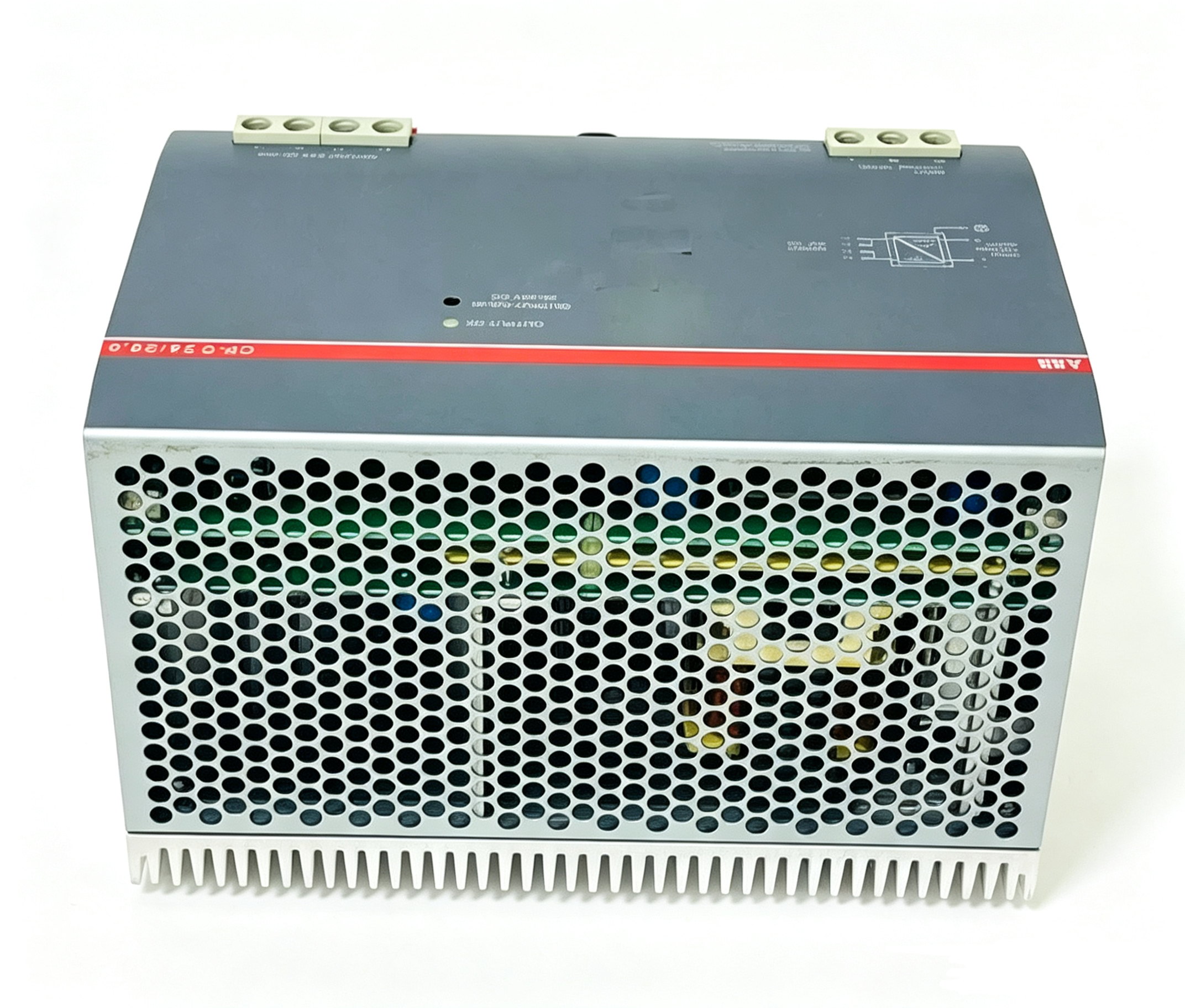
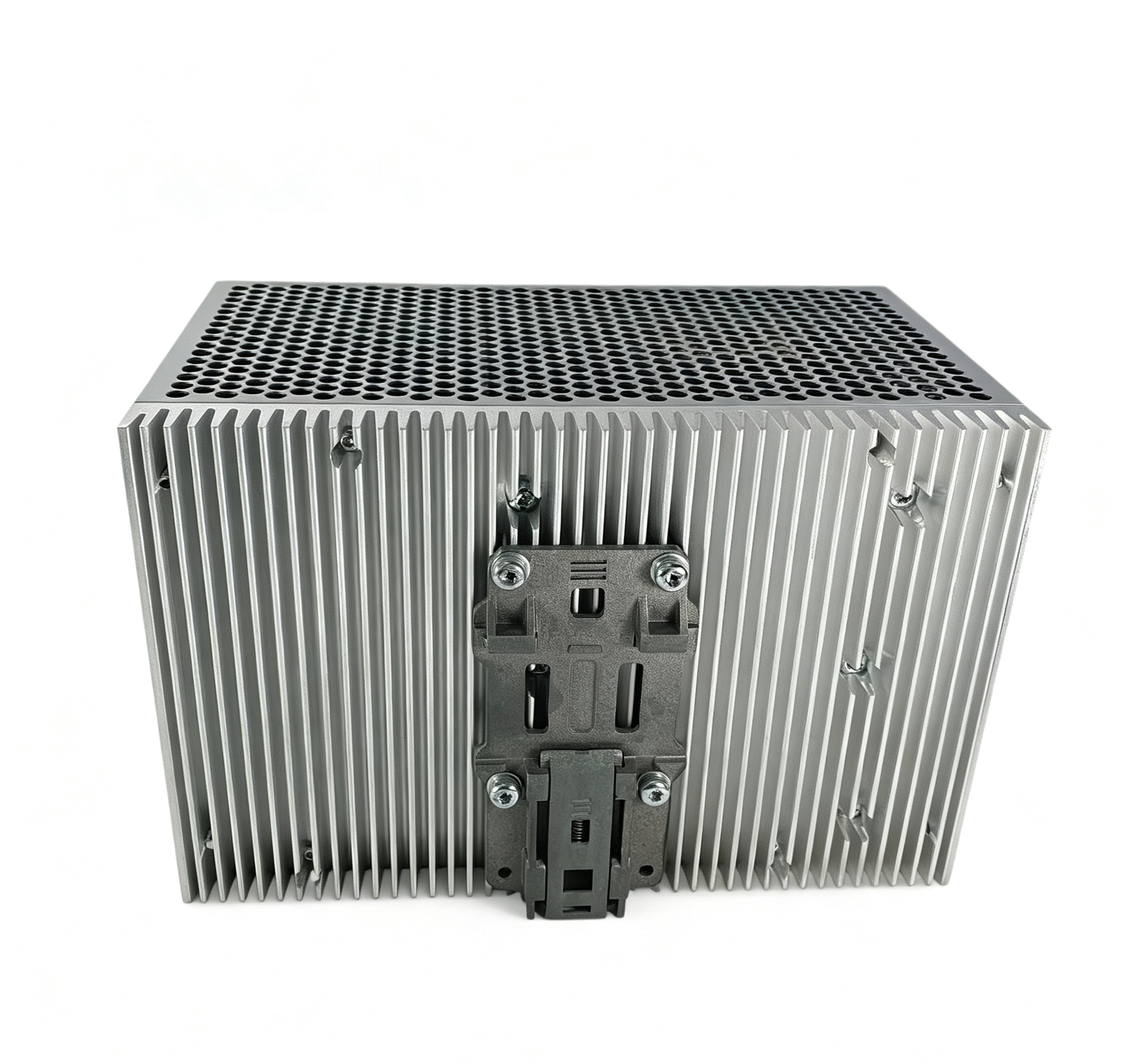
ABB CP-C 24/20.0 24 V DC 20 A Primary Switch Mode Power Supply
The ABB CP-C 24/20.0 is a primary switch mode power supply from the ABB CP-C range, developed for supplying regulated DC power to industrial automation, control, instrumentation, and electrical equipment. With a rated output voltage of 24 V DC, a rated output current of 20 A, and a rated output power of 480 W, the unit provides a substantial DC power source for control systems that require a stable and adjustable supply.
The ABB catalog number associated with CP-C 24/20.0 is 1SVR427026R0000. The product combines a wide input voltage capability with an adjustable output range and a U/I output characteristic. It also supports parallel operation, making the CP-C 24/20.0 suitable for applications where additional capacity or a redundant power architecture is required. These characteristics make the unit a practical component within structured industrial power distribution systems.
Product Identification
ABB CP-C 24/20.0 is identified as a primary switch mode power supply. The complete product designation is important when selecting the appropriate unit because ABB offers several power supply families and output ratings with similar naming structures. The CP-C designation identifies the product family, while 24/20.0 indicates the nominal 24 V DC output and 20 A rated output current.
For engineering documentation, the catalog number 1SVR427026R0000 provides an additional identification reference. Recording both the product designation and catalog number is useful when creating electrical drawings, equipment lists, control cabinet documentation, and maintenance records. This approach helps distinguish the CP-C 24/20.0 from related ABB power supply products with different input characteristics, output ratings, or functional features.
Input Voltage and Power Conversion
The CP-C 24/20.0 uses a primary switch mode power supply architecture and accepts a wide input range. ABB documentation specifies an input range of 85 to 264 V AC and 100 to 350 V DC, with a rated input voltage range of 110 to 240 V AC. This wide input capability allows the power supply to be incorporated into different industrial electrical environments without requiring a narrowly defined input source.
The unit converts the available primary supply into regulated DC power for connected control equipment. Its switching power supply design provides the output characteristics required by industrial applications while maintaining a compact cabinet-oriented form factor. The broad input specification is particularly relevant when the same control architecture may be installed in electrical environments with different supply conditions.
24 V DC Output
The main output of the ABB CP-C 24/20.0 is rated at 24 V DC and 20 A, providing a rated output power of 480 W. The output voltage can be adjusted within a range of approximately 22 to 28 V DC. This adjustment capability allows the DC output to be adapted to the requirements of the connected control equipment and to compensate for voltage-drop considerations within an installation.
The adjustable output is an important feature in industrial control applications because different connected devices may have specific operating requirements. Engineers can configure the output voltage within the specified range while considering the electrical characteristics of the complete control circuit. The power supply should always be configured according to the applicable equipment documentation and system design requirements.
U/I Output Characteristic and Power Reserve
ABB specifies a U/I output characteristic for the CP-C 24/20.0. At an ambient temperature of 25 °C, the documented characteristic allows the power supply to maintain its nominal output region while handling increased output demand. The unit can provide a continuous output current of approximately 21 A at ambient temperatures up to 40 °C, while the rated current is 20 A at ambient temperatures up to 60 °C.
The CP-C 24/20.0 also provides a power reserve of up to 10 percent. This characteristic can be useful in control systems where temporary increases in load demand occur. Rather than treating the nominal 20 A value as the only operating point, the documented U/I characteristic provides additional information about the behavior of the power supply under higher current demand.
Temperature must be considered when applying this characteristic. ABB documentation states that above 60 °C the output power must be reduced by 2.5 percent per Kelvin temperature increase, while thermal overload protection causes the device to switch off above 70 °C. These limits are important when designing control cabinets and determining the appropriate operating environment.
Parallel Operation and Redundancy
A significant feature of the ABB CP-C 24/20.0 is its ability to operate in parallel. Parallel connection can be used to increase the available power capacity when the system requires more current than a single unit can provide. The same capability can also support redundancy concepts in which the power architecture is designed to maintain supply availability through an appropriate redundant configuration.
ABB also identifies redundancy and control-related accessories for the CP-C range. When designing a redundant power supply arrangement, engineers should consider the complete system architecture, including the appropriate redundancy unit, wiring configuration, load requirements, protection devices, and installation conditions. Parallel operation should follow the manufacturer’s specified connection method rather than being implemented solely according to the nominal output values.
Electrical Connection
The CP-C 24/20.0 provides separate primary and secondary connections. The input side uses L and N terminals, with PE provided for protective earth. The secondary side provides positive and negative DC output connections identified as L+ and L-. Correct polarity and appropriate protective measures are essential when connecting the power supply to an industrial control circuit.
ABB documentation specifies that the protective earth conductor must be connected and that the installation should include a suitable disconnecting device in the supply line. The input side includes internal fuse protection. Cable selection should take the maximum output current into account, while minimizing voltage drop is also an important consideration for DC distribution.
The secondary side is electrically isolated from the input and is internally not earthed, providing a SELV-oriented configuration. Depending on the requirements of the installation, the secondary side can be referenced to earth through the appropriate positive or negative terminal arrangement.
Installation and Mounting
The ABB CP-C 24/20.0 is intended for installation in an industrial electrical enclosure or control cabinet. ABB specifies a horizontal mounting position with the input terminals positioned at the bottom. Adequate clearance is required around the unit to allow sufficient convection and thermal dissipation.
The installation documentation specifies minimum clearances of 80 mm in the vertical direction and 10 mm in the horizontal direction from other modules. Maintaining these clearances is important because the thermal performance of a power supply depends on adequate air circulation around the enclosure and adjacent equipment.
The unit uses a mounting-rail installation concept, with a latching mechanism used for mounting and removal. This arrangement allows the power supply to be integrated into organized control cabinet layouts together with other DIN-rail-oriented industrial components.
Industrial Automation Applications
ABB CP-C 24/20.0 can be used as a 24 V DC power source within industrial automation and electrical control systems. Typical system-level applications can include control circuits, automation equipment, instrumentation, interface devices, industrial electronic assemblies, and other DC-powered components that fall within the specified electrical limits.
Its 480 W rated output provides a higher-capacity 24 V DC source compared with lower-current control power supplies. The adjustable output, power reserve, wide input range, and parallel capability provide additional flexibility when engineers design centralized DC power distribution for automation equipment.
Technical Considerations
When selecting ABB CP-C 24/20.0 for an installation, engineers should evaluate the total DC load, expected starting or transient currents, ambient temperature, cabinet ventilation, input supply conditions, cable sizing, protective devices, and the requirements of connected equipment. The nominal 24 V DC and 20 A ratings should be considered together with the temperature-dependent output characteristics.
The output adjustment should also be configured carefully. Although the specified adjustment range extends from approximately 22 to 28 V DC, the appropriate setting depends on the connected devices and system design. The complete electrical installation should comply with the applicable standards and the manufacturer’s installation requirements.
Conclusion
The ABB CP-C 24/20.0 is a 480 W primary switch mode power supply providing 24 V DC at a rated current of 20 A. Its 85–264 V AC and 100–350 V DC input capability, adjustable 22–28 V DC output, U/I characteristic, power reserve, and parallel operation support make it a versatile component for industrial control power systems.
With the ABB catalog number 1SVR427026R0000, the CP-C 24/20.0 can be precisely identified within ABB’s power supply product range. Its electrical connection structure, thermal characteristics, mounting requirements, and system-level operating features should all be considered when integrating the unit into an automation cabinet. For engineering documentation, the complete product designation and catalog number should be retained together to ensure accurate identification and system configuration.
Overall, ABB CP-C 24/20.0 represents a high-capacity 24 V DC power supply solution within the ABB CP-C family, combining regulated DC output, flexible input operation, adjustable voltage, power reserve, and support for parallel power architectures in industrial automation environments.
评价
目前还没有评价