
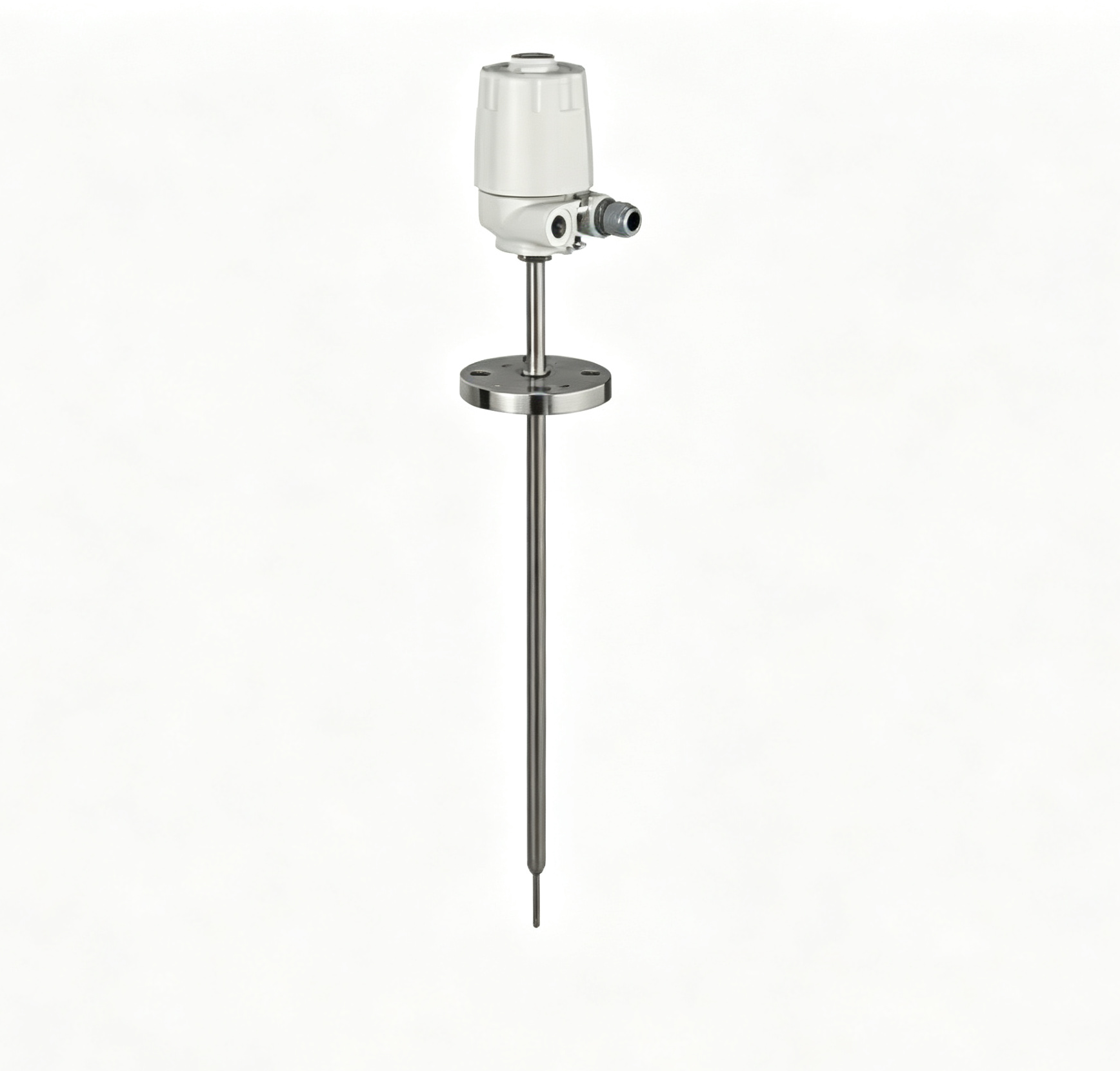
ABB TSP-Y0-S2-A3-S04-A2-Z9-Z9-S1-P2-B2-B1-R1/OPT SensyTemp TSP Temperature Sensor
ABB TSP-Y0-S2-A3-S04-A2-Z9-Z9-S1-P2-B2-B1-R1/OPT is a highly configured temperature sensor designation belonging to the ABB SensyTemp TSP product family. The long ordering code identifies a particular combination of sensor construction, process connection, protective thermowell and associated options. It is intended for industrial process temperature measurement where the sensing element must be installed in a defined mechanical and process environment.
The SensyTemp TSP range is based on a modular ordering structure. ABB documentation provides multiple selections for process connections, thermowell types, sensing elements, materials, dimensions, connection heads and transmitter arrangements. This allows the temperature sensor to be adapted to different process installations rather than relying on a single fixed mechanical configuration. :contentReference[oaicite:1]{index=1}
Product Identification
- Manufacturer: ABB
- Product Family: SensyTemp TSP
- Product Type: Industrial Temperature Sensor
- Configuration Code: TSP-Y0-S2-A3-S04-A2-Z9-Z9-S1-P2-B2-B1-R1/OPT
- Measurement Function: Process Temperature Measurement
- Process Connection Code: S04
- Process Connection: Conical 1/2 inch NPT
- Thermowell Configuration: A3 in the TSP121 ordering structure
- Application Area: Industrial Process Instrumentation
SensyTemp TSP Temperature Measurement
The ABB SensyTemp TSP family is designed for temperature measurement in industrial process applications. The sensor assembly places the measuring element inside a suitable protective arrangement so that temperature can be measured while the sensing element is mechanically separated from the process environment.
This architecture is useful in pipelines, vessels, process equipment and other industrial installations where temperature is an important process variable. The exact measurement element can vary according to the selected ordering code, with ABB documentation covering resistance thermometers and thermocouple configurations across the TSP family. :contentReference[oaicite:2]{index=2}
Configured Ordering Code
The long designation TSP-Y0-S2-A3-S04-A2-Z9-Z9-S1-P2-B2-B1-R1/OPT should be treated as a complete configuration reference rather than a simple model number. ABB’s TSP ordering system uses individual code positions to describe construction and application characteristics.
This type of identification is particularly important for process temperature sensors because two sensors from the same product family can have different thermowell designs, process connections, sensor elements and connection arrangements.
Retaining the complete designation helps engineers distinguish the specified configuration from other SensyTemp TSP variants.
Process Connection S04
One of the clearly identifiable elements of the supplied code is S04. ABB’s SensyTemp TSP121 ordering documentation identifies S04 as a conical 1/2 inch NPT process connection. This connection is used to install the temperature-sensing assembly into a compatible process connection point. :contentReference[oaicite:3]{index=3}
The process connection is a critical part of temperature sensor selection because the mechanical interface must correspond to the process equipment. Thread type, size, installation geometry and pressure conditions all need to be considered when matching the sensor to the process.
Thermowell Configuration
The thermowell provides mechanical protection for the measuring element and separates the sensor from direct exposure to the process medium. ABB’s TSP documentation provides several thermowell configurations for different process requirements.
Within the TSP121 ordering structure, code A3 corresponds to a straight threaded thermowell according to DIN 43772, form 2G. This configuration provides a threaded mechanical arrangement suitable for installations where the process connection and thermowell geometry are compatible. :contentReference[oaicite:4]{index=4}
The thermowell configuration is important because its dimensions, material and mechanical construction influence installation, response characteristics and suitability for the process.
Sensor Element Options
ABB SensyTemp TSP sensors can use different measuring technologies. Depending on the selected configuration, the range includes resistance thermometers such as Pt100 and other RTD arrangements as well as thermocouple elements.
ABB documentation lists multiple sensor-element codes and associated temperature ranges. For example, the TSP121 family documentation describes S2 as a resistance thermometer with increased vibration resistance and a measurement range of approximately -50 to 400 °C. :contentReference[oaicite:5]{index=5}
Because long customized ordering codes can contain additional option positions, the complete sensor element specification should be verified against the exact configuration documentation before treating a particular code as the final measurement element identification.
Industrial Process Applications
Temperature sensors are fundamental components in industrial process automation. Temperature information can be used for process control, equipment protection, monitoring and operating-condition analysis.
The SensyTemp TSP architecture allows the sensing assembly to be adapted to the mechanical requirements of different process installations. Depending on the configuration, the sensor may be installed in process piping, vessels, machinery or other equipment where direct measurement of process temperature is required.
The appropriate sensor configuration depends on the process medium, temperature range, pressure, vibration, installation geometry and required measurement accuracy.
Thermowell Protection
A thermowell is especially useful when the temperature sensor needs to be protected from the process environment or when the sensing element must be removable without disturbing the complete process connection.
The thermowell also provides mechanical support for the measuring element. Its construction must be suitable for the operating temperature, pressure and process medium.
ABB provides different thermowell materials and forms within the SensyTemp TSP range. These options allow the temperature assembly to be matched to different industrial process conditions. :contentReference[oaicite:6]{index=6}
Connection Head and Instrument Interface
The connection head forms the interface between the measuring element and the external electrical connection. Depending on the configuration, the head can accommodate sensor terminals or an integrated temperature transmitter.
ABB documentation provides different connection-head and cable-entry configurations within the SensyTemp TSP family. The actual configuration of a specific sensor should be determined from the complete ordering code and associated technical documentation.
This modular approach allows the same basic sensor family to support different wiring and instrumentation arrangements.
Technical Specification Summary
| Parameter | ABB TSP-Y0-S2-A3-S04-A2-Z9-Z9-S1-P2-B2-B1-R1/OPT |
|---|---|
| Manufacturer | ABB |
| Product Family | SensyTemp TSP |
| Product Type | Industrial Temperature Sensor |
| Application | Process Temperature Measurement |
| Process Connection | S04, conical 1/2 inch NPT |
| Thermowell Code | A3 |
| Thermowell Type | Straight threaded thermowell, DIN 43772 form 2G |
| Configuration | Multi-option customized ordering code |
| Measurement Technology | RTD or thermocouple according to configuration |
Temperature Measurement Accuracy
Measurement accuracy is determined by the selected sensing element, tolerance class, process conditions and associated measurement electronics. ABB’s TSP documentation provides different accuracy classes and sensor constructions for the product family.
For example, RTD configurations can use different resistance elements and accuracy classes according to the selected ordering options. The final accuracy of a complete measurement loop can also depend on the transmitter, wiring and control-system input.
Therefore, the complete configuration should be used when determining the expected measurement performance.
Vibration Resistance
Industrial temperature sensors can be installed in environments where mechanical vibration is present. ABB provides TSP measuring-element configurations with different vibration-resistance characteristics.
This is important in applications involving rotating equipment, pumps, compressors, motors and other machinery. A sensor selected for the mechanical environment should have a suitable sensing element and mounting arrangement.
The S2 designation in the TSP121 ordering structure is associated with an RTD configuration featuring increased vibration resistance. :contentReference[oaicite:7]{index=7}
Process Connection Selection
The S04 process connection provides a conical 1/2 inch NPT interface. ABB’s ordering documentation includes other threaded and flanged process connections, allowing the TSP family to be adapted to different process standards.
Selecting the correct connection is essential because the thread must correspond to the process equipment and the sensor’s mechanical installation requirements. The connection also affects how the sensor is positioned relative to the process medium.
Engineering and Installation
Before installing a configured ABB SensyTemp TSP sensor, engineers should verify the complete mechanical and electrical configuration. Important considerations include process connection, thermowell dimensions, sensing element, insertion length, temperature range and connection arrangement.
The sensor should be installed according to the applicable ABB documentation and the requirements of the process equipment. The thermowell and process connection should be compatible with the pressure, temperature and chemical conditions of the application.
Maintenance Considerations
Maintenance of a SensyTemp TSP temperature sensor should consider both the measuring element and the mechanical installation. The process connection should be inspected for appropriate mechanical condition, while the sensor wiring should be checked for secure electrical connections.
If a temperature indication becomes unstable or deviates from expected process behavior, troubleshooting should include the sensor element, wiring, transmitter, process conditions and control-system input.
A temperature measurement fault does not necessarily indicate a problem with the sensing element itself. Process changes, connection problems and signal-conditioning issues can produce similar symptoms.
Application in Process Automation
ABB SensyTemp TSP sensors can form part of a larger process automation system. The measured temperature can be transmitted to a process controller, distributed control system or monitoring instrument depending on the selected configuration.
The temperature signal may be used for closed-loop control, alarms, process sequencing or equipment protection. The sensor therefore provides a fundamental measurement function within industrial automation.
The exact control strategy depends on the host process and the instrumentation architecture.
Configuration Documentation
For engineering databases, the complete designation should be recorded without shortening the option sequence. A recommended identification format is “ABB TSP-Y0-S2-A3-S04-A2-Z9-Z9-S1-P2-B2-B1-R1/OPT — SensyTemp TSP Temperature Sensor.”
Keeping the full code is especially important for configured temperature sensors because individual code positions can describe mechanical and measurement characteristics that are not visible from the basic TSP family designation alone.
Compatibility Considerations
The complete ordering code should be compared with the original equipment documentation when determining compatibility. Matching only the SensyTemp TSP family is not sufficient because process connection, thermowell geometry and sensing configuration can vary substantially.
The supplied code should therefore be treated as the primary identification reference. Any replacement or engineering substitution should be evaluated against the same process, mechanical and measurement requirements.
Conclusion
ABB TSP-Y0-S2-A3-S04-A2-Z9-Z9-S1-P2-B2-B1-R1/OPT is a highly configured SensyTemp TSP temperature sensor designation for industrial process temperature measurement. The ABB TSP family uses a structured ordering system that defines the process connection, thermowell, sensing element, dimensions, connection arrangement and additional options.
The supplied code includes S04, which ABB documentation identifies as a conical 1/2 inch NPT process connection. The A3 code corresponds to a straight threaded thermowell configuration in the TSP121 ordering structure. ABB documentation also shows that TSP sensors are available with different RTD and thermocouple technologies, accuracy classes and vibration-resistance characteristics. :contentReference[oaicite:8]{index=8}
For technical identification, the full designation should be retained rather than shortened. The exact sensor element, dimensional configuration and remaining optional codes should be confirmed against the applicable ABB ordering documentation for the specific configuration. This approach provides a reliable basis for process-temperature measurement, installation planning, maintenance documentation and compatibility evaluation.

评价
目前还没有评价