
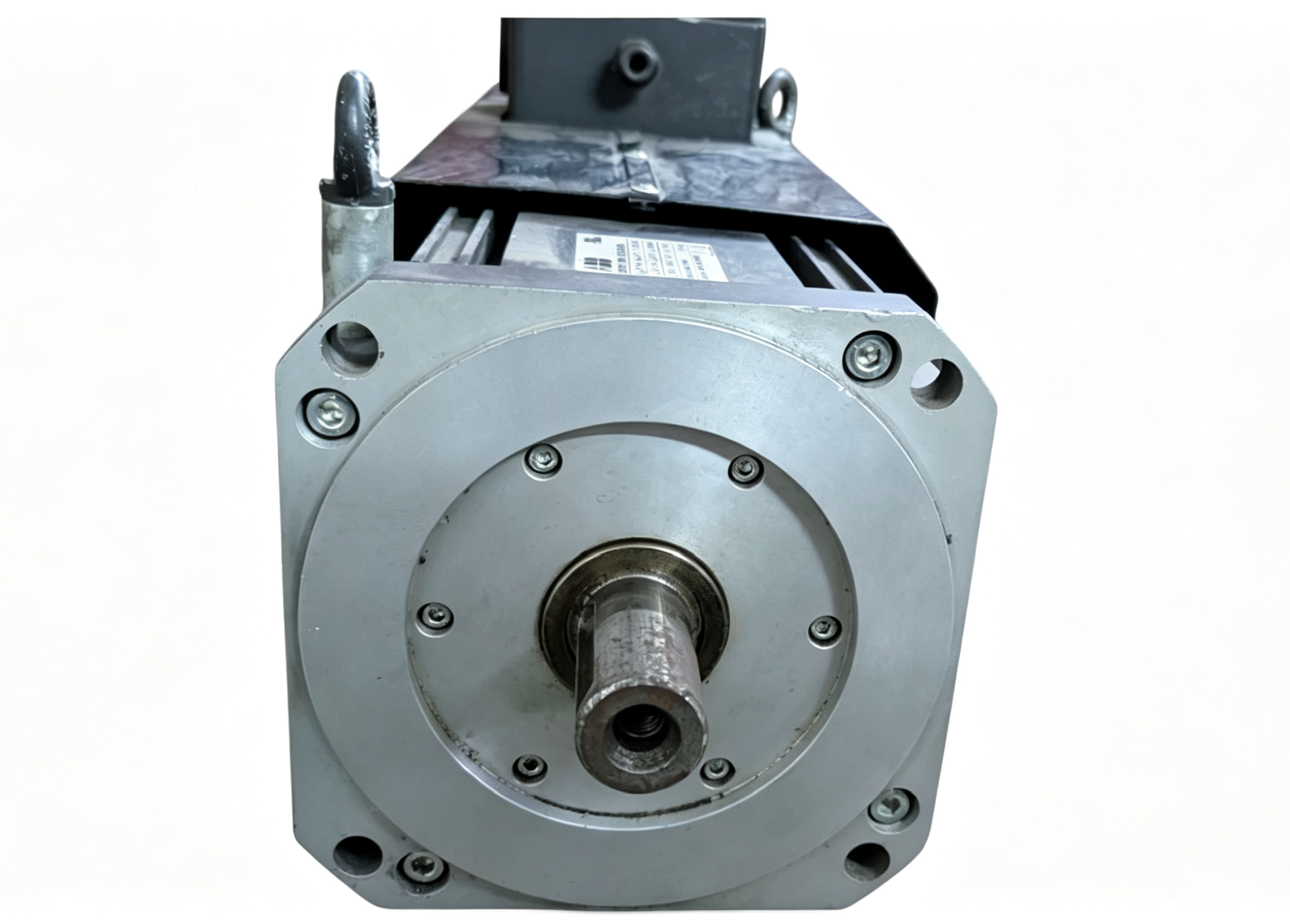
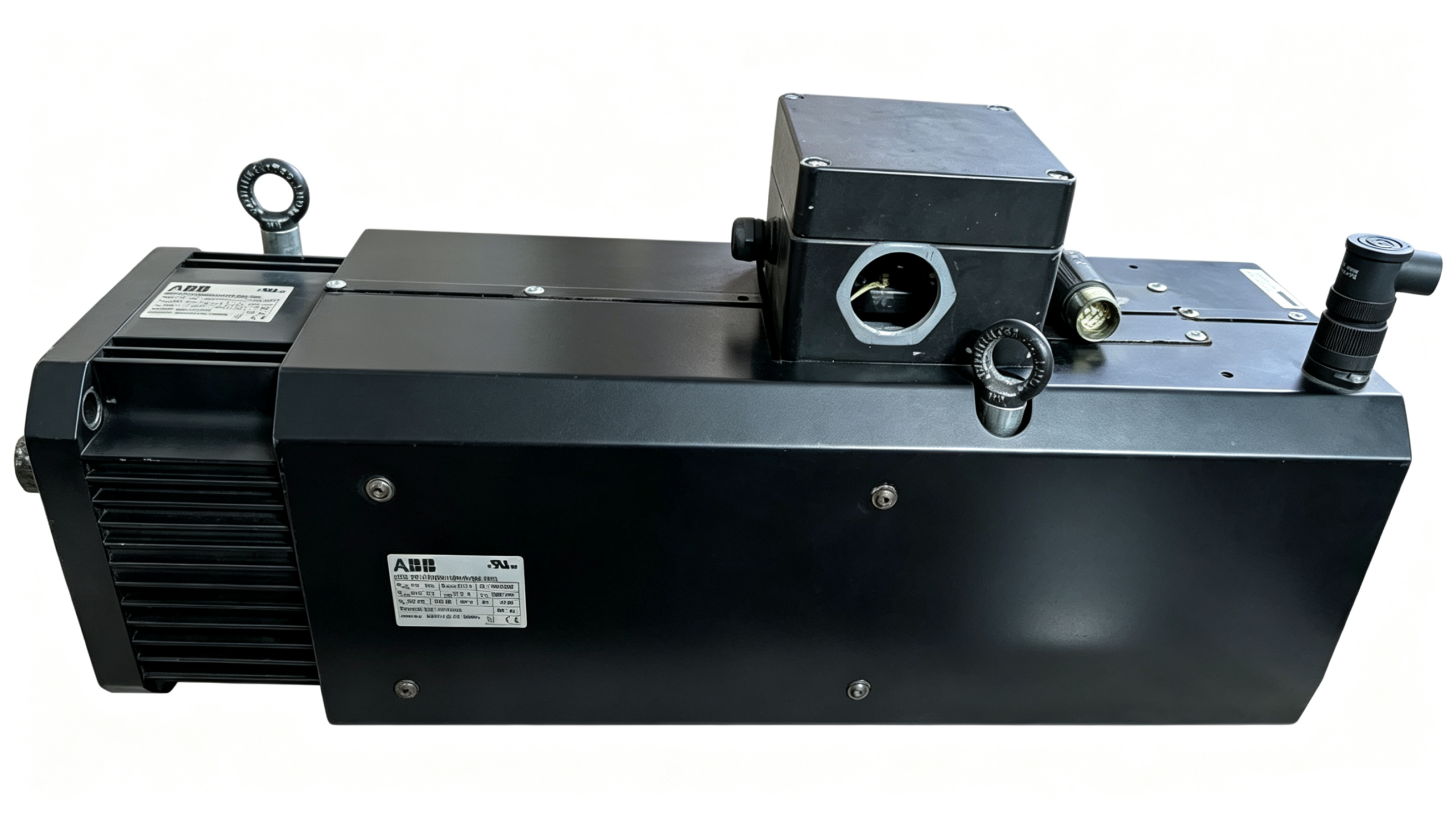
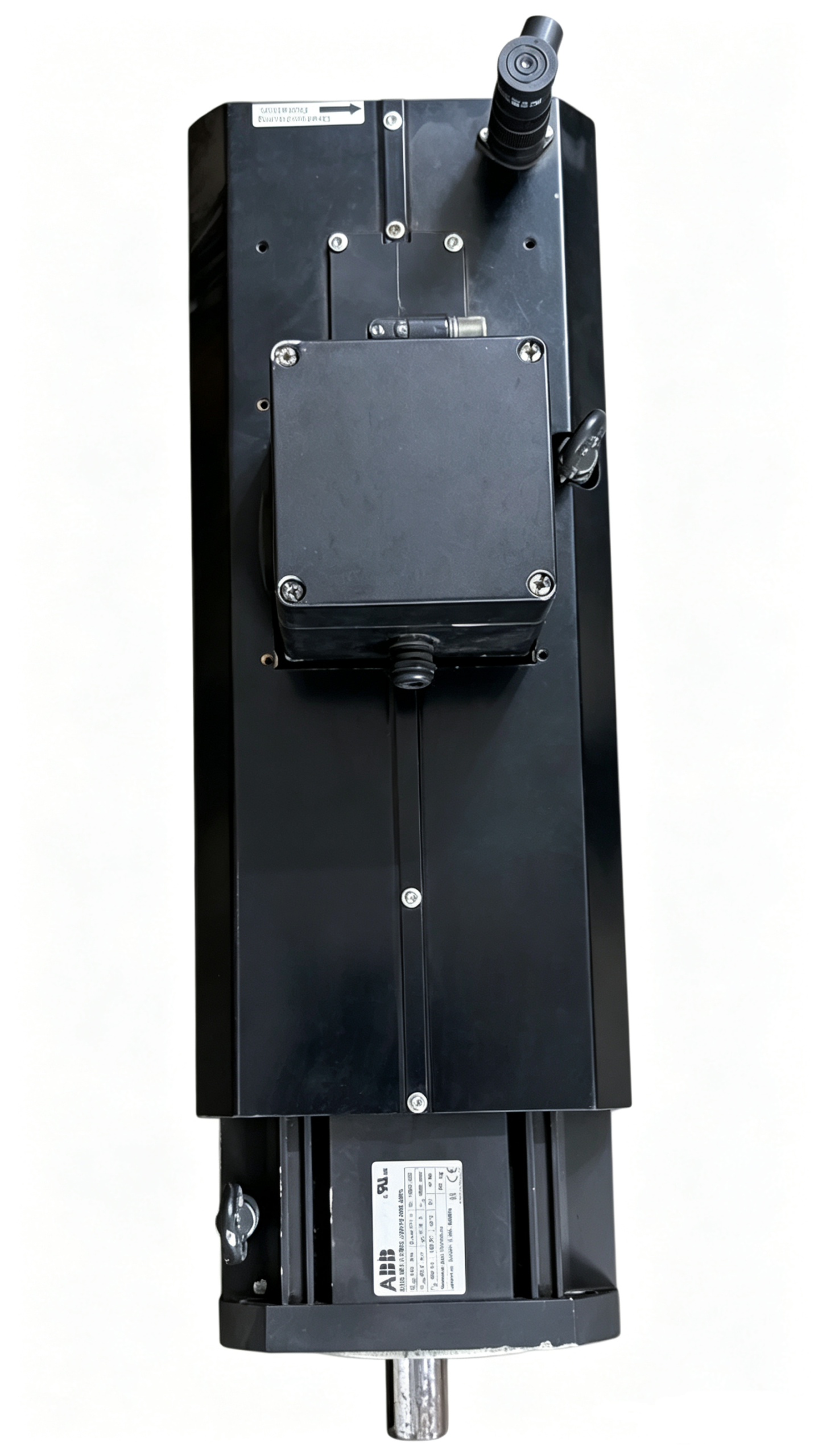
ABB SDM 261-025N0-190/40-A8G-20A0 AC Servo Motor
ABB SDM 261-025N0-190/40-A8G-20A0 is an AC servo motor belonging to the ABB SDM 261 motor family. The SDM 261 series is associated with industrial servo-motor applications where controlled rotational movement, repeatable positioning and coordinated machine motion are required. The complete designation identifies a specific motor configuration and should be retained as the primary reference when documenting the equipment.
Servo motors are designed to operate as part of a closed-loop motion-control system. The motor works together with a compatible servo drive and feedback arrangement so that speed, position and torque can be regulated according to the requirements of the machine. This architecture is different from a conventional induction motor application because the servo system is designed around controlled dynamic motion rather than simple continuous rotation.
Product Identification
The complete product designation is ABB SDM 261-025N0-190/40-A8G-20A0. Available industrial automation product records identify SDM 261 configurations as AC servo motors. Other SDM 261 models appear with different detailed configuration codes, demonstrating that the designation contains information used to distinguish individual motor variants. :contentReference[oaicite:1]{index=1}
- Manufacturer: ABB
- Series: SDM 261
- Complete model: SDM 261-025N0-190/40-A8G-20A0
- Product type: AC servo motor
- Application: Industrial motion control
- System role: Servo motor within a closed-loop drive system
- Feedback: Configuration dependent
- Mounting arrangement: Configuration dependent
- Shaft arrangement: Configuration dependent
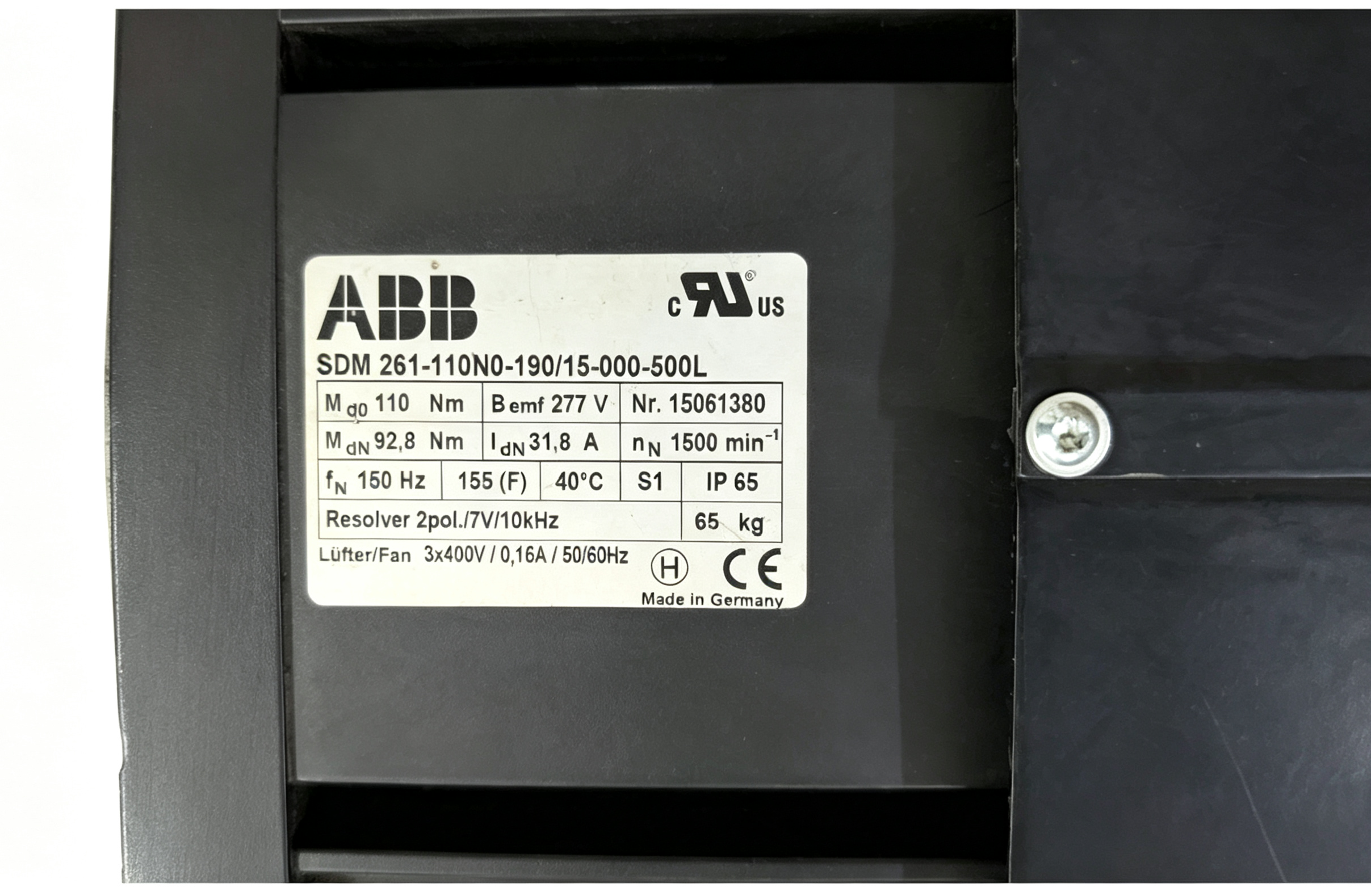
- Electrical ratings: Refer to the complete motor nameplate
SDM 261 Servo Motor Family
The SDM 261 family uses structured model designations rather than a short generic motor number. This approach allows different electrical and mechanical configurations to be identified through one complete product reference.
The model SDM 261-025N0-190/40-A8G-20A0 should therefore not be reduced to simply “SDM 261” when accurate equipment identification is required. The additional characters are important because another SDM 261 motor may have different electrical characteristics, feedback hardware, shaft dimensions or mounting features.
For technical databases, maintenance records and equipment lists, the entire designation should be recorded exactly as shown on the motor nameplate.
AC Servo Motor Operating Principle
An AC servo motor converts electrical energy into controlled mechanical rotation. In a servo application, the motor is normally connected to a servo drive that controls the electrical current supplied to the motor windings.
A feedback device can provide information about the motor shaft position or rotational condition. The controller compares the desired motion command with feedback information and continuously adjusts the drive output to reduce the difference between commanded and actual motion.
This closed-loop principle allows servo systems to provide accurate positioning and coordinated motion in industrial machinery.
Motion Control Applications
The SDM 261 servo motor is intended for applications where controlled motor movement is an important part of the machine process. Servo systems are commonly used in automated machinery that requires coordinated acceleration, deceleration, positioning and speed regulation.
Depending on the complete system configuration, applications can include machine axes, material-handling mechanisms, production equipment, positioning systems and other automated machinery requiring controlled rotary motion.
The actual application depends on the motor characteristics, servo drive, feedback system, mechanical transmission and machine control software.
Closed-Loop Control
One of the principal characteristics of a servo motor is its operation within a feedback-controlled system. The motor itself provides the mechanical output, while the associated feedback device supplies information required by the control system.
The servo drive uses this information to regulate motor behavior. Depending on the control architecture, the system can regulate position, speed or torque.
This coordinated operation allows a machine controller to command precise movements while the servo drive continuously manages the motor’s electrical operating conditions.
Model Configuration
The complete code SDM 261-025N0-190/40-A8G-20A0 contains multiple configuration fields. Because ABB motor ordering structures can distinguish several mechanical and electrical characteristics, the complete code should be treated as a single product identifier rather than independently interpreting every character without the applicable ABB coding table.
The 025N0, 190/40, A8G and 20A0 sections should therefore be retained exactly as supplied. Unless the corresponding ABB product documentation is available for the specific ordering structure, these fields should not be assigned unsupported values such as exact torque, speed, encoder type or shaft dimensions.
This approach avoids incorrect technical specifications when publishing or documenting a highly configured industrial motor.
Motor and Servo Drive Relationship
The SDM 261 motor does not normally operate as an isolated component in a precision motion system. Its electrical characteristics must correspond to the servo drive that supplies it.
The drive determines the voltage and current delivered to the motor while receiving motion commands from the machine controller. Feedback information is used by the control system to regulate the motor’s actual movement.
For this reason, motor replacement should always consider the complete servo system. The motor model, drive model, feedback interface, motor cable and machine controller must be compatible.
Mechanical Integration
Mechanical compatibility is another important consideration when installing an SDM 261 motor. The motor must match the machine’s mounting arrangement, shaft interface, coupling system and available installation space.
The complete model designation should be compared with the existing motor before selecting a replacement. Even motors belonging to the same SDM 261 family can have different mechanical configurations.
Particular attention should be given to shaft dimensions, mounting flange characteristics, connector orientation and overall motor dimensions when preparing an engineering replacement.
Electrical Connection
The electrical connection of the SDM 261 should follow the wiring arrangement specified for the exact motor and compatible servo drive. Motor phases, protective grounding, feedback connections and any auxiliary interfaces must be correctly identified before commissioning.
The motor cable should also be selected according to the drive system requirements. In servo installations, incorrect phase connections or feedback wiring can result in abnormal motor operation or control faults.
The exact terminal arrangement should be taken from the applicable ABB documentation and the motor’s nameplate rather than inferred from the model number.
Feedback System
Feedback is a fundamental part of a servo-control architecture. Depending on the specific SDM 261 configuration, a feedback device may provide position or speed information to the associated control system.
The exact feedback technology for SDM 261-025N0-190/40-A8G-20A0 should be confirmed from the complete product documentation. Different motor configurations may use different feedback arrangements, and these are not necessarily interchangeable.
Correct feedback compatibility is essential because the servo drive must be able to interpret the feedback signal correctly.
Dynamic Motion Performance
Servo motors are selected not only by nominal motor power but also by their ability to respond to changing motion commands. Acceleration, deceleration, speed changes and positioning cycles all influence the required motor and drive characteristics.
The actual dynamic performance of an SDM 261 installation depends on the motor configuration, servo drive, mechanical load, inertia, control parameters and feedback system.
Therefore, system performance should be evaluated using the complete motion-control configuration rather than relying on the motor family designation alone.
Technical Specification Table
| Parameter | ABB SDM 261-025N0-190/40-A8G-20A0 |
|---|---|
| Manufacturer | ABB |
| Motor family | SDM 261 |
| Product type | AC servo motor |
| Complete designation | SDM 261-025N0-190/40-A8G-20A0 |
| Application | Industrial motion control |
| Control architecture | Closed-loop servo system |
| Feedback arrangement | Configuration dependent |
| Rated power | Configuration dependent |
| Rated torque | Configuration dependent |
| Rated speed | Configuration dependent |
| Mounting arrangement | Configuration dependent |
| Shaft configuration | Configuration dependent |
| Electrical connection | Refer to motor nameplate and applicable documentation |
Industrial Automation Integration
An ABB SDM 261 servo motor can form part of a larger industrial automation system in which a programmable controller, motion controller or dedicated servo control system generates movement commands.
The servo drive receives these commands and regulates the motor according to the required motion profile. Feedback from the motor allows the control system to monitor actual movement and compensate for differences between commanded and measured values.
This architecture supports coordinated machine functions where multiple axes may need to move according to defined timing and position relationships.
Positioning and Speed Control
Servo systems can provide controlled positioning and speed regulation because the drive continuously evaluates motor feedback. The machine controller can define a target position, speed profile or torque requirement depending on the application.
The motor’s ability to respond to these commands depends on its electrical design and the characteristics of the associated servo drive. Mechanical inertia, friction and load torque also influence the overall response.
For engineering purposes, the SDM 261 motor should therefore be considered together with its complete drive and mechanical load.
Maintenance Considerations
Maintenance of the SDM 261 should include inspection of the motor housing, mounting interface, shaft, connectors, motor cable and feedback connection. Mechanical alignment should also be checked because excessive shaft misalignment can influence bearings, couplings and machine performance.
Electrical inspection should consider phase connections, protective grounding and feedback wiring. Any abnormal temperature, vibration, noise or unexpected motion should be investigated as part of the complete motor-drive system.
If a servo fault occurs, the motor should not automatically be considered the source of the problem. The servo drive, feedback circuit, motor cable and mechanical load should also be examined.
Replacement Identification
The complete designation ABB SDM 261-025N0-190/40-A8G-20A0 should be used when identifying this motor. Searching only for “SDM 261” can produce multiple configurations and may result in an electrically or mechanically unsuitable selection.
A correct identification procedure should compare the complete model number, motor nameplate information, associated drive model, feedback interface and mechanical installation.
The motor should be matched to the original machine configuration rather than selected solely according to its external appearance.
Technical Documentation
Available industrial automation records classify the ABB SDM 261 family as AC servo motors and list multiple SDM 261 configurations with different complete model numbers. This confirms that the SDM designation represents a configurable motor family rather than one single universal motor specification. :contentReference[oaicite:2]{index=2}
For SDM 261-025N0-190/40-A8G-20A0, the complete nameplate and applicable ABB documentation should therefore be treated as the authoritative source for exact electrical and mechanical specifications.
This is particularly important for determining rated power, continuous and peak torque, speed range, feedback type, connector arrangement, mounting dimensions and shaft characteristics.
Application Engineering
When engineering an SDM 261 servo motor into an automated machine, the motor must be evaluated from both electrical and mechanical perspectives. Electrical compatibility includes the servo drive, motor current, voltage, feedback interface and cable configuration.
Mechanical compatibility includes shaft coupling, load inertia, mounting dimensions, rotation requirements and available installation space. Control compatibility includes the motion controller, feedback processing and servo tuning parameters.
A successful servo application depends on the interaction of all these elements rather than on the motor alone.
Conclusion
ABB SDM 261-025N0-190/40-A8G-20A0 is an SDM 261 series AC servo motor for industrial motion-control applications. The complete model designation identifies a specific motor configuration and is the preferred reference for equipment identification, engineering documentation and maintenance records.
The SDM 261 motor operates as part of a closed-loop servo system, working with a compatible servo drive and feedback arrangement to provide controlled rotational movement. Its application can involve positioning, speed regulation and coordinated machine motion, depending on the complete automation architecture.
Because the SDM 261 family includes multiple configurations, exact specifications such as rated power, torque, speed, feedback type, mounting dimensions and shaft arrangement should be verified from the individual motor nameplate and corresponding ABB documentation. Retaining the complete designation SDM 261-025N0-190/40-A8G-20A0 provides the most reliable basis for technical identification and system compatibility.
评价
目前还没有评价