
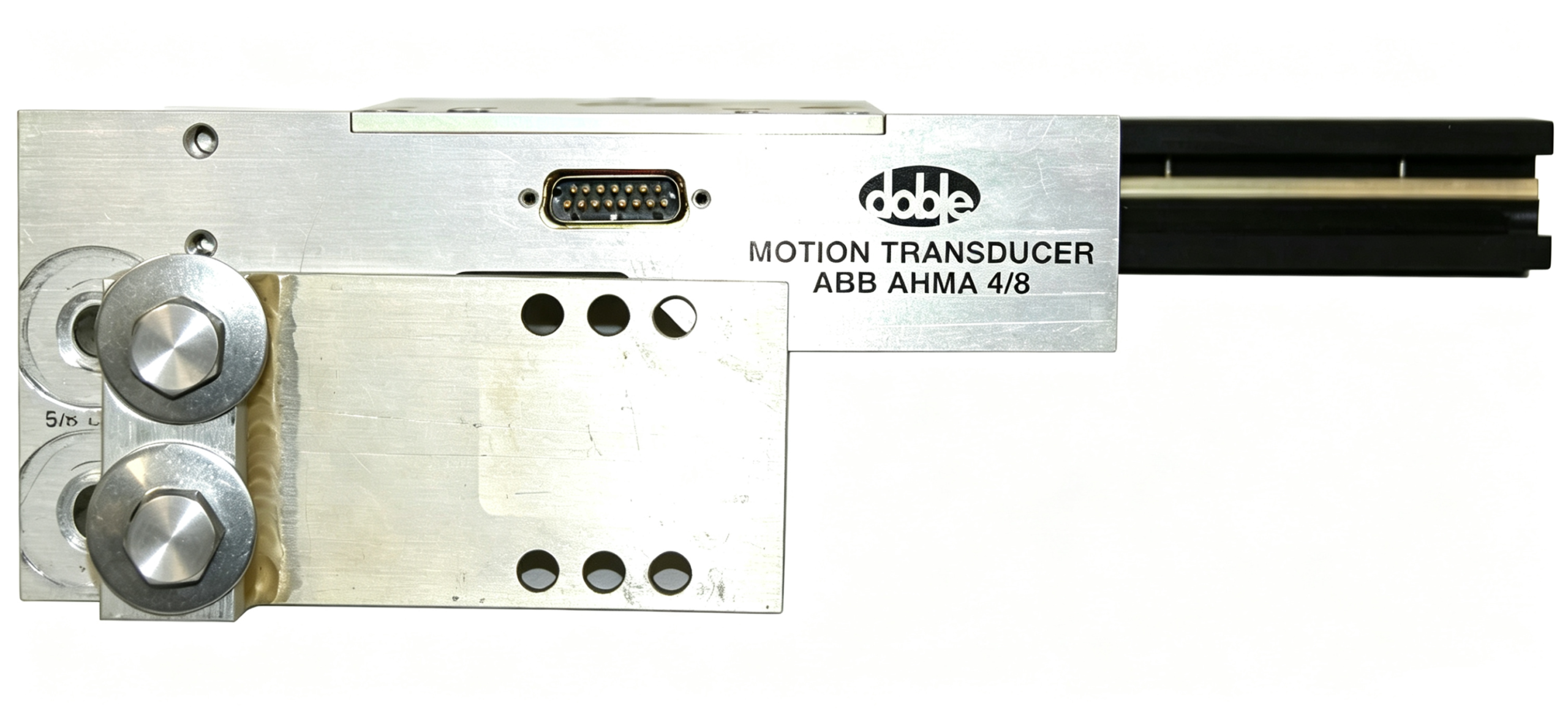
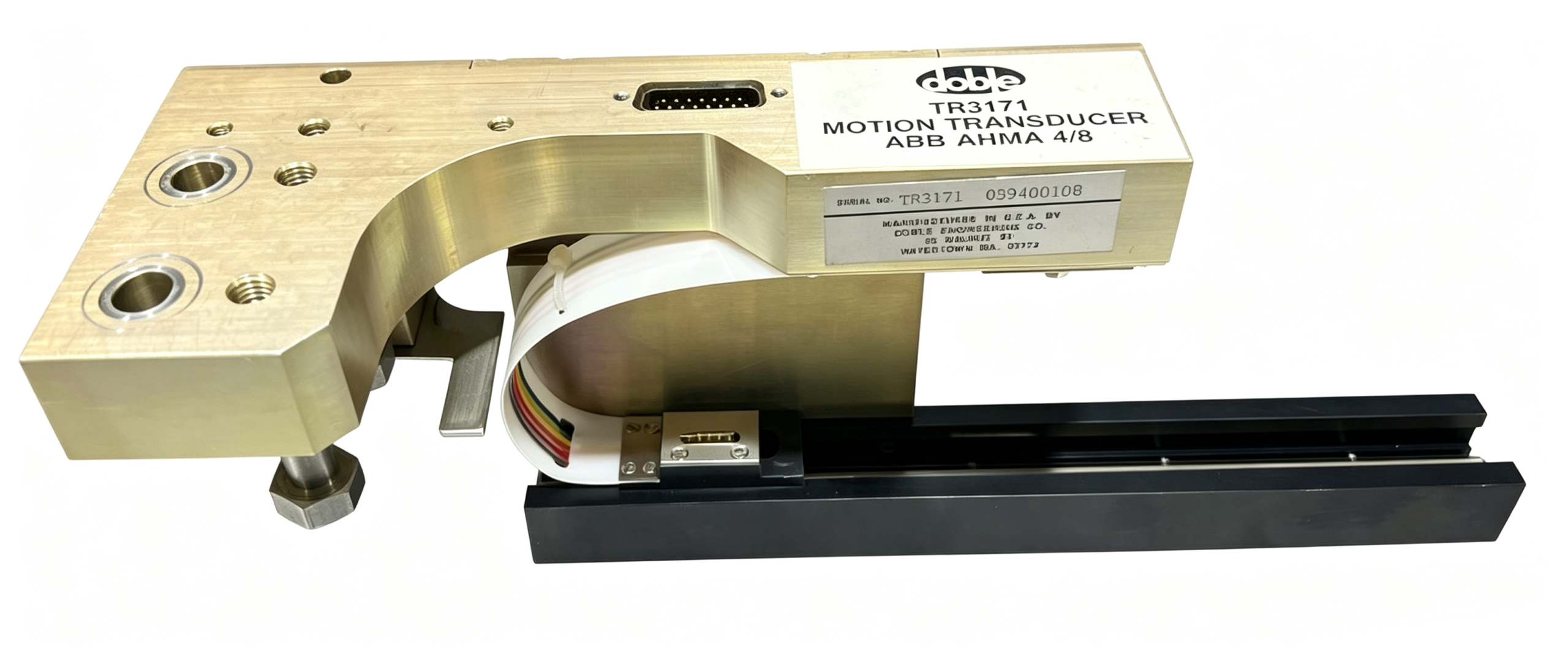
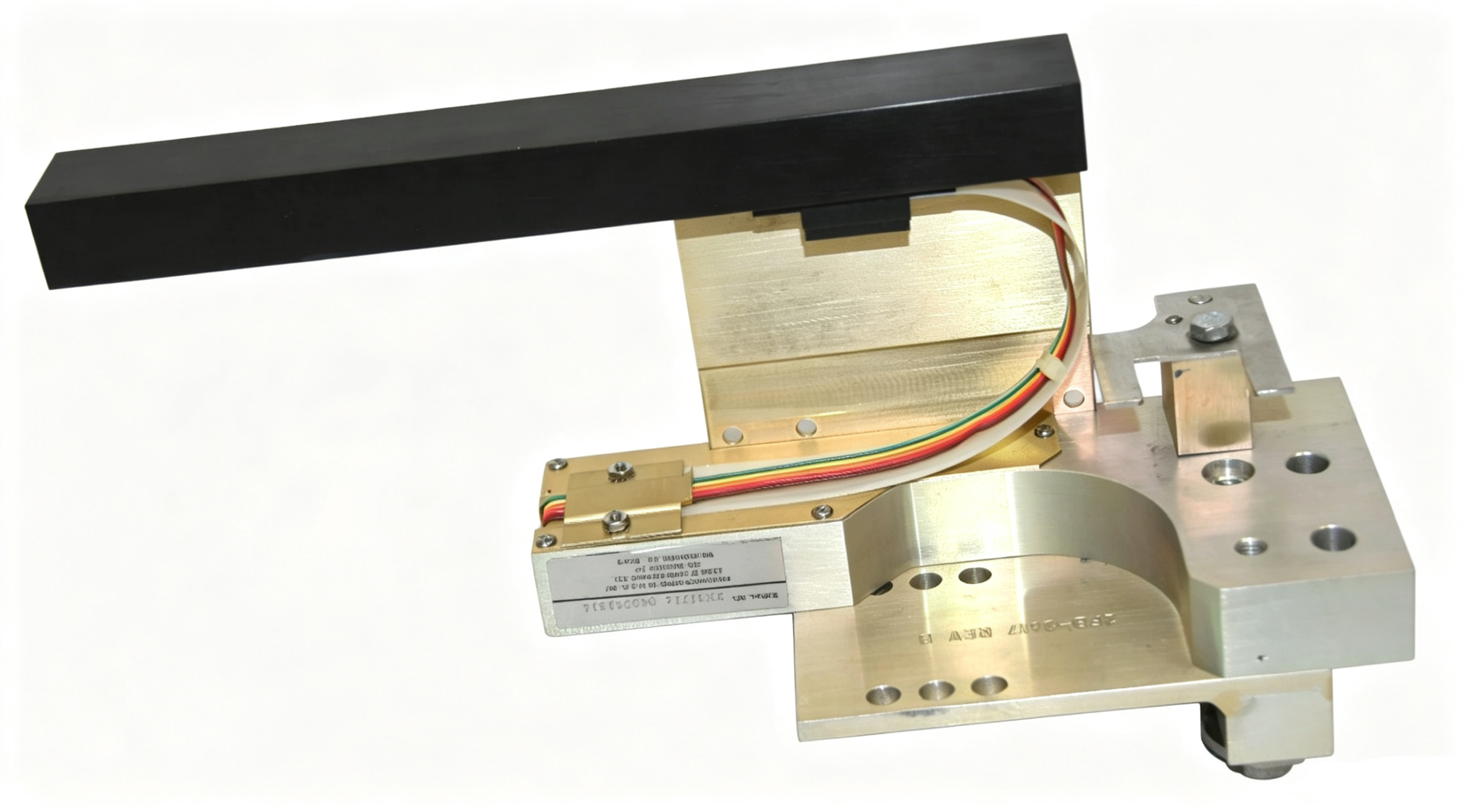
ABB AHMA4 Hydraulic Circuit Breaker Operating Mechanism
ABB AHMA4 is a hydraulic operating mechanism associated with ABB high-voltage power circuit breaker equipment. The AHMA family is designed to provide the mechanical operating force required to open and close a circuit breaker through a hydraulic energy-storage and transmission arrangement. In a high-voltage switchgear system, the operating mechanism is an essential part of the circuit breaker because it converts stored energy and control commands into controlled mechanical movement of the breaker contacts.
The AHMA4 designation identifies a specific version within the AHMA operating mechanism family. ABB technical documentation for the AHMA mobile charging unit specifically lists AHMA-4 among the compatible circuit breaker drive types. ABB product records also identify AHMA4 as a circuit breaker drive associated with high-voltage breaker equipment. :contentReference[oaicite:1]{index=1}
Product Overview
The operating mechanism is responsible for transferring energy to the circuit breaker’s mechanical linkage. During normal operation, a circuit breaker must move its contacts rapidly and accurately when an opening or closing command is received. The mechanism therefore has to store sufficient operating energy, release it at the appropriate moment and transmit the resulting force through the mechanical drive system.
AHMA4 belongs to an ABB mechanism family based on hydraulic energy transmission. Compared with a purely manual mechanism, a hydraulic arrangement can provide the force and operating characteristics required by high-voltage circuit breakers while allowing the breaker to be controlled from electrical protection and control systems.
The complete operating performance depends on the circuit breaker assembly, hydraulic circuit, energy-storage components, mechanical linkage, control equipment and application configuration. The AHMA4 mechanism should therefore be regarded as one part of the complete circuit breaker operating system.
Hydraulic Operating Principle
A hydraulic circuit breaker mechanism uses pressurized hydraulic energy to produce mechanical movement. Energy is stored within the hydraulic system and can subsequently be released to operate the breaker mechanism. The hydraulic system transfers this energy through suitable mechanical components to produce the required opening or closing movement.
The use of hydraulic energy is particularly suitable for high-voltage circuit breakers because breaker contacts may require substantial mechanical force and controlled movement. The mechanism must also provide consistent operation during repeated switching cycles.
The AHMA design incorporates hydraulic and mechanical components as part of an integrated operating mechanism. Correct hydraulic pressure, mechanical adjustment and linkage condition are important factors in maintaining the intended operating characteristics.
Circuit Breaker Opening Operation
Opening operation is one of the most important functions of a high-voltage circuit breaker mechanism. When a protection system detects a fault, the breaker may receive a trip command. The operating mechanism then releases the stored energy required to separate the circuit breaker contacts.
Rapid contact separation helps interrupt the electrical current and isolate the affected section of the power network. The exact interruption time depends on the complete circuit breaker, including the protection system, control circuit, operating mechanism, contact system and interruption technology.
For the AHMA4 mechanism, the hydraulic and mechanical components work together to transfer the required operating force to the circuit breaker. Mechanical movement must remain within the specified operating limits to ensure correct contact travel and switching performance.
Circuit Breaker Closing Operation
The closing function returns the circuit breaker contacts to the closed position when the switching system determines that energization is required. A suitable closing command activates the operating mechanism, which transfers stored hydraulic energy through the mechanical drive.
Controlled closing movement is important because the circuit breaker contacts must reach the correct final position with appropriate mechanical timing. The mechanism must also coordinate with auxiliary switches, indication systems and electrical interlocking circuits.
The actual closing sequence depends on the complete breaker design and its control configuration. Therefore, AHMA4 operating characteristics should always be evaluated together with the corresponding circuit breaker type.
Energy Storage System
Energy storage is a fundamental part of the hydraulic operating mechanism. The stored energy provides the force required for the circuit breaker switching operation without depending solely on the instantaneous output of an electric motor or external power source.
A hydraulic energy-storage arrangement can be charged before the switching operation and then released when an opening or closing command is received. This principle allows the operating mechanism to provide a defined mechanical movement during a switching event.
ABB documentation for the AHMA mechanism family also describes the use of a mobile charging unit for manually charging the energy accumulator when motor charging is unavailable. The documentation states that this charging equipment is suitable for AHMA-1, AHMA-4 and AHMA-8 breaker drives. :contentReference[oaicite:2]{index=2}
Manual Hydraulic Charging
The AHMA family includes provisions for manual charging of the operating mechanism energy accumulator through an appropriate hydraulic charging system. ABB’s product manual describes a mobile charging unit intended for manual charging when motor charging has failed or when the hydraulic pump cannot perform the charging operation.
This arrangement provides a method of restoring the stored energy required for safe circuit breaker operation under specific service conditions. The mobile charging unit connects to the appropriate hydraulic connections of the breaker operating mechanism and transfers hydraulic energy into the energy-storage system. :contentReference[oaicite:3]{index=3}
The charging procedure must follow the applicable ABB service documentation for the particular circuit breaker and mechanism. Hydraulic pressure, connection points and operating sequence should not be assumed from the AHMA4 designation alone.
High-Voltage Switchgear Applications
AHMA4 is associated with high-voltage circuit breaker operating systems used in electrical substations and switchgear installations. The operating mechanism forms the mechanical interface between the circuit breaker control system and the main interrupting assembly.
In a substation, the circuit breaker can receive commands from local control equipment, remote supervisory systems or protection relays. The operating mechanism converts these electrical commands into the mechanical opening or closing movement required by the breaker.
The mechanism therefore plays an important role in the overall reliability of the switching system. Its hydraulic, mechanical and electrical control components must work together to provide the required switching sequence.
Mechanical Transmission
The hydraulic energy generated or stored within the mechanism must ultimately be transferred to the circuit breaker’s moving components. Mechanical transmission elements connect the hydraulic operating section with the breaker contact system.
Correct mechanical alignment is important because the circuit breaker must achieve the specified contact travel, opening position and closing position. Wear, incorrect adjustment or damage to linkage components can influence switching characteristics.
For maintenance work, the mechanism should therefore be evaluated as a complete mechanical system. Hydraulic pressure alone does not define the performance of the circuit breaker.
Control and Indication
A high-voltage circuit breaker operating mechanism normally interacts with several control and indication circuits. These can include opening and closing coils, auxiliary contacts, position indicators, interlocking circuits and energy-storage status signals.
The control system uses these signals to determine whether the breaker is available for operation and whether it has reached the required open or closed position. Auxiliary contacts can also provide breaker status information to protection and substation automation systems.
The exact electrical interface depends on the specific ABB circuit breaker and mechanism configuration. AHMA4 should therefore not be assigned a universal coil voltage or auxiliary-contact arrangement without reference to the complete equipment designation.
Maintenance Considerations
Hydraulic operating mechanisms require attention to both hydraulic and mechanical components. The hydraulic circuit should be checked for suitable operating conditions, while mechanical linkages should be inspected for wear, correct adjustment and secure connections.
Potential maintenance areas can include hydraulic connections, pressure-related components, mechanical transmission parts, energy-storage components, control circuits and position indication. The appropriate inspection interval and service procedure depend on the associated circuit breaker and operating environment.
ABB service documentation for the specific breaker should be used when performing maintenance because AHMA4 can be incorporated into different equipment configurations.
Application in Protection Systems
The circuit breaker mechanism is closely connected to the protection system. When a protection relay identifies an electrical fault, it can issue a trip command to the breaker control circuit. The operating mechanism then performs the mechanical opening sequence.
This relationship makes the operating mechanism an important component of the overall protection chain. The protection relay can detect and process the electrical fault, but physical isolation of the affected circuit depends on the circuit breaker and its operating mechanism.
For this reason, the mechanism’s operating time, contact movement and control circuit condition are important considerations in high-voltage protection system maintenance.
AHMA4 Product Identification
ABB AHMA4 should be identified by its complete equipment and component information whenever technical work is performed. The AHMA family contains different mechanism variants, including AHMA-1, AHMA-4 and AHMA-8, and ABB documentation specifically distinguishes these types. :contentReference[oaicite:4]{index=4}
Some ABB component records use descriptions such as “circuit breaker drive AHMA4” and associate the mechanism with particular high-voltage breaker equipment. These records demonstrate that AHMA4 is used as a circuit breaker operating mechanism designation rather than as a general-purpose industrial hydraulic actuator. :contentReference[oaicite:5]{index=5}
When identifying a complete installation, the breaker type, mechanism type, control voltage, hydraulic arrangement and associated component references should be recorded together.
Typical Applications
ABB AHMA4 hydraulic operating mechanisms can be associated with applications such as:
- High-voltage power circuit breakers
- Electrical substations
- High-voltage switchgear
- Transmission switching equipment
- Substation circuit breaker control systems
- Hydraulic circuit breaker operating systems
- Protection-related switching equipment
- High-voltage network isolation systems
The exact application depends on the circuit breaker model and the complete operating mechanism configuration. The AHMA4 designation identifies the mechanism family and version but does not by itself specify every characteristic of the associated breaker.
System Integration
In a complete high-voltage switchgear installation, AHMA4 operates together with the circuit breaker interrupting chamber, control cabinet, hydraulic components, mechanical linkage and electrical protection system. These elements form an integrated switching system.
The operating mechanism receives commands through the breaker control circuit and provides the mechanical movement necessary to change the breaker position. Position and energy-storage information can then be returned to the control and protection system.
This integration allows the circuit breaker to participate in automatic fault clearing, controlled switching and substation operating procedures.
Technical Identification and Documentation
For engineering and maintenance purposes, the most reliable method of identifying ABB AHMA4 is to use the complete information shown on the equipment identification plate and associated circuit breaker documentation. The mechanism designation should be combined with the breaker model and relevant component references.
This approach is particularly important because hydraulic operating mechanisms contain application-specific components. A component designed for one AHMA4 installation should not automatically be assumed to be interchangeable with a component from another breaker arrangement simply because both mechanisms carry the AHMA4 designation.
Conclusion
ABB AHMA4 is a hydraulic operating mechanism used with ABB high-voltage power circuit breaker systems. The mechanism provides the hydraulic and mechanical energy transmission required for controlled circuit breaker opening and closing operations. Its design is associated with ABB’s AHMA family of hydraulic breaker drives.
ABB documentation identifies AHMA-4 as one of the compatible circuit breaker drive types for the AHMA mobile charging system, together with AHMA-1 and AHMA-8. The same documentation explains that the mobile charging system can be used to manually charge the breaker operating mechanism’s energy accumulator when motor charging is unavailable. :contentReference[oaicite:6]{index=6}
For technical identification, ABB AHMA4 should be considered together with the complete circuit breaker model, hydraulic arrangement, control system and associated component references. This provides a more accurate basis for understanding the operating mechanism and its role within a high-voltage switchgear installation.
评价
目前还没有评价