
ABB RDCU-02C-SW Drive Control Unit
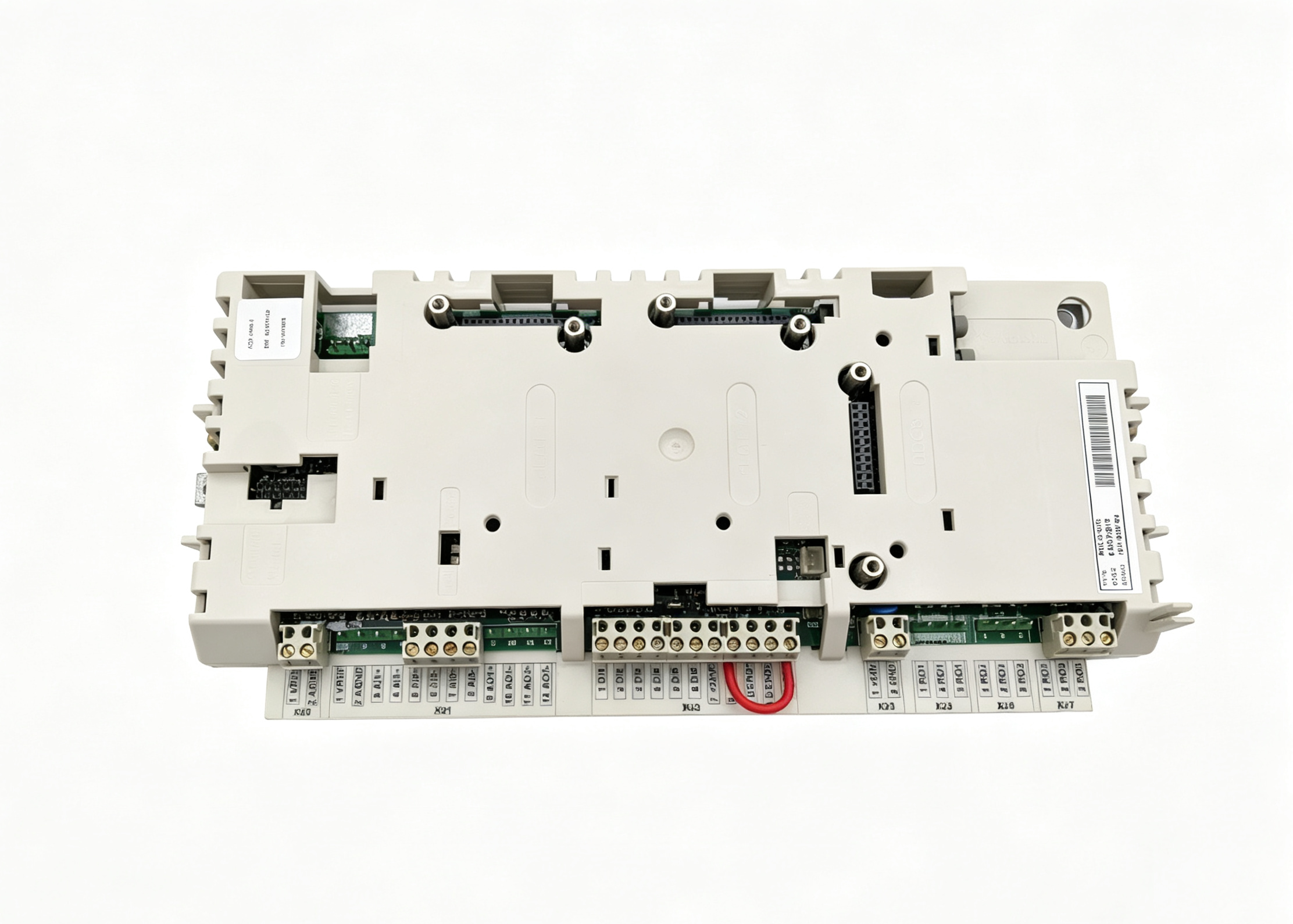
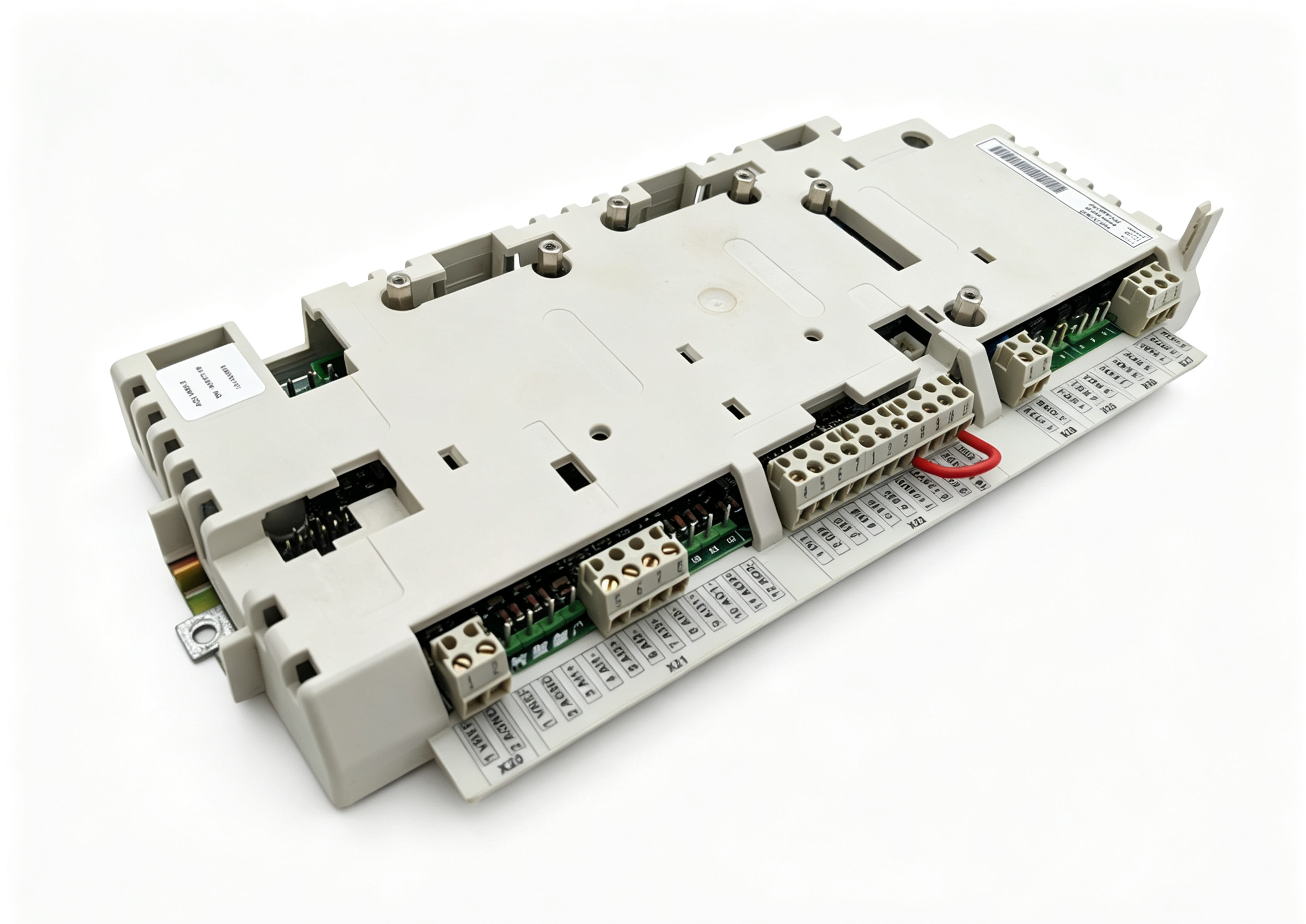
ABB RDCU-02C-SW is associated with the ABB RDCU-02C Drive Control Unit platform used in industrial drive systems. The RDCU is a dedicated control unit designed to provide the control, monitoring and input/output functions required by compatible ABB drive equipment. It is particularly associated with ABB ACS600 and ACS800 drive architectures, where the control electronics may be installed separately from the main inverter power section.
The RDCU-02C is built around an RMIO motor control and input/output board installed inside a dedicated housing. This arrangement separates the drive control electronics from the power module and allows the control unit to communicate with inverter or IGBT supply hardware through optical fiber connections. ABB documentation identifies the RDCU as a separate unit that can be used with larger drive modules where the RMIO board is not installed directly inside the inverter module. :contentReference[oaicite:1]{index=1}
The “SW” designation is particularly relevant when identifying an RDCU configuration because ABB specifies application software information through the unit identification label. The hardware manual states that the label contains SW TYPE, SW CODE and DEVICE TYPE information, and that the application program must correspond to the converter hardware. :contentReference[oaicite:2]{index=2}
Product Overview
ABB RDCU-02C provides the central control interface for compatible drive configurations. Rather than functioning as a power switching device itself, the unit processes control information and interfaces with the drive power section. This architecture enables the drive control functions to be physically separated from high-power inverter components.
The RDCU platform is designed around the RMIO board, which contains the principal motor control and input/output functions. Depending on the application, optional modules can be installed to extend the control capabilities of the unit. The hardware architecture also provides connections for a control panel and optical communication links.
The RDCU-02C can be used with different application programs. ABB documentation identifies several common software types, including ACS600 and ACS800 system application programs, standard application programs, pump control application programs and IGBT supply unit application programs. The correct software must match the converter hardware and intended application. :contentReference[oaicite:3]{index=3}
Technical Characteristics
- Product type: Drive Control Unit
- Model family: RDCU-02C
- Designation: RDCU-02C-SW
- Control board: RMIO
- Primary application: ABB industrial drive systems
- Associated drive platforms: ACS600 and ACS800 applications
- Power supply: 24 V DC
- Power connector: X34
- Control panel connection: X39
- Optical communication connectors: V57 and V68
- Mounting: 35 × 7.5 mm DIN rail
- Optional module capability: Supported
- Application software identification: SW TYPE and SW CODE
- Hardware identification: DEVICE TYPE
The ABB hardware manual specifies that the RDCU is powered through connector X34. It can receive power from the power supply board of the inverter or IGBT supply module provided the specified current limit is not exceeded, and it can also be powered from an external 24 V DC supply. The actual current consumption depends on the installed configuration and optional modules. :contentReference[oaicite:4]{index=4}
Drive Control Architecture
The RDCU-02C is an important part of a distributed drive control architecture. In larger ABB drive systems, the power electronics and control electronics can be physically separated. The inverter module handles the high-power conversion function, while the RDCU provides the associated control and input/output processing.
An optical fiber connection links the RDCU to the inverter or IGBT supply module. ABB documentation identifies the PPCS connection between the RDCU and the AINT or NINT board of the corresponding power module. This optical interface provides electrical isolation between the control electronics and power section while allowing control information to be exchanged. :contentReference[oaicite:5]{index=5}
This architecture is particularly useful in industrial drive cabinets where high-power switching components and sensitive control electronics need to be organized separately. The physical separation also helps system designers manage electromagnetic interference and cabinet layout.
Software Identification
The software aspect of ABB RDCU-02C-SW is an important consideration when identifying or replacing a control unit. The RDCU housing carries identification information including SW TYPE, SW CODE and DEVICE TYPE.
SW TYPE identifies the application program loaded into the control unit. SW CODE identifies the corresponding software code, while DEVICE TYPE identifies the converter hardware configuration. ABB specifically instructs users to verify that the application program corresponds to the converter hardware before installation. :contentReference[oaicite:6]{index=6}
This means that two RDCU-02C units with similar physical hardware may not necessarily be interchangeable if their software configuration or device type differs. For engineering work, the complete identification information should therefore be recorded before selecting a replacement control unit.
Communication and Optical Interfaces
ABB RDCU-02C provides optical communication connections for interfacing with compatible inverter and supply modules. The hardware manual identifies V57 and V68 as fiber optic connectors associated with the PPCS link.
The optical fiber connection is designed for communication between the control unit and power electronics. ABB specifies a recommended maximum distance of 10 meters for the PPCS link when plastic optical fiber is used. Longer distances require consideration of the applicable ABB system configuration and technical requirements. :contentReference[oaicite:7]{index=7}
The RDCU also provides connections for control panels and optional modules, allowing the control architecture to be adapted to the requirements of the associated drive system.
Installation Characteristics
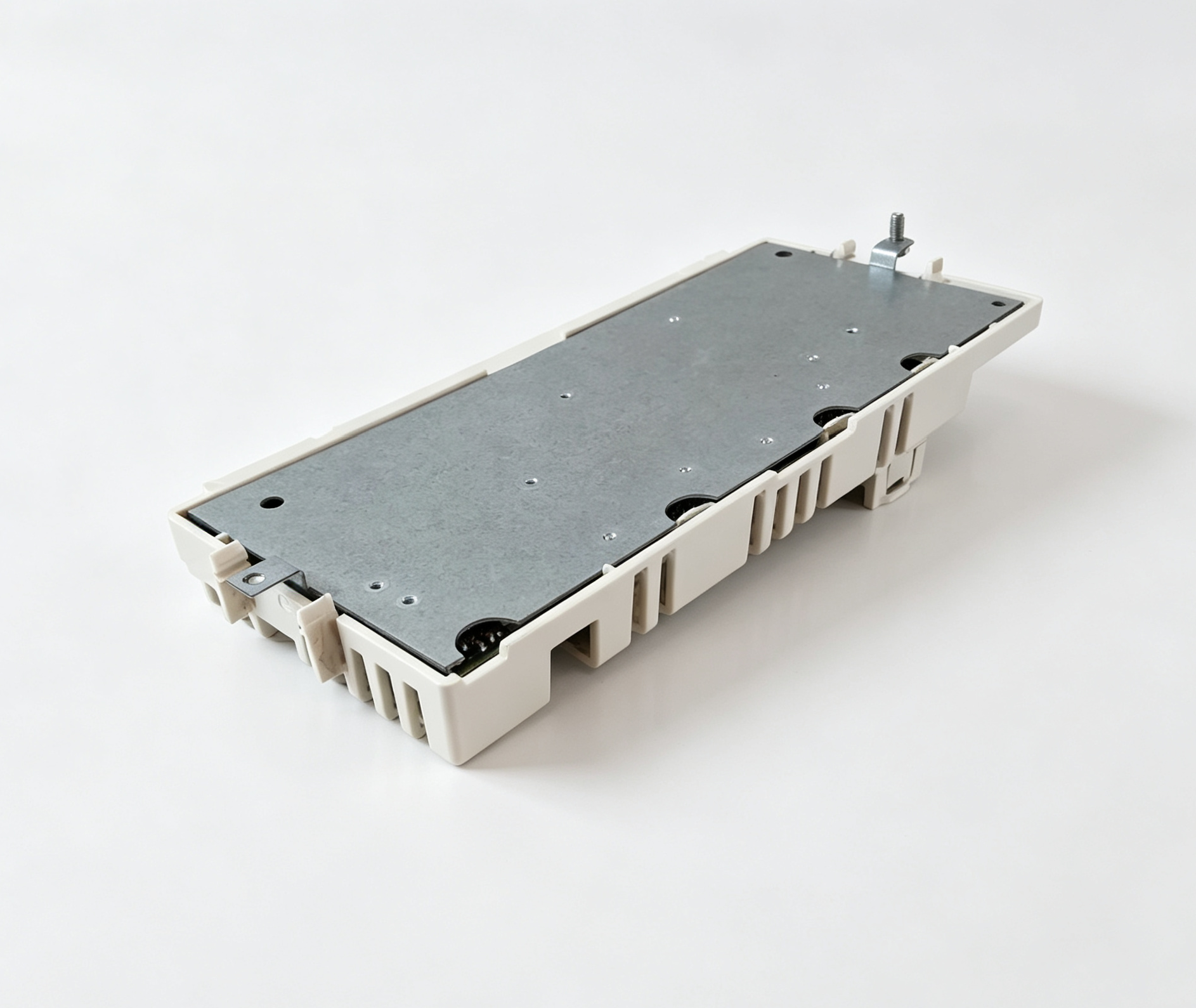
The ABB RDCU-02C is designed for installation on a 35 × 7.5 mm DIN rail. The unit can be mounted vertically or horizontally, provided that sufficient airflow is maintained through the ventilation openings in the housing. ABB recommends avoiding installation directly above heat-generating equipment. :contentReference[oaicite:8]{index=8}
The RDCU is grounded to the mounting rail using two screws. The grounding connection is therefore an important part of the mechanical installation procedure and should be completed according to the applicable ABB installation instructions.
ABB also recommends avoiding installation close to strong electromagnetic disturbance sources such as relays, contactors, brake choppers and motor cables. The hardware manual specifies a recommended minimum distance of 500 mm from such sources and notes that metallic screening can be used to reduce electromagnetic interference. :contentReference[oaicite:9]{index=9}
Industrial Drive Applications
ABB RDCU-02C can be incorporated into industrial drive systems requiring centralized control of inverter power modules. Typical applications can include:
- ABB ACS800 drive systems
- Industrial motor control equipment
- Large inverter systems
- Multi-module drive configurations
- IGBT supply applications
- Industrial automation cabinets
- Process machinery
- High-power motor control systems
The exact application depends on the software loaded into the RDCU and the hardware configuration of the connected converter. The device type and software identification should therefore be considered together rather than treating the RDCU hardware as an independent universal controller.
Input and Output Functions
The RMIO board inside the RDCU provides the principal motor control and input/output functions. Digital and analog connections can be used according to the requirements of the application program installed in the unit.
ABB documentation notes that the detailed digital and analog input/output connections depend on the firmware application program. Optional modules are also installed according to their respective technical documentation. This software-dependent architecture allows the same general RDCU hardware platform to support different drive applications. :contentReference[oaicite:10]{index=10}
System Integration
In a complete ABB drive system, the RDCU-02C works together with the inverter or IGBT supply module, optical communication components, control panel and optional interface modules. The control unit provides the processing and communication layer required for the power section to operate according to the selected drive application.
This modular arrangement simplifies the organization of complex drive systems. It also allows engineers to identify the control hardware, application software and power hardware as separate but coordinated parts of the overall drive architecture.
Conclusion
ABB RDCU-02C-SW is associated with the ABB RDCU-02C Drive Control Unit platform used in industrial drive control architectures. The unit incorporates the RMIO motor control and input/output board and provides interfaces for control panels, optional modules, external power and optical communication with compatible inverter or IGBT supply modules.
Its DIN rail mounting structure, optical communication architecture and software identification system make the RDCU-02C suitable for distributed industrial drive installations. The unit can support different application programs, but the correct SW TYPE, SW CODE and DEVICE TYPE must correspond to the connected converter hardware. :contentReference[oaicite:11]{index=11}
For ABB RDCU-02C-SW identification and system integration, the complete unit label should be reviewed together with the associated drive documentation. In particular, the hardware model, application software and device type should be matched before the control unit is installed in an existing drive system.

评价
目前还没有评价