
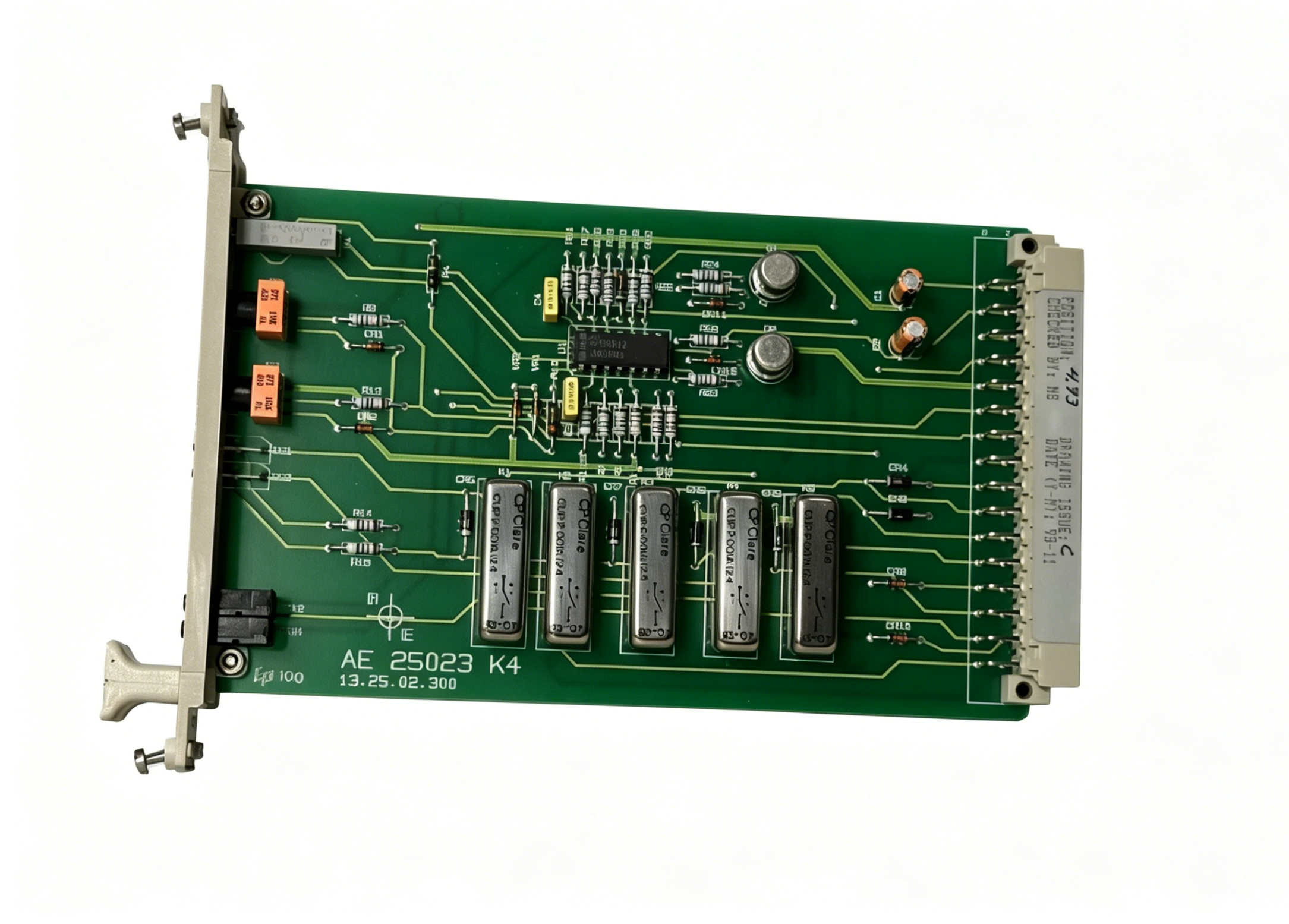
ABB Stal 720090-1 Frequency Dead Band PCB Circuit Board
The ABB Stal 720090-1 Frequency Dead Band PCB Circuit Board is a specialized control module designed for integration within ABB STAL turbine control systems. In industrial turbine applications, maintaining stable operating frequency is essential for ensuring efficient performance, protecting mechanical equipment, and supporting reliable power generation. The 720090-1 module contributes to these objectives through frequency dead band management, allowing turbine control systems to respond appropriately to operational changes while avoiding unnecessary control actions.
Modern turbine installations rely on sophisticated automation architectures to regulate speed, frequency, load demand, and overall system performance. Within these environments, frequency dead band functionality plays an important role by establishing a controlled operating range in which minor frequency variations do not trigger corrective actions. This approach helps prevent excessive controller activity and contributes to smoother turbine operation. The ABB Stal 720090-1 is designed to support this functionality as part of a broader ABB STAL control platform.
Designed for ABB STAL Turbine Control Systems
ABB STAL turbine control systems have been widely utilized in industrial facilities requiring dependable turbine operation and advanced automation capabilities. These control architectures incorporate numerous specialized modules responsible for speed measurement, frequency regulation, signal conditioning, protection functions, and operational supervision. The ABB Stal 720090-1 is recognized within industry references as a Frequency Dead Band module used within ABB STAL turbine environments.
The module operates as part of a coordinated control structure that includes turbine controllers, speed measurement cards, supervisory protection units, signal processing modules, and operator interfaces. By supporting frequency dead band control, the 720090-1 contributes to the stability and responsiveness of the overall turbine automation system.
Understanding Frequency Dead Band Control
Frequency dead band control is a fundamental concept within turbine regulation and industrial automation systems. In any operating turbine, small fluctuations in frequency can occur as a result of changing load conditions, process variations, or normal operating dynamics. If the control system reacted to every minor fluctuation, excessive adjustments could occur, potentially reducing efficiency and increasing wear on mechanical components.
A dead band establishes a predefined operating range within which frequency deviations are considered acceptable and do not require corrective action. Only when frequency variations exceed the specified threshold does the control system initiate a response. This strategy helps maintain operational stability while reducing unnecessary control activity. The ABB Stal 720090-1 supports this important control philosophy within turbine automation architectures.
Supporting Turbine Speed Regulation
Turbine speed regulation is directly related to frequency control in many industrial and power generation applications. Maintaining a stable speed reference helps ensure consistent output performance while supporting equipment reliability. The ABB Stal 720090-1 contributes to this objective by assisting with frequency dead band management and signal processing functions.
Effective speed regulation helps turbine systems operate efficiently under varying load conditions. Whether responding to changes in power demand or process requirements, control systems must maintain balance between responsiveness and stability. Dead band control helps achieve this balance by filtering out insignificant frequency variations while allowing meaningful operational changes to be addressed appropriately.
Signal Processing and Control Coordination
Industrial turbine automation systems generate substantial amounts of operational data from sensors, monitoring devices, controllers, and protective equipment. The ABB Stal 720090-1 participates in the management of these signals by supporting frequency-related control functions and operational coordination activities.
Accurate signal processing enables the turbine control platform to evaluate system conditions and implement appropriate responses when required. Reliable communication between control modules helps maintain consistent operation while supporting diagnostics, monitoring, and performance optimization efforts throughout the facility.
Applications in Power Generation Facilities
Power generation facilities depend heavily on precise turbine control technologies to maintain stable electrical output and efficient energy production. Frequency regulation remains one of the most critical aspects of power generation because deviations can impact system performance and grid stability. The ABB Stal 720090-1 supports these applications by contributing to the control infrastructure responsible for frequency management.
Within power plants, turbine control systems must continuously balance operational efficiency, load demand, and equipment protection requirements. Frequency dead band modules assist in achieving these objectives by enabling stable control strategies that minimize unnecessary adjustments while maintaining operational responsiveness.
Industrial Process Control Applications
Beyond power generation, turbine systems are commonly utilized within process industries such as petrochemicals, refining, oil and gas production, pulp and paper manufacturing, and large-scale industrial operations. In these environments, turbines often drive compressors, pumps, generators, and other critical equipment.
The ABB Stal 720090-1 can contribute to the reliable operation of these systems by supporting frequency control and operational stability. Effective dead band management helps reduce control system oscillations and promotes smoother equipment performance, contributing to improved process reliability and operational efficiency.
Integration Within ABB STAL Control Architectures
Industry references identify numerous ABB STAL modules that operate alongside the 720090-1 within turbine automation systems. These include speed measurement cards, automatic mode switch modules, critical speed controllers, selector cards, supervision modules, frequency droop controllers, and overspeed protection devices. Together, these components create an integrated control environment capable of managing complex turbine operations.
The ABB Stal 720090-1 functions within this ecosystem by supporting a specific aspect of frequency regulation. Its integration with related control modules enables coordinated operation and contributes to overall system reliability and performance.
Operational Reliability and Engineering Quality
Industrial turbine environments demand highly reliable electronic control hardware. Components must operate continuously while maintaining accurate control performance under varying operating conditions. ABB has long been recognized for developing automation technologies designed to meet these demanding requirements.
The ABB Stal 720090-1 reflects these engineering principles by supporting dependable frequency regulation functionality within turbine control systems. Reliable performance helps organizations maintain operational continuity while supporting long-term equipment availability and process efficiency.
Long-Term Value for Turbine Automation Systems
Organizations operating turbine-based facilities often prioritize equipment that supports long service life, dependable performance, and efficient maintenance practices. Frequency regulation modules remain essential because they contribute directly to operational stability and control system effectiveness.
The ABB Stal 720090-1 provides value by supporting stable turbine operation, minimizing unnecessary control actions, and enhancing overall automation performance. Its role within ABB STAL architectures highlights the importance of specialized control modules in achieving efficient and reliable turbine management.
Conclusion
The ABB Stal 720090-1 Frequency Dead Band PCB Circuit Board is a specialized turbine control module designed to support frequency regulation, dead band management, speed stabilization, and operational coordination within ABB STAL automation systems. By helping control systems respond appropriately to frequency deviations while maintaining operational stability, the module contributes to efficient turbine performance across power generation and industrial process applications. Its integration within ABB STAL control architectures makes the ABB Stal 720090-1 an important component for organizations seeking reliable turbine automation and control system functionality.

评价
目前还没有评价