
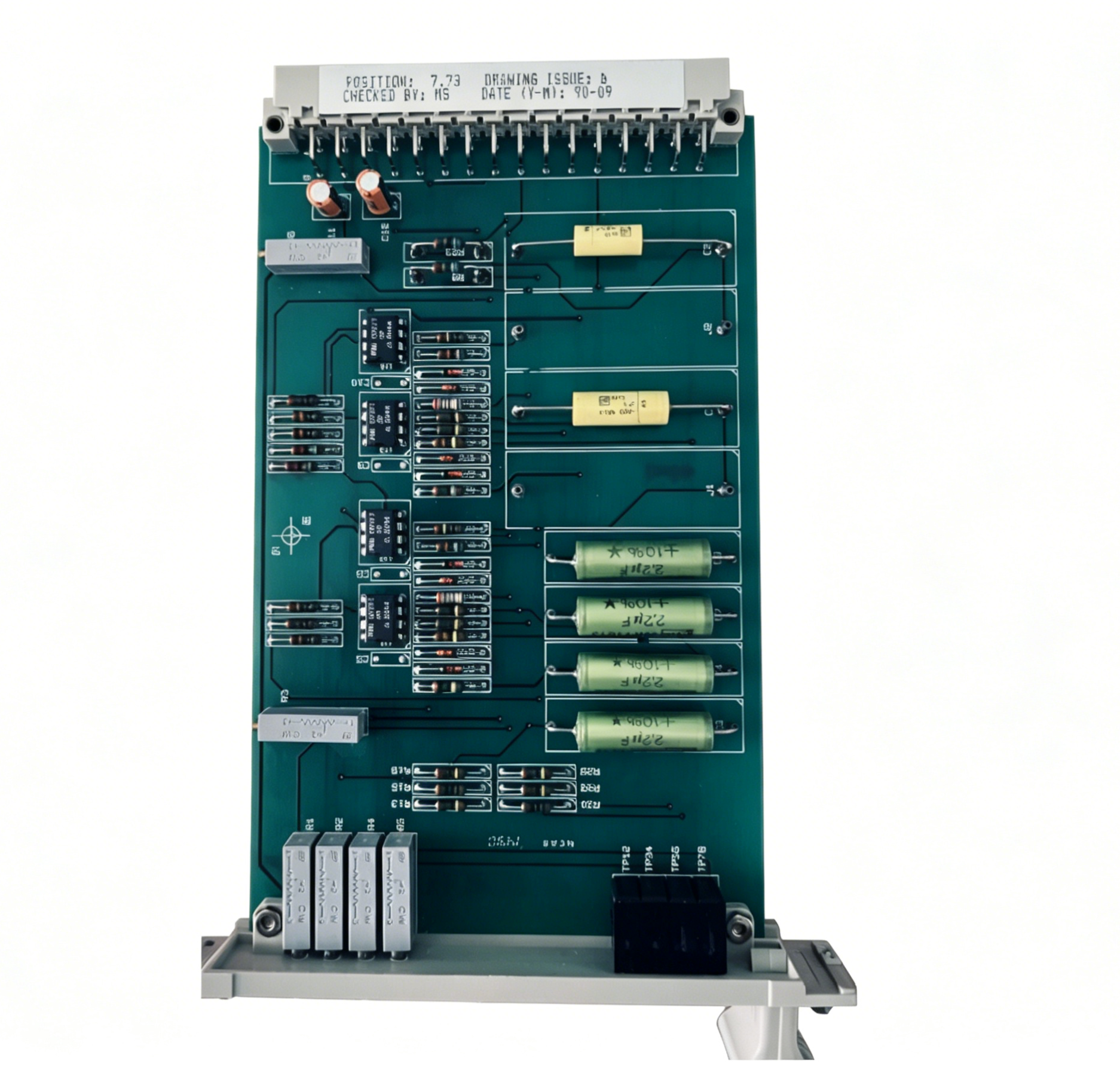
ABB STAL 720093-1 I/U Converter Module
The ABB STAL 720093-1 I/U Converter Module is an industrial-grade signal conversion PCB designed for use in automation systems, process control environments, and industrial measurement applications. It belongs to the ABB STAL product family, which is widely recognized for delivering reliable electronic modules used in industrial signal processing and control architectures. This module is primarily responsible for converting voltage (U) signals into current (I) signals, ensuring stable and accurate signal transmission across automation systems.
In modern industrial environments, accurate signal conversion is essential for maintaining system stability and ensuring correct communication between sensors, controllers, and actuators. The ABB STAL 720093-1 provides this functionality by acting as a bridge between different signal formats, allowing industrial systems to operate with improved compatibility and reduced signal distortion.
Voltage-to-Current Signal Conversion Function
One of the core functions of the ABB STAL 720093-1 I/U Converter Module is the conversion of voltage signals into standardized current signals. Industrial systems often rely on 4–20 mA current loops for long-distance signal transmission due to their resistance to electrical noise and voltage drops.
The module ensures that incoming voltage signals from field devices are accurately converted into proportional current outputs. This conversion process improves signal integrity and ensures that downstream control systems receive consistent and reliable data, even in electrically noisy industrial environments.
By maintaining accurate signal conversion, the module helps reduce measurement errors, improves system responsiveness, and enhances overall process control quality.
Role in Industrial Automation Systems
The ABB STAL 720093-1 is commonly used in industrial automation systems where precise signal handling is required. It functions as an interface between field instrumentation and control systems, ensuring that data collected from sensors is properly conditioned and transmitted to controllers.
This role is critical in applications where multiple devices operate together in a coordinated system. Without proper signal conversion, inconsistencies between voltage and current signals could lead to incorrect readings or unstable system behavior.
The module contributes to stable automation performance by ensuring that all signals are standardized and compatible with control system requirements.
Signal Conditioning and Stability
Beyond simple conversion, the ABB STAL 720093-1 also provides signal conditioning functions that improve overall signal quality. Industrial environments often introduce electrical noise, interference, and voltage fluctuations that can degrade signal accuracy.
The module helps stabilize these signals by maintaining consistent conversion characteristics and reducing signal distortion. This ensures that control systems receive clean and accurate data for processing and decision-making.
Stable signal conditioning is especially important in continuous process industries such as power generation, chemical processing, and manufacturing automation.
Integration with ABB STAL Architecture
The ABB STAL 720093-1 I/U Converter Module is designed for seamless integration within ABB STAL-based industrial architectures. It works alongside other control and measurement modules to form a complete automation system.
This integration allows for efficient communication between system components, ensuring that signal conversion, processing, and control operations are synchronized. The modular structure also supports flexible system design, enabling easy expansion or modification of automation setups without major redesign.
Industrial Applications
The ABB STAL 720093-1 is widely applied in industrial sectors such as energy production, manufacturing, oil and gas, water treatment, and process automation. In these environments, accurate signal conversion is essential for monitoring and controlling equipment.
In power systems, the module supports measurement and control of electrical parameters. In manufacturing environments, it ensures stable communication between sensors, drives, and control systems. In process industries, it contributes to maintaining consistent production quality and operational stability.
Its versatility makes it suitable for any application requiring reliable voltage-to-current conversion and robust signal handling.
Reliability and Industrial Performance
Industrial automation systems require components that can operate reliably under harsh conditions, including temperature variations, electrical noise, and continuous operation. The ABB STAL 720093-1 is engineered to meet these requirements.
Its robust design ensures long-term stability and consistent performance, even in demanding environments. By minimizing signal errors and maintaining accurate conversion, the module supports uninterrupted industrial operation and reduces system downtime.
This reliability is essential for industries where operational interruptions can lead to significant financial losses or safety risks.
Operational Benefits
The ABB STAL 720093-1 I/U Converter Module provides several key benefits for industrial systems. It improves signal accuracy, enhances system compatibility, and ensures stable communication between devices. These advantages contribute to improved process control efficiency and better overall system performance.
It also supports maintenance and diagnostics by ensuring that signal data remains consistent and reliable, allowing operators to detect system issues more effectively and optimize performance over time.
Conclusion
The ABB STAL 720093-1 I/U Converter Module is a critical component in industrial automation and process control systems. It provides reliable voltage-to-current signal conversion, stable signal conditioning, and seamless integration within ABB STAL architectures.
By ensuring accurate signal transmission and improving system stability, the module supports efficient industrial operation and long-term reliability. It is widely used in automation environments where precision, stability, and consistent signal quality are essential for optimal performance.

评价
目前还没有评价