
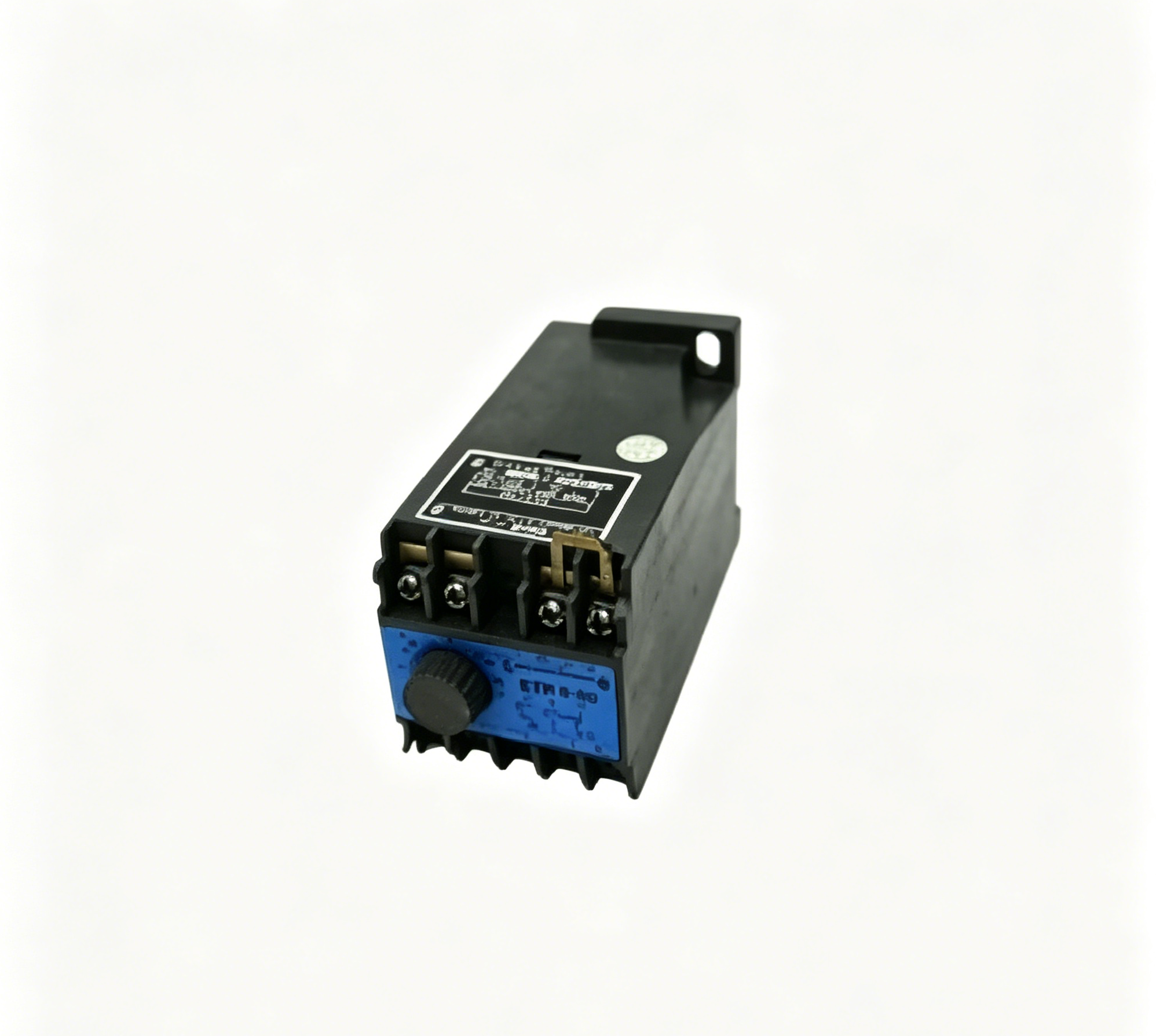
ABB 07TI21B Timer Board
The ABB 07TI21B Timer Board is an industrial timing control module used in ABB automation and control system architectures. It is part of ABB’s legacy industrial control ecosystem, commonly associated with Procontic and PLC-based automation systems. In industrial environments, timing modules are essential components that manage sequence execution, process delays, and time-based logic operations within automated systems.
Industrial automation systems rely heavily on precise timing control to coordinate machine operations. Many industrial processes require delayed activation, synchronized switching, or controlled cycle execution. The ABB 07TI21B Timer Board supports these requirements by providing time-based control functions that integrate into larger automation architectures.
Based on industrial repair and catalog references, the ABB 07TI21B is classified as a timer board used in ABB control systems, where it functions as part of logic sequencing or process timing control. It is commonly found in older ABB automation platforms where modular control boards were used to build customized industrial control solutions.
Role in Industrial Automation Systems
Timing modules are essential components in industrial control systems because they determine when specific actions occur. In automated production environments, machines must operate in a precise sequence. Without timing coordination, systems can fail to synchronize properly, leading to production errors or mechanical conflicts.
The ABB 07TI21B Timer Board contributes to this structure by managing time-dependent control signals within automation systems. It helps ensure that outputs are activated or deactivated based on predefined time intervals or logical conditions defined by the system architecture.
In PLC-based systems, timer boards are often used to extend or supplement built-in controller timing functions. They provide additional hardware-level timing capabilities that improve system flexibility in complex industrial environments.
Industrial Timing Control Principle
Timing control in industrial systems is based on the ability to delay, schedule, or synchronize electrical signals. This ensures that different parts of a system operate in coordination. For example, a conveyor system may need to delay motor activation until a sensor confirms material presence, or a safety system may require timed shutdown sequences.
The ABB 07TI21B Timer Board operates within this principle by supporting time-based signal processing in automation systems. It allows controlled execution of logic sequences, ensuring that system operations follow a defined temporal structure.
Industrial timer boards are designed to operate reliably in continuous environments where consistent timing accuracy is required. This is critical in manufacturing systems where even small timing deviations can affect production quality.
Integration in Procontic and PLC Architectures
ABB’s Procontic automation systems are known for modular industrial control designs where individual function boards handle specific tasks such as logic processing, input/output handling, and timing control. The ABB 07TI21B is associated with this type of architecture as a timing function module.
In PLC-based systems, timer modules are used to implement delay functions, cyclic operations, and sequence control logic. These functions are essential for coordinating industrial machinery such as motors, actuators, valves, and conveyor systems.
The modular nature of these systems allows engineers to configure automation logic by combining different function boards, including timer modules, input/output boards, and processing units.
Applications in Industrial Environments
The ABB 07TI21B Timer Board is used in industrial automation environments where precise timing control is required. These include manufacturing systems, process control plants, machinery automation, and legacy ABB control installations.
In manufacturing systems, timer boards help coordinate machine sequences such as start delays, motor activation timing, and production cycle synchronization. This ensures that machines operate in a controlled and predictable manner.
In process industries, timing control is used for managing chemical processes, heating cycles, and automated mixing systems. These processes depend on accurate timing to maintain product quality and safety standards.
In material handling systems, timing modules control conveyor delays, sorting sequences, and packaging operations. This ensures smooth material flow and reduces system congestion.
System Reliability and Operational Importance
Industrial automation systems require high reliability because they often operate continuously under heavy load conditions. Timing modules play a critical role in ensuring that system operations remain synchronized and stable.
The ABB 07TI21B contributes to system reliability by providing consistent timing control within automation architectures. This reduces the risk of sequence errors and ensures predictable system behavior.
In complex automation environments, multiple processes may run simultaneously. Proper timing coordination ensures that these processes do not interfere with each other and operate in a controlled sequence.
Engineering and Maintenance Considerations
Legacy industrial systems often rely on modular boards such as the ABB 07TI21B for system functionality. These systems require careful maintenance and replacement planning due to their long operational lifecycle.
Timing boards are typically installed in control cabinets where they interface with other system modules. Proper installation and configuration are essential to ensure accurate timing behavior.
Maintenance engineers must ensure that timing modules operate within expected parameters to avoid system synchronization issues. Replacement of aging modules is common in long-term industrial installations.
Importance in Legacy Automation Systems
Although modern automation systems increasingly use integrated digital controllers, many industrial environments still rely on legacy modular systems. The ABB 07TI21B represents an important component in these older automation architectures.
Legacy systems continue to operate in industrial plants due to their stability and long-term reliability. Timing boards such as this one ensure that these systems continue to function effectively even decades after installation.
Understanding and maintaining such modules is essential for industries that rely on older ABB automation platforms.
Conclusion
ABB 07TI21B Timer Board is an industrial timing control module used in ABB automation systems for sequence timing, process coordination, and logic-based control functions. It plays an important role in Procontic and PLC-based architectures where precise timing is essential for stable and synchronized industrial operation. As part of legacy automation systems, it continues to support reliable industrial control performance in long-term installations.
评价
目前还没有评价